Katagiri Sayaka, Nitta Hiroshi, Nagasawa Toshiyuki, Izumi Yuichi, Kanazawa Masao, Matsuo Akira, Chiba Hiroshige, Fukui Michiaki, Nakamura Naoto, Oseko Fumishige, Kanamura Narisato, Inagaki Koji, Noguchi Toshihide, Naruse Keiko, Matsubara Tatsuaki, Miyazaki Shigeru, Miyauchi Takashi, Ando Yuichi, Hanada Nobuhiro, Inoue Shuji
Department of Periodontology and the GCOE Program, Graduate School of Medical and Dental Science, Tokyo Medical and Dental University Tokyo, Japan.
J Diabetes Investig. 2013 May;4(3):320-325. doi: 10.1111/jdi.12026. Epub 2013 Feb 14.
AIMS/INTRODUCTION: Diabetes mellitus and periodontitis are closely related. A huge number of reports has addressed the effect of periodontal intervention therapy on glycemic control, but no reports have addressed the effect of glycemic intervention therapy on periodontal disease in type 2 diabetic patients. The aim of this study was to examine the effect of improved glycemic control by glycemic intervention therapy on periodontitis in type 2 diabetic patients.
A total of 35 patients underwent intervention therapy to improve glycemic control without periodontal treatment. Glycohemoglobin (HbA), high-sensitivity C-reactive protein (hs-CRP), bleeding on probing (BOP), probing pocket depth (PPD) and intraoral community periodontal index (CPI) codes of the World health Organization (WHO) were examined at baseline, and 2 and 6 months after the intervention therapy to improve glycemic control.
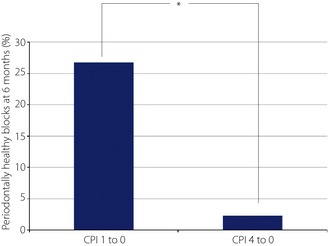
After the improvement of glycemic control, BOP lesions improved, but deep PPD lesions and WHO CPI codes did not improve. Subanalyses showed that effective glycemic control (average HbA reduction 1.8%) improved BOP lesions, but did not affect deep PPD lesions and WHO CPI codes. In addition, high BOP lesions at baseline responded more effectively to glycemic intervention. Further analysis of CPI codes in all individual periodontal sites independent of WHO CPI codes in 35 patients showed that only gingival inflammation without a deep periodontal pocket improved after glycemic intervention.
Effective glycemic control improves BOP lesions in type 2 diabetic patients with periodontitis through ameliorating inflammation at the gingival sites of periodontal tissue. This trial was registered with the University Hospital Medical Information Network (no. UMIN000007670).
目的/引言:糖尿病与牙周炎密切相关。大量报告探讨了牙周干预治疗对血糖控制的影响,但尚无报告探讨血糖干预治疗对2型糖尿病患者牙周疾病的影响。本研究的目的是检验血糖干预治疗改善血糖控制对2型糖尿病患者牙周炎的影响。
共有35例患者在未进行牙周治疗的情况下接受了改善血糖控制的干预治疗。在基线以及改善血糖控制的干预治疗后2个月和6个月时,检测糖化血红蛋白(HbA)、高敏C反应蛋白(hs-CRP)、探诊出血(BOP)、探诊深度(PPD)以及世界卫生组织(WHO)的口腔社区牙周指数(CPI)代码。
血糖控制改善后,BOP病变有所改善,但深PPD病变和WHO CPI代码未改善。亚组分析显示,有效的血糖控制(平均HbA降低1.8%)改善了BOP病变,但未影响深PPD病变和WHO CPI代码。此外,基线时BOP病变程度高的患者对血糖干预反应更有效。对35例患者中所有独立于WHO CPI代码的各个牙周部位的CPI代码进行进一步分析显示,血糖干预后仅无深牙周袋的牙龈炎症有所改善。
有效的血糖控制通过改善牙周组织牙龈部位的炎症,改善了2型糖尿病伴牙周炎患者的BOP病变。本试验已在大学医院医学信息网络注册(编号UMIN000007670)。