Department of Behavioral Biology, Johns Hopkins University, Baltimore, MD, USA.
Clin Auton Res. 2013 Dec;23(6):305-11. doi: 10.1007/s10286-013-0212-z. Epub 2013 Sep 3.
Adolescents with postural tachycardia syndrome (POTS) often experience ill-defined cognitive impairment referred to by patients as "brain fog." The objective of this study was to evaluate the symptom of brain fog as a means of gaining further insight into its etiology and potential palliative interventions.
Eligible subjects who reported having been diagnosed with POTS were recruited from social media web sites. Subjects were asked to complete a 38-item questionnaire designed for this study, and the Wood mental fatigue inventory (WMFI).
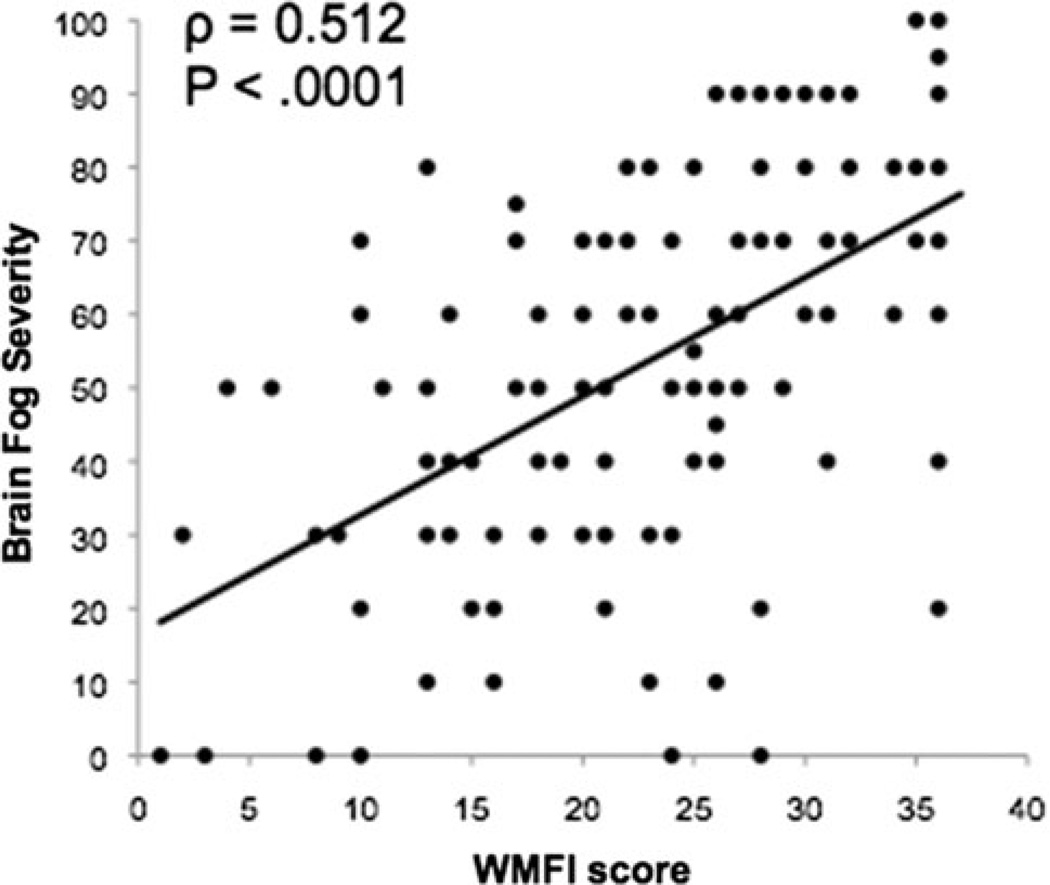
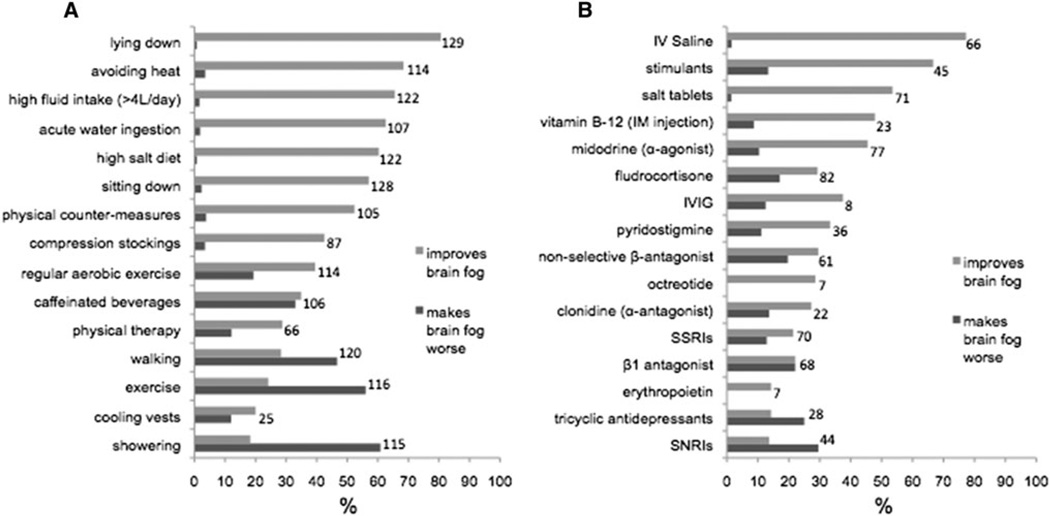
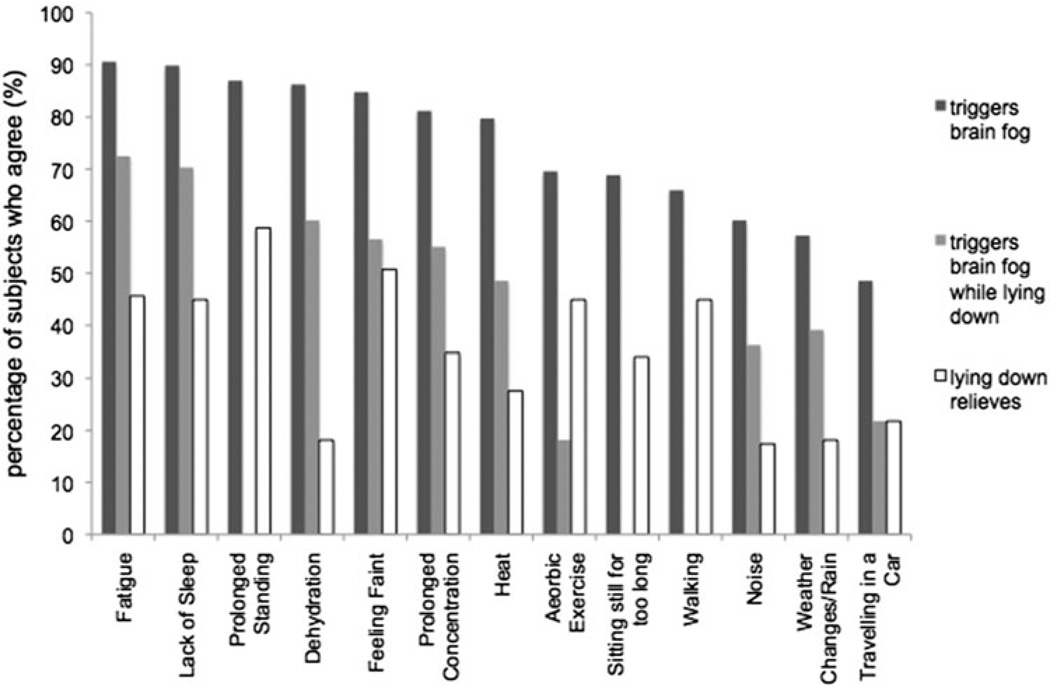
Responses were received from 138 subjects with POTS (88 % female), ranging in age from 14 to 29 years; 132 subjects reported brain fog. WMFI scores correlated with brain fog frequency and severity (P < 0.001). The top ranked descriptors of brain fog were "forgetful," "cloudy," and "difficulty focusing, thinking and communicating." The most frequently reported brain fog triggers were fatigue (91 %), lack of sleep (90 %), prolonged standing (87 %), dehydration (86 %), and feeling faint (85 %). Although aggravated by upright posture, brain fog was reported to persist after assuming a recumbent posture. The most frequently reported interventions for the treatment of brain fog were intravenous saline (77 %), stimulant medications (67 %), salt tablets (54 %), intra-muscular vitamin B-12 injections (48 %), and midodrine (45 %).
Descriptors for "brain fog" are most consistent with it being a cognitive complaint. Factors other than upright posture may play a role in the persistence of this symptom. Subjects reported a number of therapeutic interventions for brain fog not typically used in the treatment of POTS that may warrant further investigation.
体位性心动过速综合征(POTS)患者常出现定义不明确的认知障碍,患者称之为“脑雾”。本研究的目的是评估“脑雾”这一症状,以进一步了解其病因和潜在的缓解干预措施。
从社交媒体网站招募报告患有 POTS 的合格受试者。要求受试者完成一项专为该研究设计的 38 项问卷和伍德精神疲劳量表(WMFI)。
共收到 138 名 POTS 患者(88%为女性)的回复,年龄从 14 岁到 29 岁不等;132 名患者报告有脑雾。WMFI 评分与脑雾频率和严重程度相关(P<0.001)。脑雾的首要描述词是“健忘”、“模糊”和“难以集中注意力、思考和交流”。报告最多的脑雾诱因是疲劳(91%)、睡眠不足(90%)、长时间站立(87%)、脱水(86%)和头晕(85%)。尽管直立姿势会加重脑雾,但报告称,即使采取卧位,脑雾仍会持续存在。治疗脑雾最常报告的干预措施是静脉注射生理盐水(77%)、兴奋剂药物(67%)、盐片(54%)、肌肉内注射维生素 B-12(48%)和米多君(45%)。
“脑雾”的描述词最符合认知障碍。除直立姿势外,其他因素可能在该症状持续存在中起作用。报告了一些治疗脑雾的治疗方法,这些方法通常不适用于治疗 POTS,可能需要进一步研究。