Department of Life Sciences and Centre for Integrative Systems Biology and Bioinformatics, Imperial College, London, United Kingdom.
Sci Rep. 2013;3:2606. doi: 10.1038/srep02606.
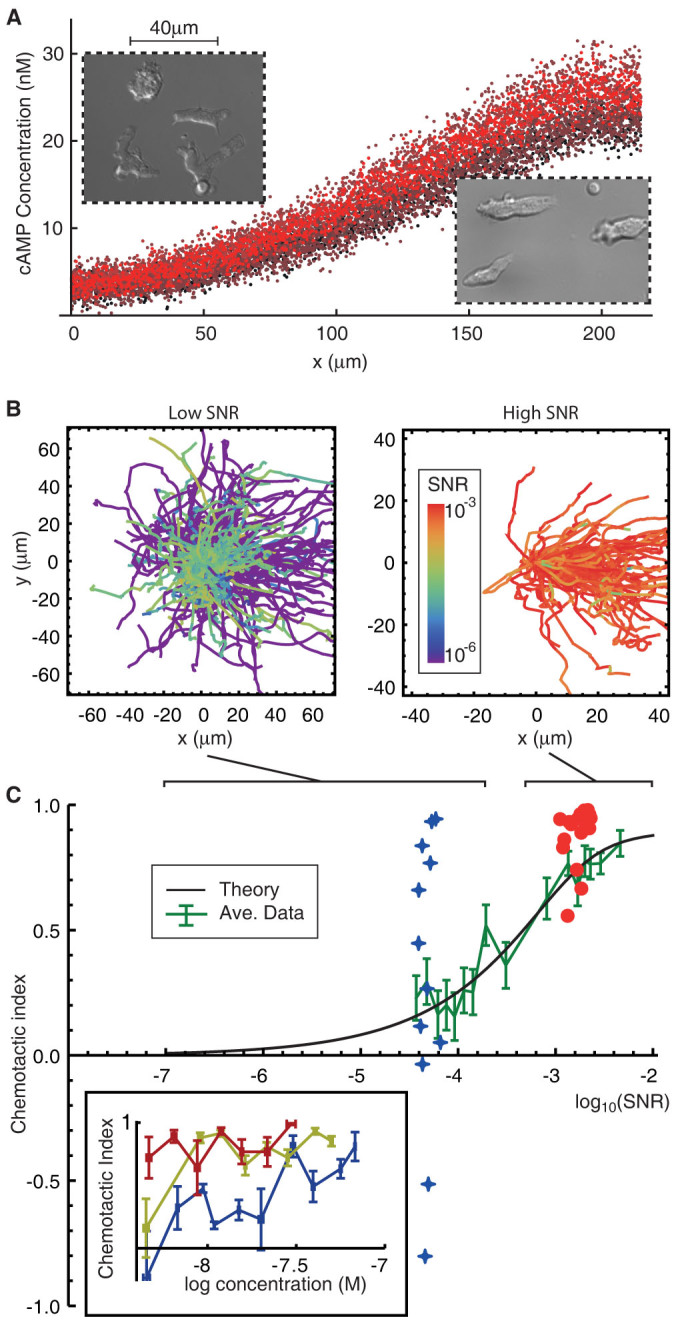
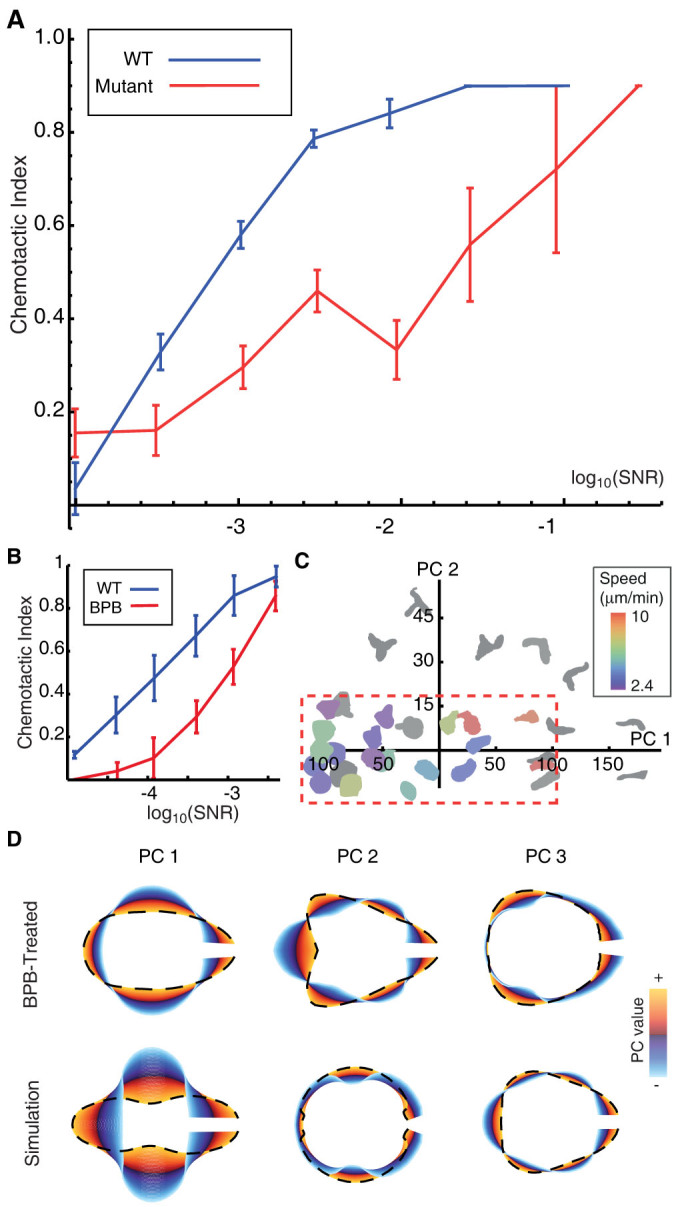
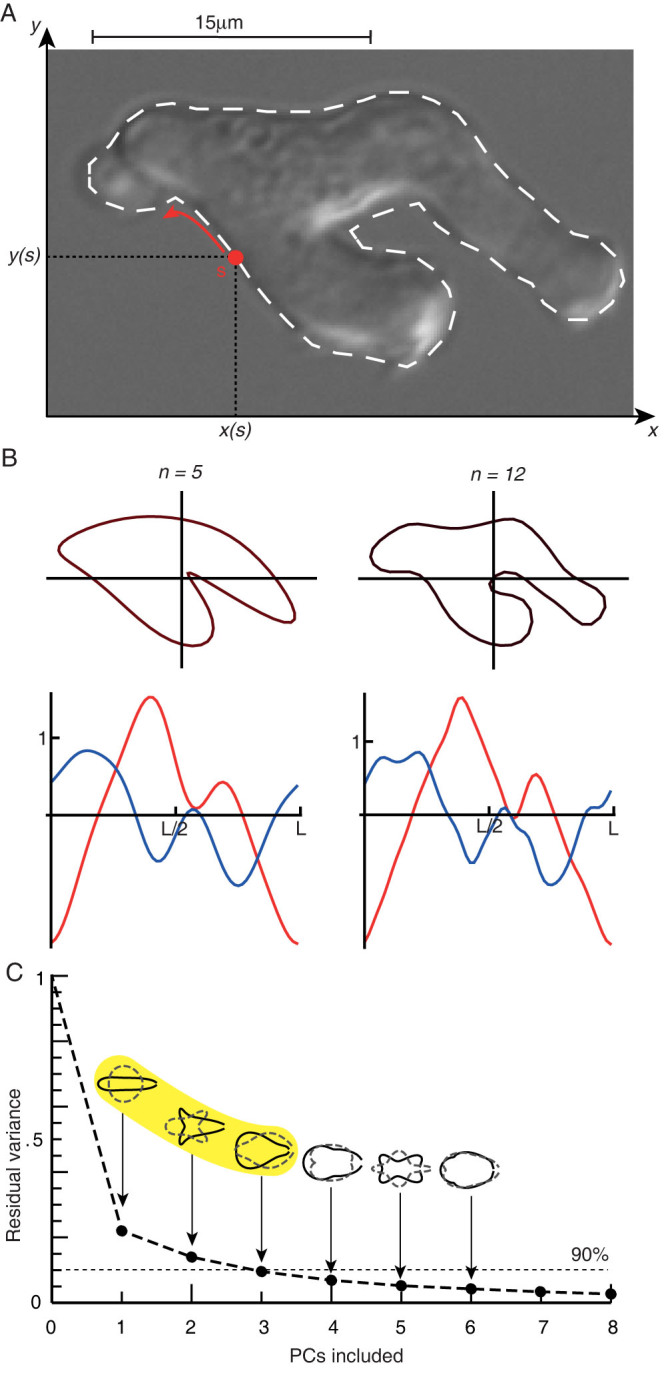
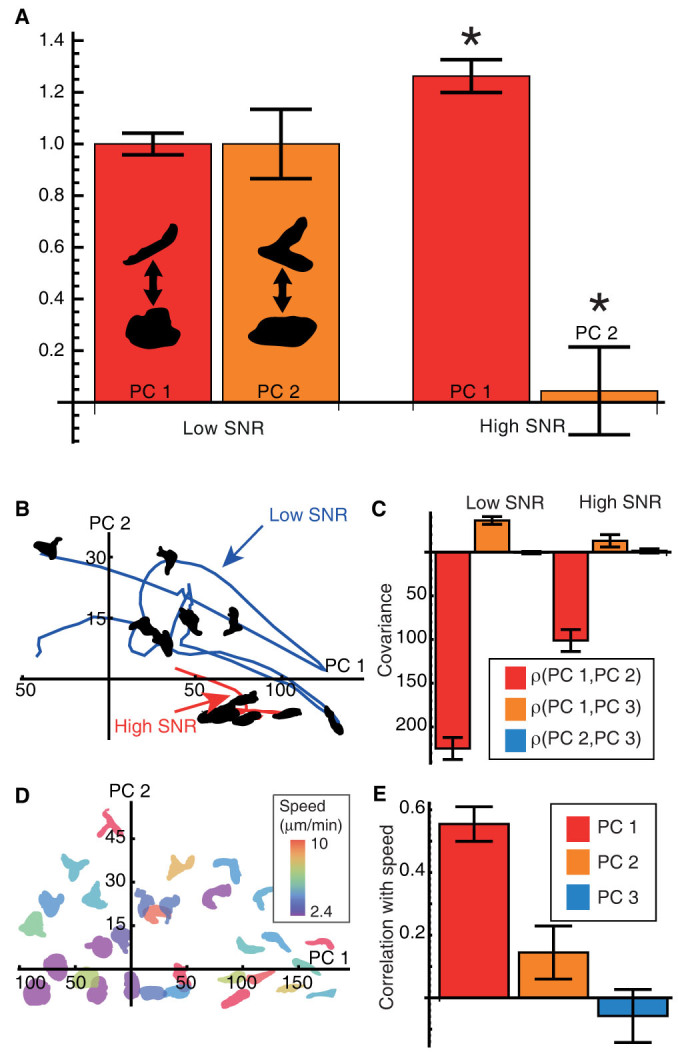
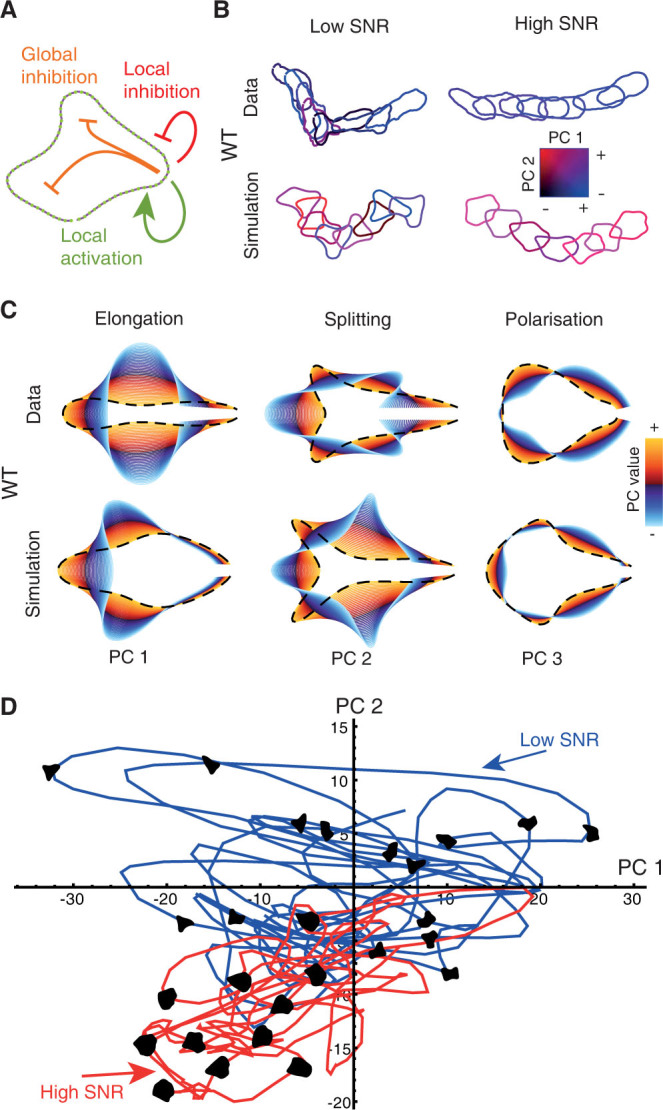
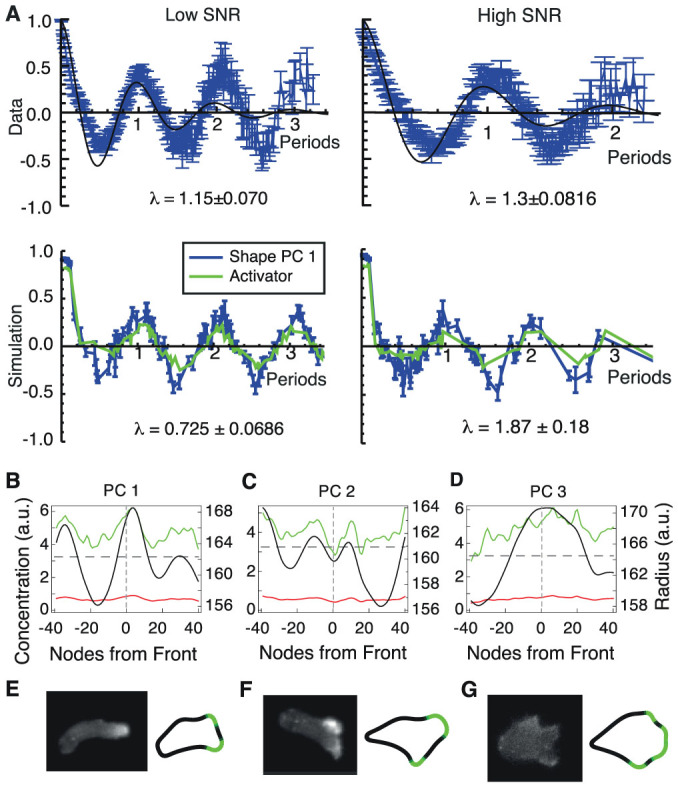
The behaviour of an organism often reflects a strategy for coping with its environment. Such behaviour in higher organisms can often be reduced to a few stereotyped modes of movement due to physiological limitations, but finding such modes in amoeboid cells is more difficult as they lack these constraints. Here, we examine cell shape and movement in starved Dictyostelium amoebae during migration toward a chemoattractant in a microfluidic chamber. We show that the incredible variety in amoeboid shape across a population can be reduced to a few modes of variation. Interestingly, cells use distinct modes depending on the applied chemical gradient, with specific cell shapes associated with shallow, difficult-to-sense gradients. Modelling and drug treatment reveals that these behaviours are intrinsically linked with accurate sensing at the physical limit. Since similar behaviours are observed in a diverse range of cell types, we propose that cell shape and behaviour are conserved traits.
生物体的行为通常反映了其应对环境的策略。由于生理限制,高等生物的这种行为往往可以简化为几种刻板的运动模式,但在变形虫细胞中寻找这种模式则更加困难,因为它们没有这些限制。在这里,我们在微流控室中检查了饥饿的 Dictyostelium 变形虫在向化学引诱剂迁移过程中的细胞形状和运动。我们表明,在一个群体中,变形虫形状的惊人多样性可以简化为几种变化模式。有趣的是,细胞根据施加的化学梯度使用不同的模式,特定的细胞形状与浅而难以感知的梯度相关。建模和药物治疗表明,这些行为与物理极限下的准确感知内在相关。由于在多种类型的细胞中都观察到类似的行为,我们提出细胞形状和行为是保守的特征。