Institute of Cancer Sciences, University of Glasgow, Glasgow, G61 1HQ, United Kingdom.
The CRUK Beatson Institute, Glasgow, G61 1BD, United Kingdom.
Nat Commun. 2022 Sep 9;13(1):5317. doi: 10.1038/s41467-022-32958-x.
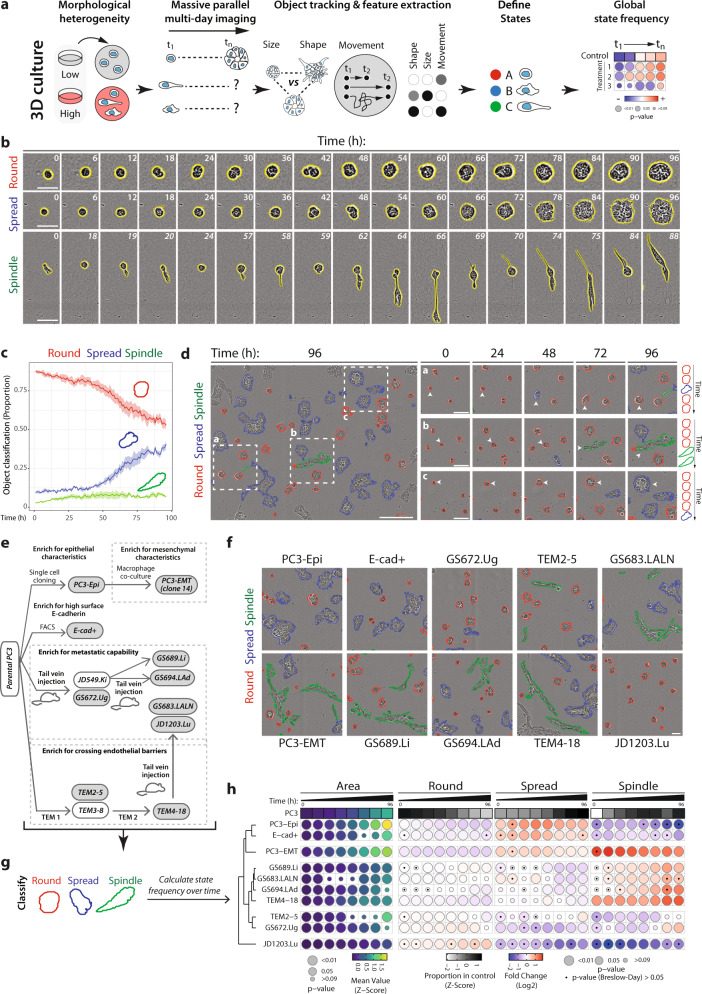
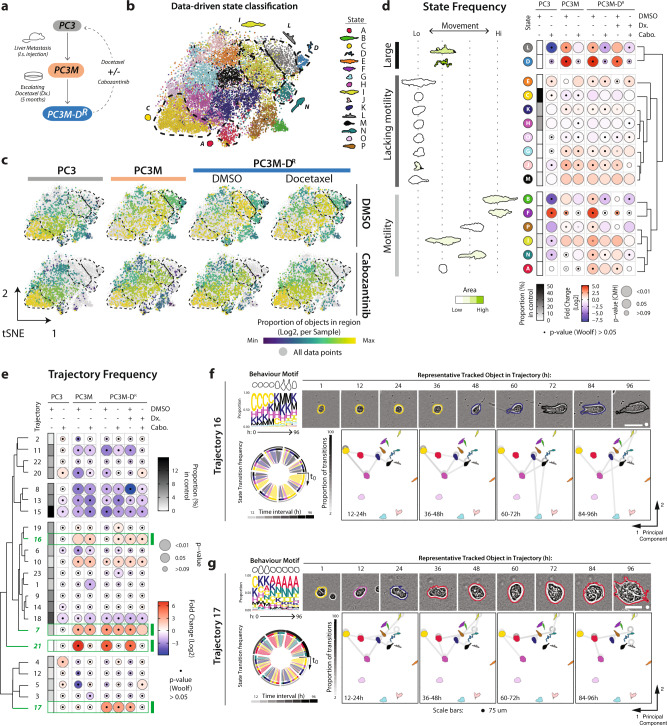
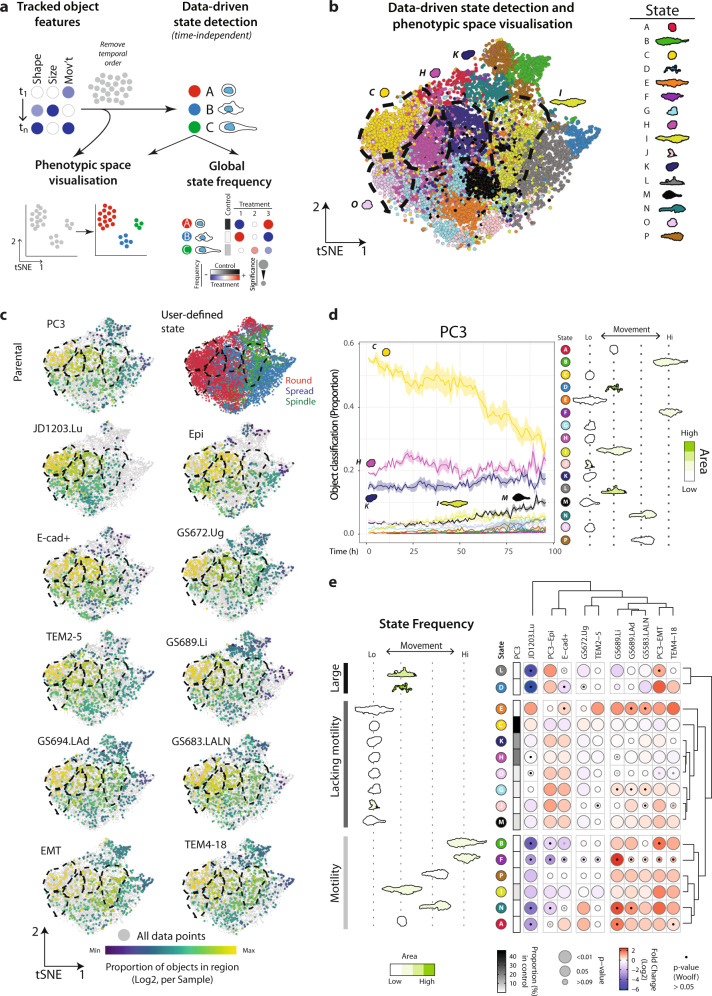
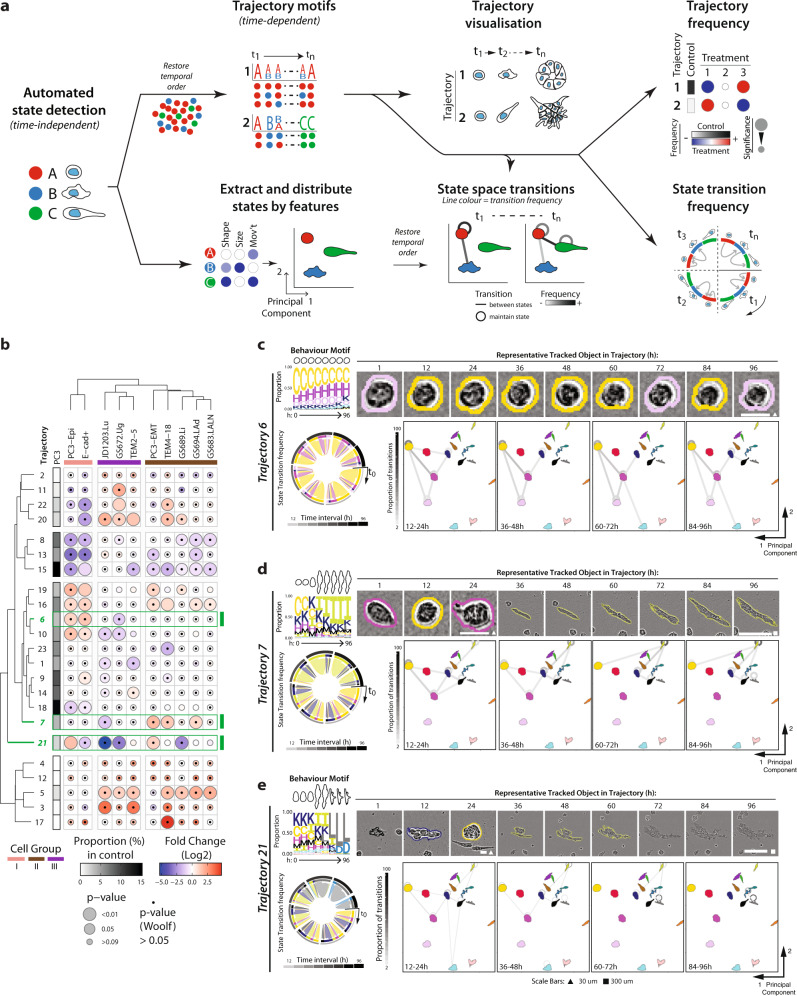
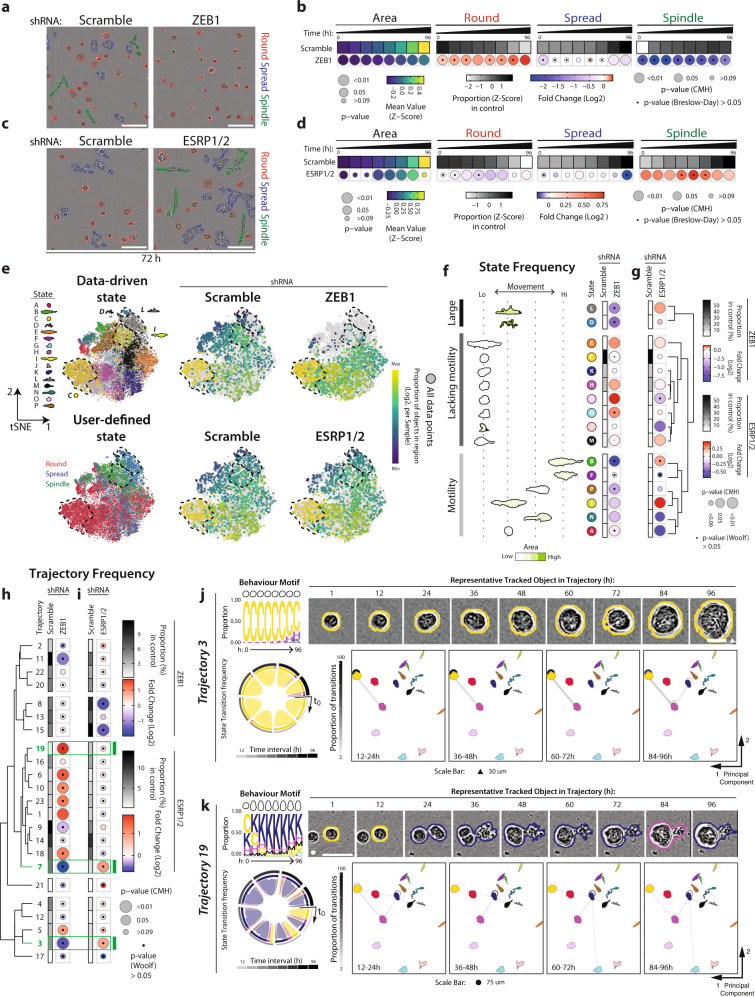
Single cell profiling by genetic, proteomic and imaging methods has expanded the ability to identify programmes regulating distinct cell states. The 3-dimensional (3D) culture of cells or tissue fragments provides a system to study how such states contribute to multicellular morphogenesis. Whether cells plated into 3D cultures give rise to a singular phenotype or whether multiple biologically distinct phenotypes arise in parallel is largely unknown due to a lack of tools to detect such heterogeneity. Here we develop Traject3d (Trajectory identification in 3D), a method for identifying heterogeneous states in 3D culture and how these give rise to distinct phenotypes over time, from label-free multi-day time-lapse imaging. We use this to characterise the temporal landscape of morphological states of cancer cell lines, varying in metastatic potential and drug resistance, and use this information to identify drug combinations that inhibit such heterogeneity. Traject3d is therefore an important companion to other single-cell technologies by facilitating real-time identification via live imaging of how distinct states can lead to alternate phenotypes that occur in parallel in 3D culture.
通过遗传、蛋白质组学和成像方法进行单细胞分析,扩大了识别调节不同细胞状态的程序的能力。细胞或组织片段的 3 维(3D)培养提供了一个系统,可以研究这些状态如何促进多细胞形态发生。由于缺乏检测这种异质性的工具,尚不清楚种植到 3D 培养物中的细胞是否会产生单一表型,或者是否会同时出现多个生物学上不同的表型。在这里,我们开发了 Traject3d(3D 轨迹识别),这是一种从无标记多日延时成像中识别 3D 培养物中异质状态以及这些状态如何随时间产生不同表型的方法。我们使用它来描述具有不同转移潜能和耐药性的癌细胞系的形态状态的时间景观,并利用这些信息来识别抑制这种异质性的药物组合。因此,Traject3d 通过实时识别不同状态如何导致 3D 培养中同时发生的不同表型,成为其他单细胞技术的重要补充。