Department of Otolaryngology-Head and Neck Surgery, Keck School of Medicine, University of Southern California, Los Angeles, CA, USA.
Oncogenesis. 2013 Sep 9;2(9):e68. doi: 10.1038/oncsis.2013.33.
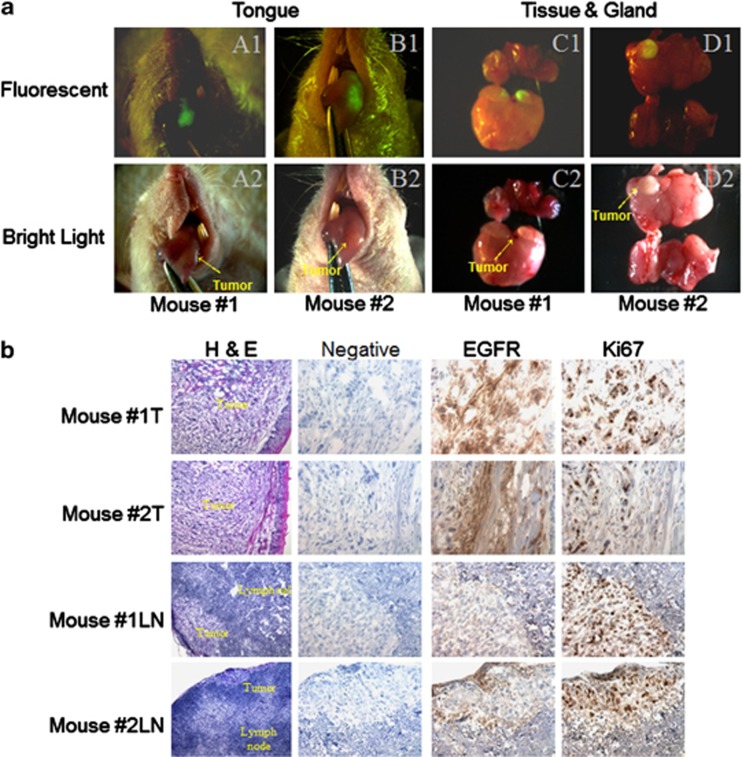
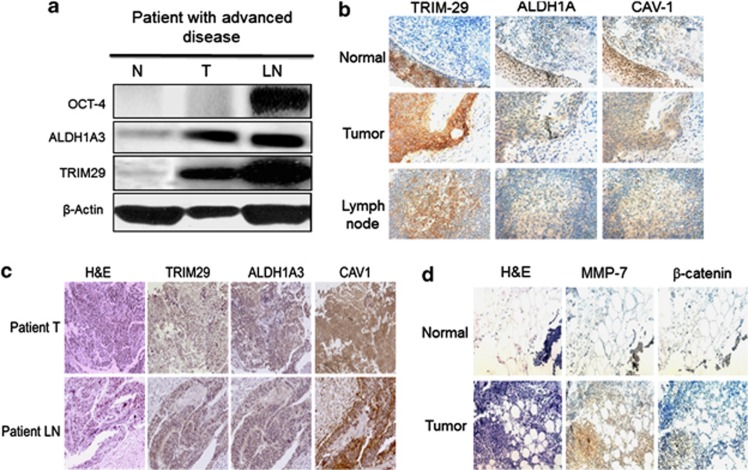
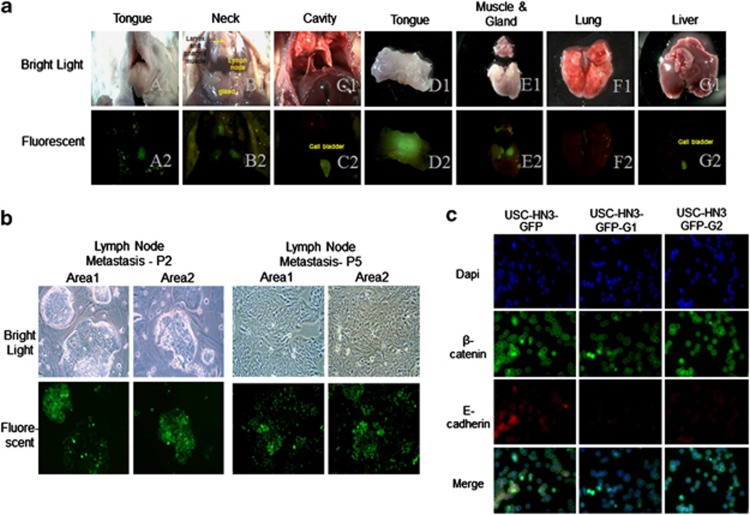
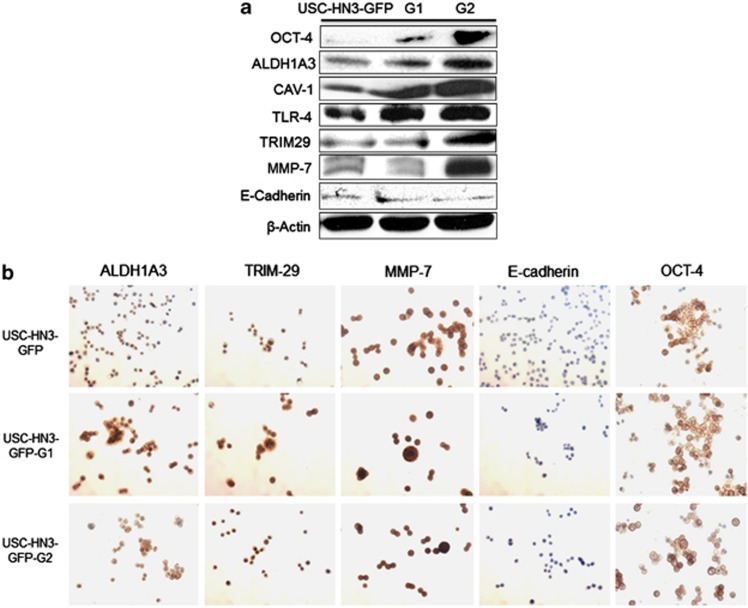
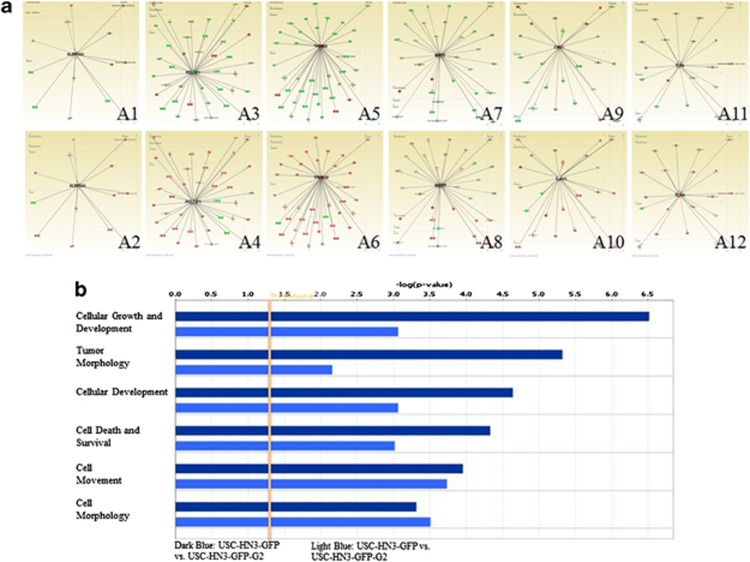
Prognosis of head and neck squamous cell carcinoma (HNSCC) is largely determined by the extent of lymph node (LN) metastasis at diagnosis, and this appears to be controlled by cancer cell genetics. To examine the role of these genes in LN metastasis, we created a human-in-mouse orthotopic model of HNSCC and performed comparative microarray analysis of gene expression between populations of HNSCC cell lines derived before and after serial transplantation and in vivo metastasis in mice. Microarray analysis comparing the USC-HN3-GFP, USC-HN3-GFP-G1 and USC-HN3-GFP-G2 cell lines identified overexpression of genes implicated in epithelial-to- mesenchymal transition and the formation of cancer stem cells, including CAV-1, TLR-4 (Toll-like receptor 4), MMP-7 (matrix metalloproteinase 7), ALDH1A3, OCT-4 and TRIM-29. Ingenuity Pathway Analysis confirmed upregulation of respective gene signaling pathways in the USC-HN1-GFP-G2 cell line. Patient HNSCC samples from advanced stages overexpressed ALDH1A3, CAV-1 and MMP-7. Our results show that CAV-1, TLR-4, MMP-7, ALDH1A3, OCT-4 and TRIM-29 have increased expression in HNSCC cells selected for an enhanced metastatic phenotype and suggest that these genes may have an important role in the metastatic potential of HNSCC cells. Inhibition of these genes may therefore have prognostic and therapeutic utility in HNSCC.
头颈部鳞状细胞癌(HNSCC)的预后在很大程度上取决于诊断时淋巴结(LN)转移的程度,而这似乎受到癌细胞遗传学的控制。为了研究这些基因在 LN 转移中的作用,我们创建了一个人源化小鼠头颈部鳞状细胞癌原位模型,并对来源于 HNSCC 细胞系的人群进行了比较基因表达微阵列分析,这些细胞系在小鼠体内转移前和转移后进行了连续移植。将 USC-HN3-GFP、USC-HN3-GFP-G1 和 USC-HN3-GFP-G2 细胞系进行比较的微阵列分析,鉴定出与上皮间质转化和癌症干细胞形成相关的基因表达上调,包括 CAV-1、TLR-4(Toll 样受体 4)、MMP-7(基质金属蛋白酶 7)、ALDH1A3、OCT-4 和 TRIM-29。Ingenuity 通路分析证实了 USC-HN1-GFP-G2 细胞系中相应基因信号通路的上调。晚期患者的 HNSCC 样本中 ALDH1A3、CAV-1 和 MMP-7 表达上调。我们的结果表明,在选择具有增强转移表型的 HNSCC 细胞时,CAV-1、TLR-4、MMP-7、ALDH1A3、OCT-4 和 TRIM-29 的表达增加,并表明这些基因可能在 HNSCC 细胞的转移潜能中具有重要作用。因此,这些基因的抑制可能对头颈部鳞状细胞癌具有预后和治疗意义。