Pflugers Arch. 2014 May;466(5):887-901. doi: 10.1007/s00424-013-1342-9.
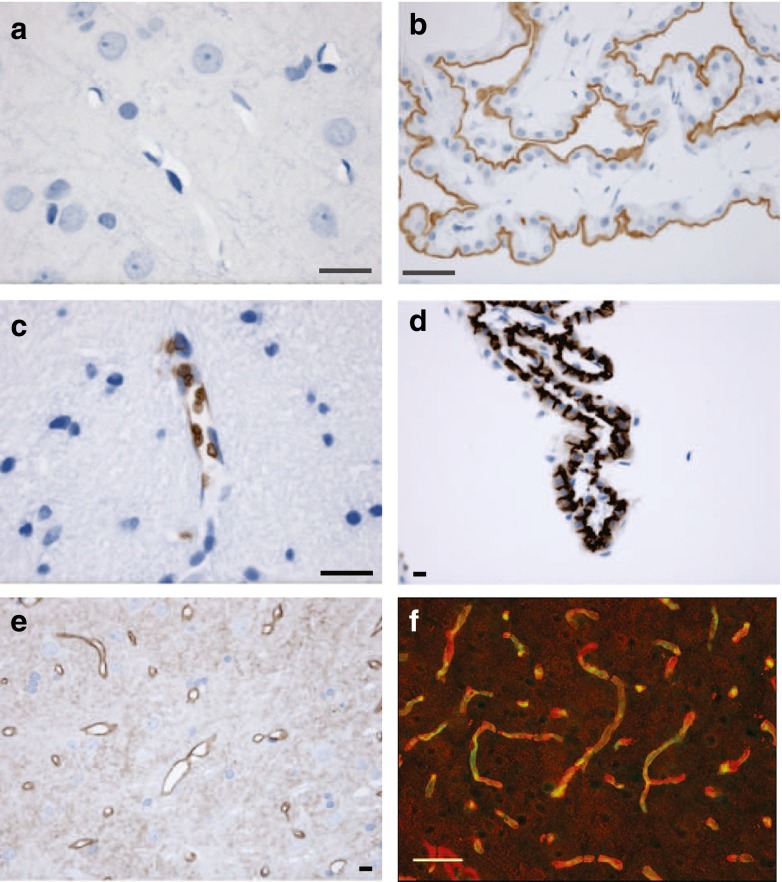
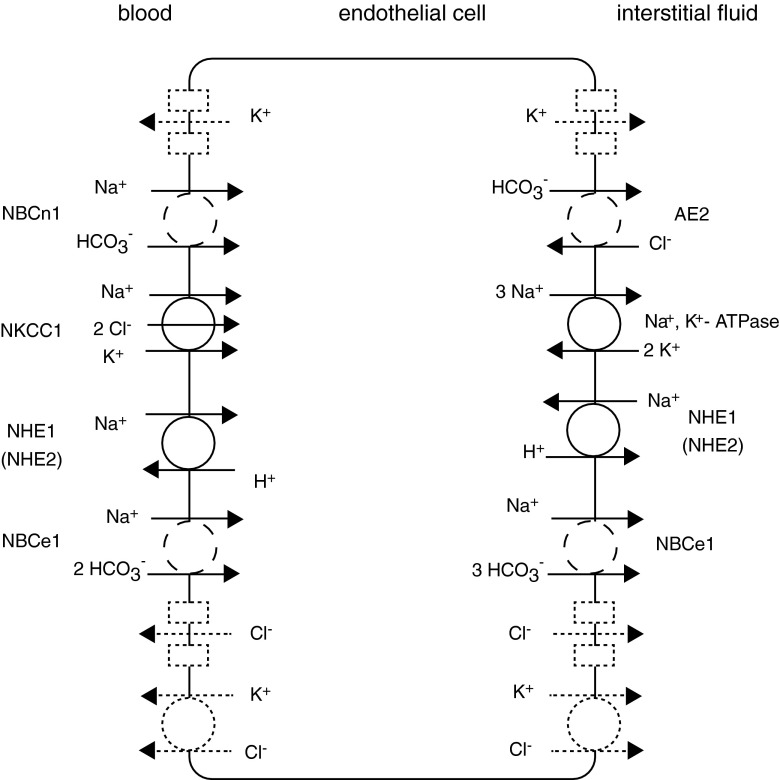
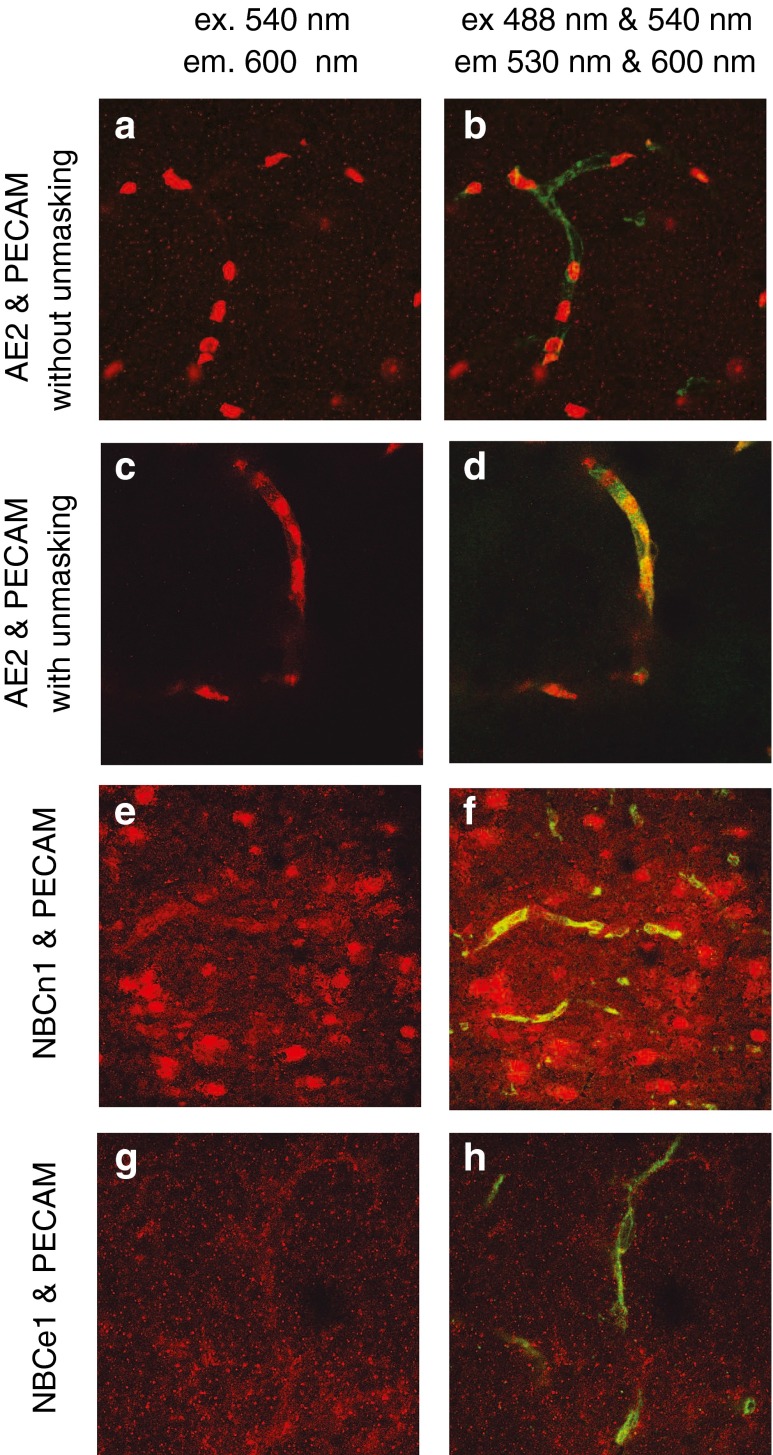
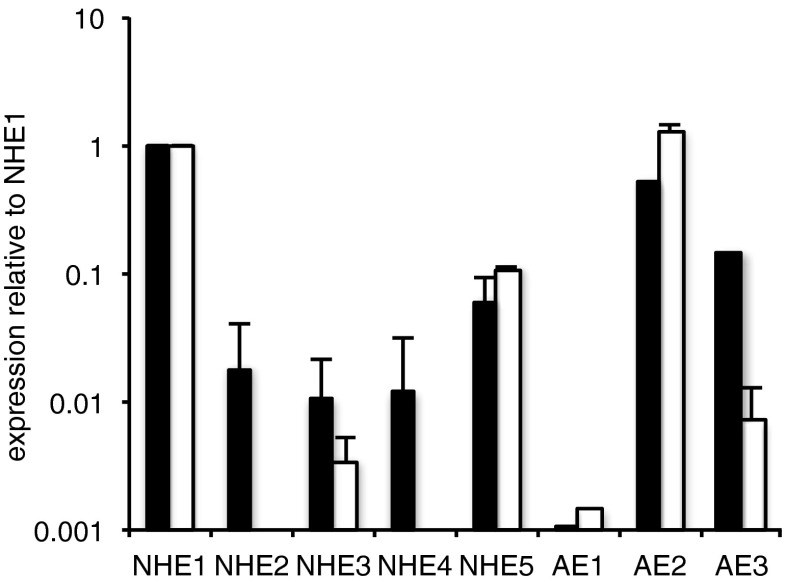
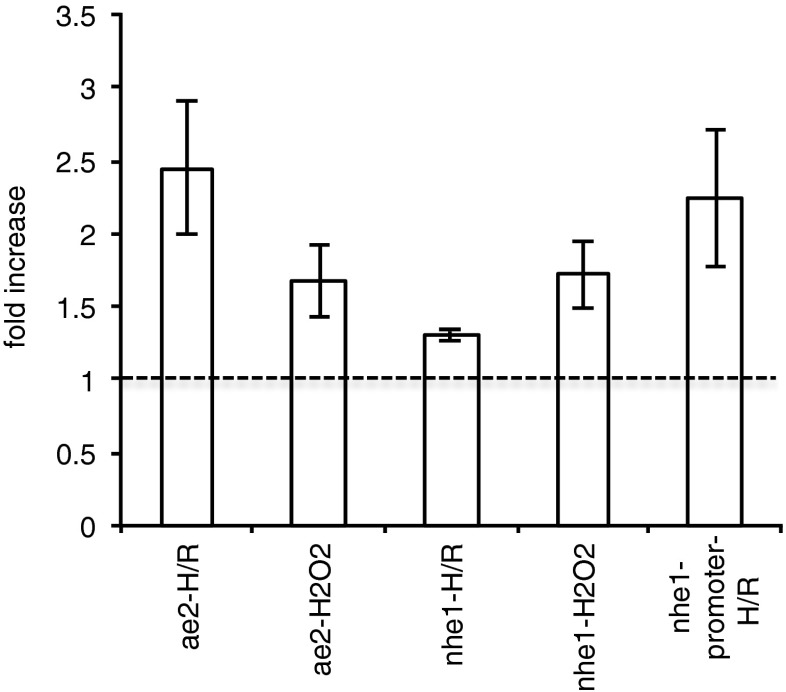
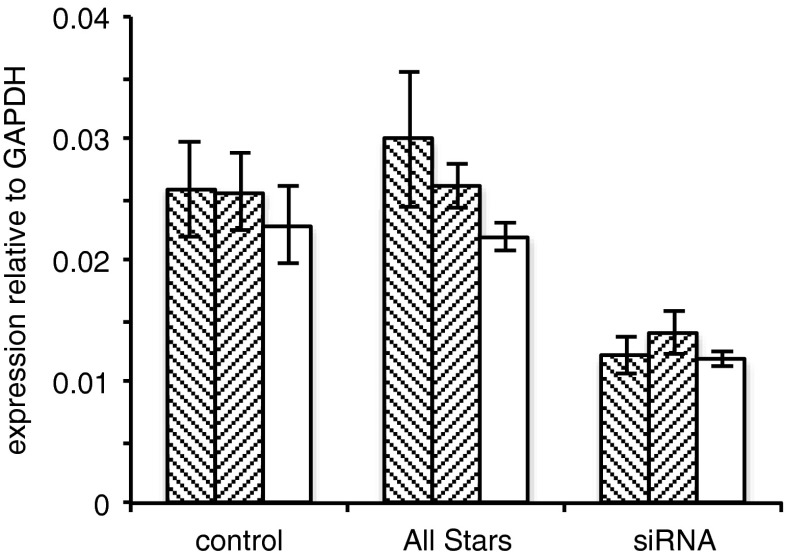
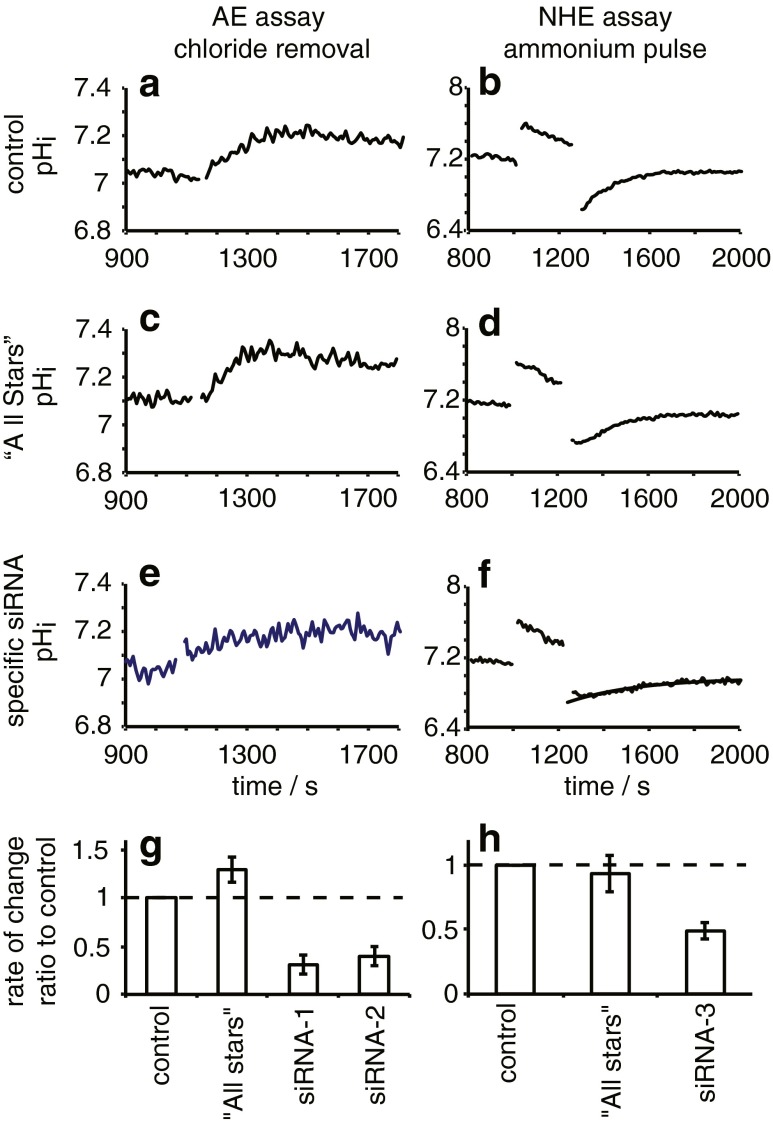
Ions and water transported across the endothelium lining the blood–brain barrier contribute to the fluid secreted into the brain and are important in maintaining appropriate volume and ionic composition of brain interstitial fluid. Changes in this secretion process may occur after stroke. The present study identifies at transcript and protein level ion transporters involved in the movement of key ions and examines how levels of certain of these alter following oxidative stress. Immunohistochemistry provides evidence for Cl−/HCO3− exchanger, AE2, and Na+, HCO3− cotransporters, NBCe1 and NBCn1, on brain microvessels. mRNA analysis by RT-PCR reveals expression of these transporters in cultured rat brain microvascular endothelial cells (both primary and immortalized GPNT cells) and also Na+/H+ exchangers, NHE1 (primary and immortalized) and NHE2 (primary cells only). Knock-down using siRNA in immortalized GPNT cells identifies AE2 as responsible for much of the Cl−/HCO3− exchange following extracellular chloride removal and NHE1 as the transporter that accounts for most of the Na+/H+ exchange following intracellular acidification. Transcript levels of both AE2 and NHE1 are increased following hypoxia/reoxygenation. Further work is now required to determine the localization of the bicarbonate transporters to luminal or abluminal membranes of the endothelial cells as well as to identify and localize additional transport mechanisms that must exist for K+ and Cl−.
穿过血脑屏障内皮细胞的离子和水转运有助于将液体分泌到大脑中,并在维持脑间质液适当的体积和离子组成方面发挥重要作用。这种分泌过程的变化可能发生在中风后。本研究在转录和蛋白水平上确定了参与关键离子运动的离子转运体,并研究了在氧化应激后这些离子的某些水平如何发生变化。免疫组织化学为脑微血管上的 Cl−/HCO3−交换体、AE2 和 Na+、HCO3−共转运体 NBCe1 和 NBCn1 提供了证据。通过 RT-PCR 的 mRNA 分析显示,这些转运体在培养的大鼠脑微血管内皮细胞(原代和永生化的 GPNT 细胞)中表达,也表达 Na+/H+交换体 NHE1(原代和永生化)和 NHE2(仅原代细胞)。在永生化的 GPNT 细胞中使用 siRNA 进行敲低,发现 AE2 负责去除细胞外氯后大部分的 Cl−/HCO3−交换,而 NHE1 则是负责细胞内酸化后大部分 Na+/H+交换的转运体。AE2 和 NHE1 的转录水平在缺氧/复氧后增加。现在需要进一步的工作来确定碳酸氢盐转运体在内皮细胞的腔侧或基底外侧膜上的定位,以及确定和定位必须存在的用于 K+和 Cl−的其他转运机制。