Kolluru Gopi K, Shen Xinggui, Kevil Christopher G
Department of Pathology, LSU Health-Shreveport, USA.
Redox Biol. 2013 May 23;1(1):313-8. doi: 10.1016/j.redox.2013.05.001.
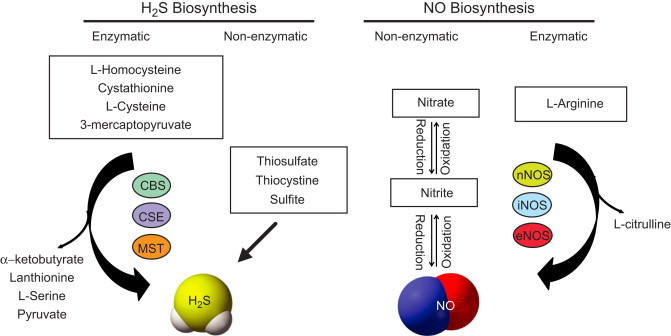
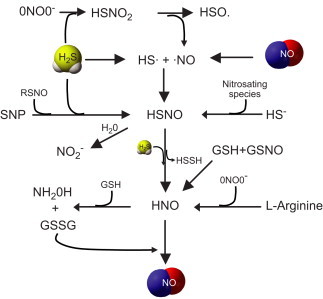
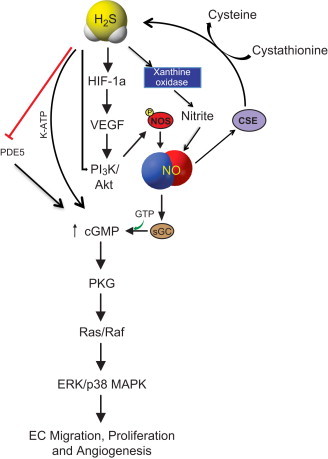
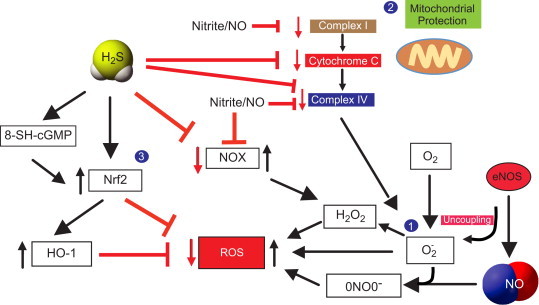
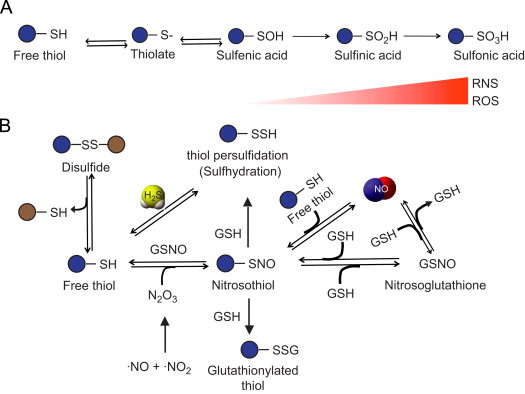
Nitric oxide (NO) and hydrogen sulfide (H2S) have emerged as dominant redox regulators of numerous aspects of cellular and physiological functions within several organ systems included cardiovascular, immune and neurological tissues. Recent studies have begun to reveal that these two gaseous molecules may have redundant or overlapping pathophysiological functions often involving similar molecular targets. However, it remains less clear when and how NO and H2S may interact under biological and disease processes. In this graphical review, we discuss the current understanding of NO and H2S interactions and how they may functionally influence each other and what this may mean for biology and mechanisms of disease.
一氧化氮(NO)和硫化氢(H2S)已成为多种器官系统(包括心血管、免疫和神经组织)细胞和生理功能诸多方面的主要氧化还原调节因子。最近的研究开始揭示,这两种气体分子可能具有冗余或重叠的病理生理功能,通常涉及相似的分子靶点。然而,在生物和疾病过程中,NO和H2S何时以及如何相互作用仍不太清楚。在本图文综述中,我们讨论了目前对NO和H2S相互作用的理解,以及它们如何在功能上相互影响,以及这对生物学和疾病机制可能意味着什么。