Li Xingbao, Malcolm Robert J, Huebner Kristina, Hanlon Colleen A, Taylor Joseph J, Brady Kathleen T, George Mark S, See Ronald E
Medical University of South Carolina, United States.
Drug Alcohol Depend. 2013 Dec 1;133(2):641-6. doi: 10.1016/j.drugalcdep.2013.08.012. Epub 2013 Aug 26.
Repetitive transcranial magnetic stimulation (rTMS) can temporarily interrupt or facilitate activity in a focal brain region. Several lines of evidence suggest that rTMS of the dorsolateral prefrontal cortex (DLPFC) can affect processes involved in drug addiction. We hypothesized that a single session of low-frequency rTMS of the left DLPFC would modulate cue-induced craving for methamphetamine (MA) when compared to a sham rTMS session.
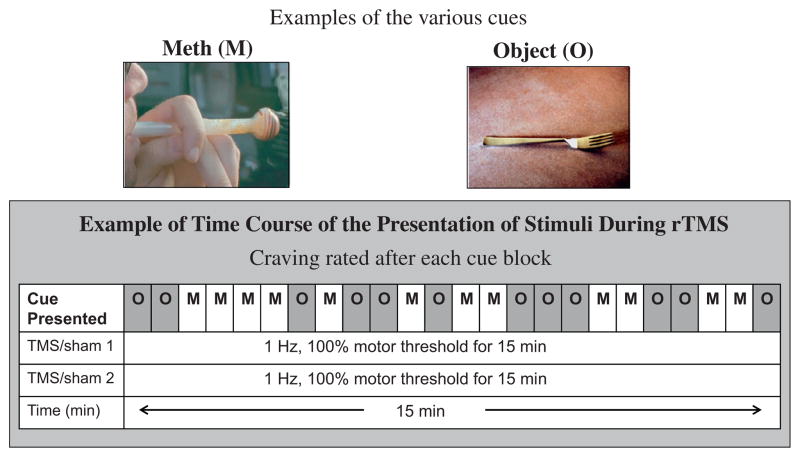
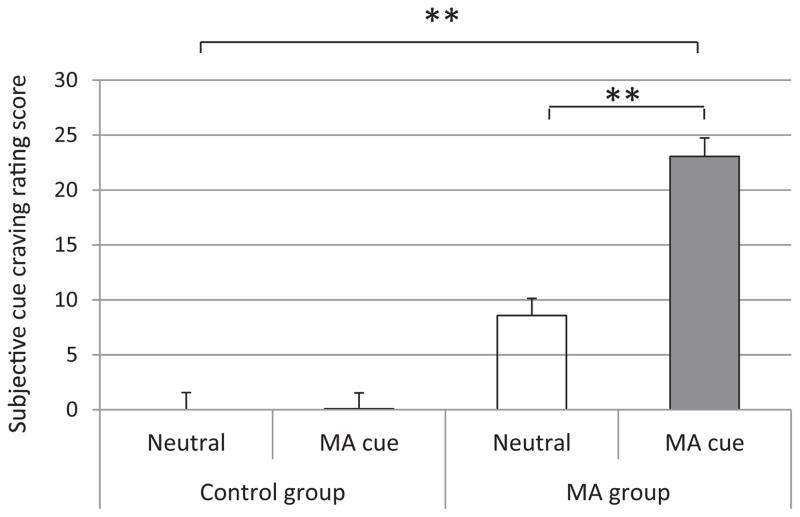
In this single-blind, sham-controlled crossover study, 10 non-treatment seeking MA-dependent users and 8 healthy controls were randomized to receive 15 min of sham and real (1 Hz) DLPFC rTMS in two experimental sessions separated by 1h. During each rTMS session, participants were exposed to blocks of neutral cues and MA-associated cues. Participants rated their craving after each cue block.
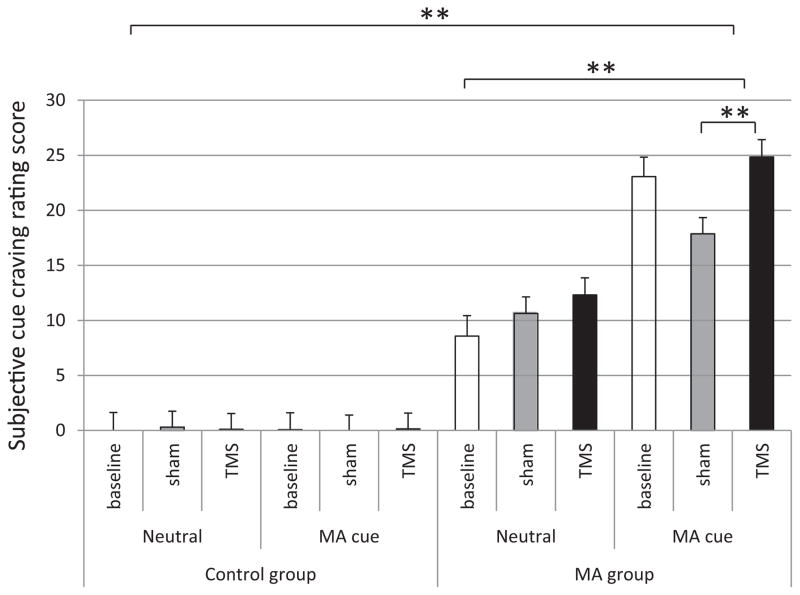
In MA users, real rTMS over the left DLPFC increased self-reported craving as compared to sham stimulation (17.86 ± 1.46 vs. 24.85 ± 1.57, p=0.001). rTMS had no effect on craving in healthy controls. One Hertz rTMS of the left DLPFC was safe and tolerable for all participants.
Low frequency rTMS of the left DLPFC transiently increased cue-induced craving in MA participants. These preliminary results suggest that 1 Hz rTMS of the left DLPFC may increase craving by inhibiting the prefrontal cortex or indirectly activating subcortical regions involved in craving.
重复经颅磁刺激(rTMS)可暂时中断或促进大脑局部区域的活动。多项证据表明,背外侧前额叶皮质(DLPFC)的rTMS可影响与药物成瘾相关的过程。我们假设,与假rTMS治疗相比,单次低频rTMS刺激左侧DLPFC可调节线索诱导的甲基苯丙胺(MA)渴求。
在这项单盲、假对照交叉研究中,10名未寻求治疗的MA依赖使用者和8名健康对照者被随机分配,在两个相隔1小时的实验环节中接受15分钟的假刺激和真实(1赫兹)DLPFC rTMS。在每个rTMS环节中,参与者会接触中性线索和与MA相关的线索组块。参与者在每个线索组块后对自己的渴求程度进行评分。
在MA使用者中,与假刺激相比,左侧DLPFC的真实rTMS增加了自我报告的渴求程度(17.86±1.46对24.85±1.57,p=0.001)。rTMS对健康对照者的渴求程度没有影响。左侧DLPFC的1赫兹rTMS对所有参与者来说都是安全且可耐受的。
左侧DLPFC的低频rTMS会短暂增加MA使用者线索诱导的渴求。这些初步结果表明,左侧DLPFC的1赫兹rTMS可能通过抑制前额叶皮质或间接激活与渴求相关的皮质下区域来增加渴求。