1 Psychiatry Neuromodulation Unit, Addictology and Liaison Psychiatry Department, CHU Nantes , Nantes, France.
2 Faculty of Sport Sciences, Laboratory "Movement, Interactions, Performance" (E.A. 4334), University of Nantes , Nantes, France.
J Behav Addict. 2018 Mar 1;7(1):126-136. doi: 10.1556/2006.7.2018.14. Epub 2018 Feb 21.
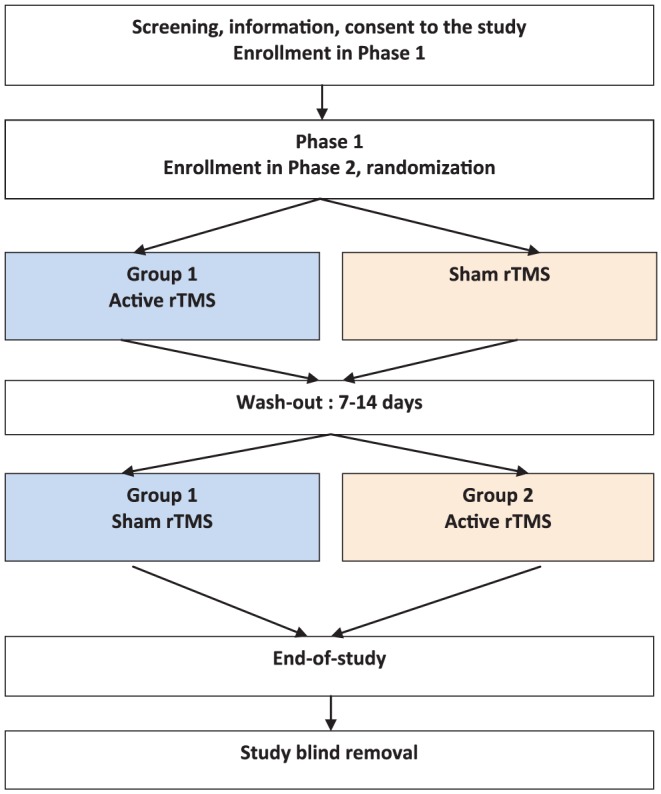
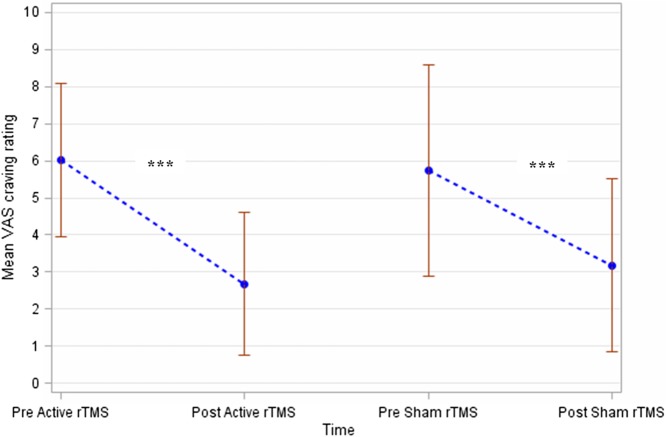
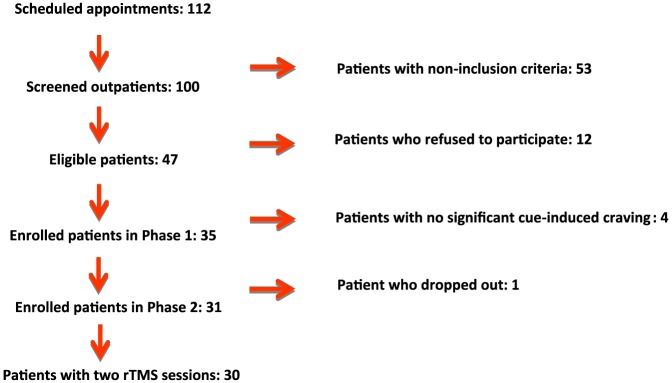
Background Craving is a core symptom of addictive disorders, such as pathological gambling for example. Over the last decade, several studies have assessed the efficacy of repetitive transcranial magnetic stimulation (rTMS) in the addiction field, which triggers the dorsolateral prefrontal cortex (DLPFC) to decrease craving. The STIMJEU study investigated whether a single session of low-frequency (LF, i.e., 1 Hz) rTMS applied to the right DLPFC reduced cue-induced gambling craving in a sample of treatment-seeking pathological gamblers. Methods Thirty patients received both active and sham rTMS in random order and were blinded to the condition in a within-subject crossover design. Outcome measures included self-reported gambling craving (Visual Analog Scale and Gambling Craving Scale) and physiological measures (heart rate and blood pressure). Results The rTMS sessions were associated with a significant decrease in the gambling urge, regardless of whether the session was active or sham. When controlling cue-induced craving levels, no effects were observed on craving for active rTMS. Overall, rTMS was well-tolerated, and the credibility of the sham procedure was assessed and appeared to be appropriate. Conclusions We failed to demonstrate the specific efficacy of one session of LF rTMS to decrease cue-induced craving in pathological gamblers. A strong placebo-effect and rTMS parameters may partly explain these results. Yet, we are convinced that rTMS remains a promising therapeutic method. Further studies are required to examine its potential effect.
渴求感是成瘾障碍(如病理性赌博)的核心症状之一。在过去的十年中,已有多项研究评估了重复经颅磁刺激(rTMS)在成瘾领域的疗效,该疗法可刺激背外侧前额叶皮质(DLPFC)以降低渴求感。STIMJEU 研究调查了单次低频(LF,即 1Hz)rTMS 应用于右 DLPFC 是否会降低治疗性寻求病理性赌博者的线索诱发赌博渴求感。
30 名患者以随机顺序接受了真实和假 rTMS,并在自身对照交叉设计中对条件进行了盲法。主要终点为自我报告的赌博渴求感(视觉模拟量表和赌博渴求量表)和生理指标(心率和血压)。
rTMS 治疗与赌博冲动的显著降低相关,无论治疗是否真实。当控制线索诱发的渴求水平时,对真实 rTMS 的渴求没有影响。总体而言,rTMS 耐受性良好,并且评估了假程序的可信度,结果似乎是合适的。
我们未能证明单次 LF rTMS 可降低病理性赌博者的线索诱发渴求感的特定疗效。强安慰剂效应和 rTMS 参数可能部分解释了这些结果。然而,我们相信 rTMS 仍然是一种很有前途的治疗方法。需要进一步的研究来检验其潜在的效果。