Department of Psychiatry, Yale Stress Center, Yale University School of Medicine, 2 Church Street South, Suite 209, New Haven, CT, 06519, USA,
Sports Med. 2014 Jan;44(1):81-121. doi: 10.1007/s40279-013-0090-5.
Psychological stress and physical activity (PA) are believed to be reciprocally related; however, most research examining the relationship between these constructs is devoted to the study of exercise and/or PA as an instrument to mitigate distress.
The aim of this paper was to review the literature investigating the influence of stress on indicators of PA and exercise.
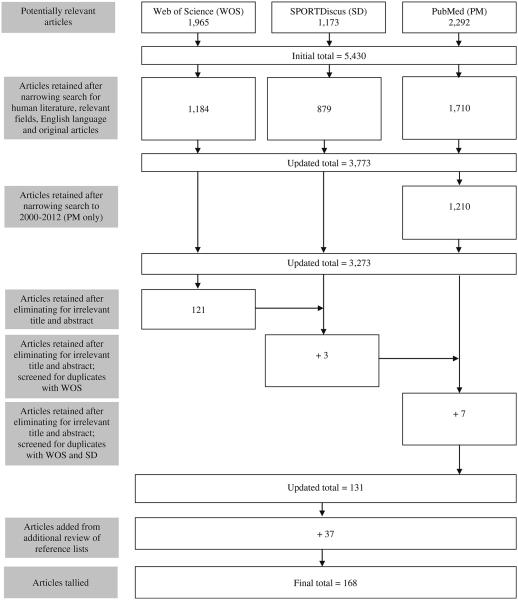
A systematic search of Web of Science, PubMed, and SPORTDiscus was employed to find all relevant studies focusing on human participants. Search terms included "stress", "exercise", and "physical activity". A rating scale (0-9) modified for this study was utilized to assess the quality of all studies with multiple time points.
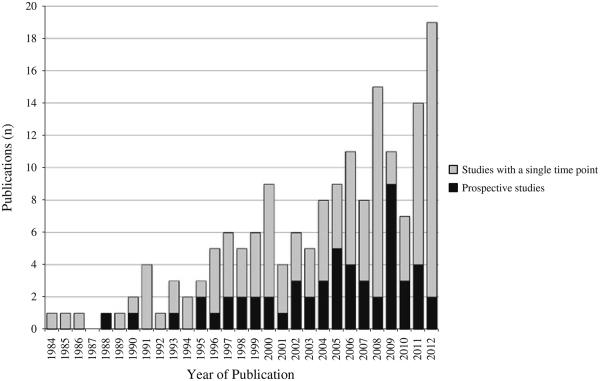
The literature search found 168 studies that examined the influence of stress on PA. Studies varied widely in their theoretical orientation and included perceived stress, distress, life events, job strain, role strain, and work-family conflict but not lifetime cumulative adversity. To more clearly address the question, prospective studies (n = 55) were considered for further review, the majority of which indicated that psychological stress predicts less PA (behavioral inhibition) and/or exercise or more sedentary behavior (76.4 %). Both objective (i.e., life events) and subjective (i.e., distress) measures of stress related to reduced PA. Prospective studies investigating the effects of objective markers of stress nearly all agreed (six of seven studies) that stress has a negative effect on PA. This was true for research examining (a) PA at periods of objectively varying levels of stress (i.e., final examinations vs. a control time point) and (b) chronically stressed populations (e.g., caregivers, parents of children with a cancer diagnosis) that were less likely to be active than controls over time. Studies examining older adults (>50 years), cohorts with both men and women, and larger sample sizes (n > 100) were more likely to show an inverse association. 85.7 % of higher-quality prospective research (≥ 7 on a 9-point scale) showed the same trend. Interestingly, some prospective studies (18.2 %) report evidence that PA was positively impacted by stress (behavioral activation). This should not be surprising as some individuals utilize exercise to cope with stress. Several other factors may moderate stress and PA relationships, such as stages of change for exercise. Habitually active individuals exercise more in the face of stress, and those in beginning stages exercise less. Consequently, stress may have a differential impact on exercise adoption, maintenance, and relapse. Preliminary evidence suggests that combining stress management programming with exercise interventions may allay stress-related reductions in PA, though rigorous testing of these techniques has yet to be produced.
Overall, the majority of the literature finds that the experience of stress impairs efforts to be physically active. Future work should center on the development of a theory explaining the mechanisms underlying the multifarious influences of stress on PA behaviors.
心理压力和身体活动(PA)被认为是相互关联的;然而,大多数研究这些结构之间的关系致力于研究运动和/或 PA 作为减轻痛苦的手段。
本文的目的是综述研究压力对 PA 和运动指标影响的文献。
采用系统检索 Web of Science、PubMed 和 SPORTDiscus,以查找所有关注人类参与者的相关研究。搜索词包括“压力”、“运动”和“身体活动”。使用本研究修改的评分量表(0-9)评估具有多个时间点的所有研究的质量。
文献检索发现了 168 项研究,这些研究考察了压力对 PA 的影响。研究在理论取向和研究方法上存在很大差异,包括感知压力、压力、生活事件、工作压力、角色压力和工作-家庭冲突,但不包括终身累积逆境。为了更清楚地回答这个问题,考虑了前瞻性研究(n=55)进行进一步综述,其中大多数研究表明,心理压力预示着较少的 PA(行为抑制)和/或运动或更多的久坐行为(76.4%)。客观(即生活事件)和主观(即压力)压力测量都与 PA 减少有关。前瞻性研究调查了客观压力标志物的影响,几乎所有研究(七项研究中的六项)都认为压力对 PA 有负面影响。这适用于研究(a)在客观压力水平变化期间的 PA(即期末考试与对照时间点)和(b)长期处于压力下的人群(例如,照顾者、患有癌症诊断的儿童的父母)的情况,这些人群随着时间的推移比对照组不太可能活跃。研究老年人(>50 岁)、男女混合的队列以及更大的样本量(n>100)更有可能显示出相反的趋势。85.7%的高质量前瞻性研究(≥9 分制的 7 分)显示出相同的趋势。有趣的是,一些前瞻性研究(18.2%)报告了 PA 受到压力(行为激活)积极影响的证据。这并不奇怪,因为有些人利用运动来应对压力。其他一些因素可能会调节压力和 PA 的关系,例如运动的改变阶段。习惯性活跃的人在面对压力时会更多地运动,而处于开始阶段的人则会运动较少。因此,压力可能对运动的采用、维持和复发产生不同的影响。初步证据表明,将压力管理计划与运动干预相结合可能会减轻与压力相关的 PA 减少,但尚未对这些技术进行严格测试。
总的来说,大多数文献发现压力体验会损害人们积极参与体育活动的努力。未来的工作应该集中在发展一种解释压力对 PA 行为多方面影响的机制的理论上。