Shoulder, Knee, and Sports Medicine , Orthopaedic Clinic of Hanover Medical School at the Annastift Hospital, Hanover , Germany .
Acta Orthop. 2013 Oct;84(5):468-72. doi: 10.3109/17453674.2013.838658. Epub 2013 Sep 16.
Humeral resurfacing has shown promising results for osteoarthritis, but revisions for glenoid erosion have been reported frequently. We investigated the hypothesis that preoperative glenoid wear and postoperative progress of glenoid erosion would influence the clinical outcome.
We reviewed 61 resurfacing hemiarthroplasties (55 patients) for primary osteoarthritis. 6 patients were lost to follow-up and 5 had undergone revision arthroplasty. This left 50 shoulders in 44 patients (mean age 66 years) that were followed for mean 30 (12-44) months. Complications, revisions, and the age- and sex-related Constant score were assessed. Radiographs were evaluated for loosening and glenoid erosion according to Walch.
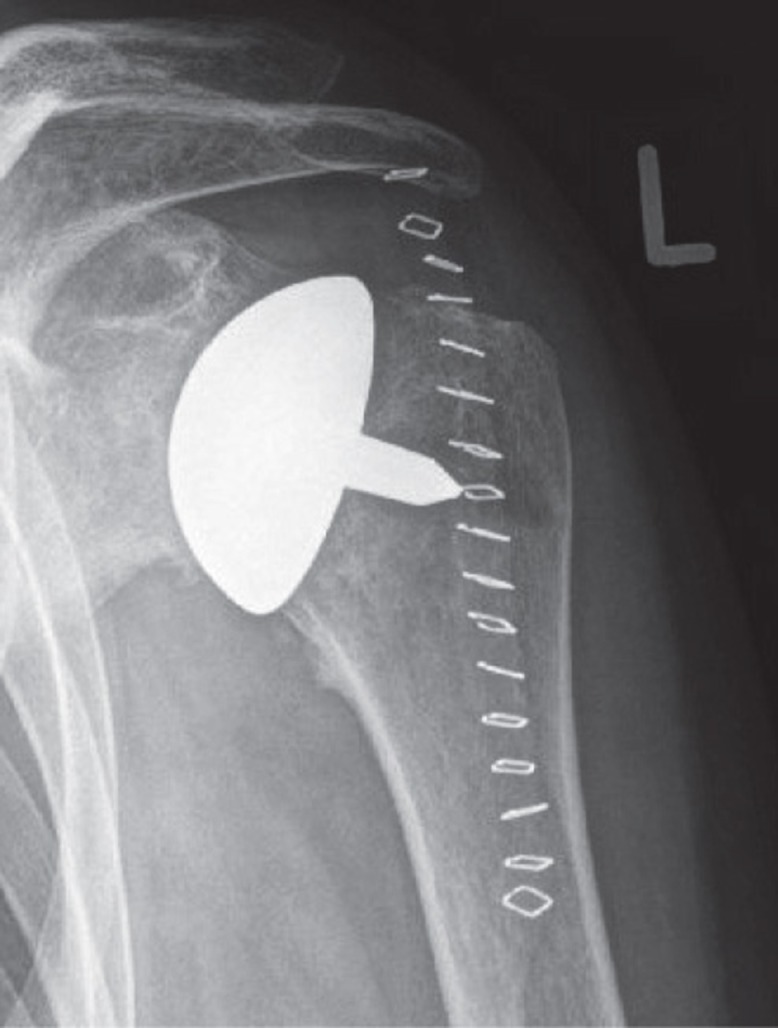
Of the 50 shoulders that were functionally assessed, the average age- and sex-related Constant score was 73%. In patients with preoperative type-B2 glenoids, at 49% it was lower than in type-A1 glenoids (81%, p = 0.03) and in type-B1 glenoids (84%, p = 0.02). The average age- and sex-related Constant score for patients with type-A2 glenoids (60%) was lower than for type-A1 and -B1 glenoids and higher than for type-B2 glenoids, but the differences were not statistically significant. In the total population of 61 shoulders, the radiographs showed postoperative glenoid erosion in 38 cases and no humeral prosthetic loosening. Revision arthroplasty was performed in 11 cases after 28 (7-69) months. The implant size had no statistically significant influence on the functional outcome. The size was considered to be adequate in 28 of the 50 functionally assessed shoulders. In 21 cases, the implant size was too large and in 1 case it was too small.
We found frequent postoperative glenoid erosion and a high rate of revision arthroplasty after humeral resurfacing for primary osteoarthritis. Oversizing of the implants was common, but it had no statistically significant influence on the functional outcome. Inferior results were found in the presence of increased eccentric preoperative glenoid wear. Total shoulder arthroplasty should be considered in these patients.
肱骨表面置换术治疗骨关节炎疗效确切,但肩盂侧骨溶解的翻修率较高。我们推测术前肩盂磨损和术后肩盂骨溶解进展会影响临床疗效。
我们回顾性分析了 61 例(55 例患者)因原发性骨关节炎行肱骨表面置换术的病例资料。6 例患者失访,5 例患者行翻修手术,最终纳入 44 例(50 肩)患者,平均年龄 66 岁,平均随访时间 30(12-44)个月。评估并发症、翻修情况及年龄、性别相关的 Constant 评分。根据 Walch 标准评估假体松动和肩盂骨溶解情况。
在 50 例功能评估的患者中,平均年龄、性别相关 Constant 评分为 73%。术前肩盂为 B2 型的患者评分(49%)低于 A1 型(81%,p=0.03)和 B1 型(84%,p=0.02)。A2 型肩盂的平均评分(60%)低于 A1 型和 B1 型,高于 B2 型,但差异无统计学意义。61 例患者中,38 例术后 X 线片显示肩盂骨溶解,所有患者均未出现肱骨头假体松动。11 例患者在术后 28(7-69)个月行翻修手术。假体大小与功能评分无显著相关性。在 50 例功能评估的患者中,28 例患者认为假体大小合适,21 例患者认为假体过大,1 例患者认为假体过小。
我们发现原发性骨关节炎行肱骨表面置换术后,患者常出现术后肩盂骨溶解,翻修率较高。假体过大较为常见,但与功能评分无显著相关性。术前肩盂偏心性磨损增加的患者疗效较差,建议行全肩关节置换术。