Broad Institute of Harvard and Massachusetts Institute of Technology, , Cambridge, Massachusetts, USA.
Gut. 2013 Oct;62(10):1505-10. doi: 10.1136/gutjnl-2012-303954.
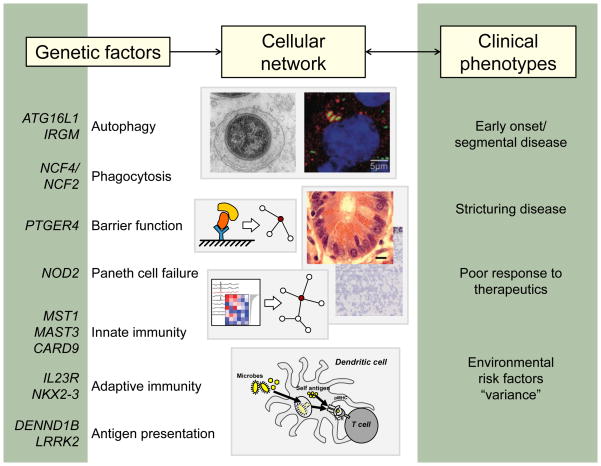
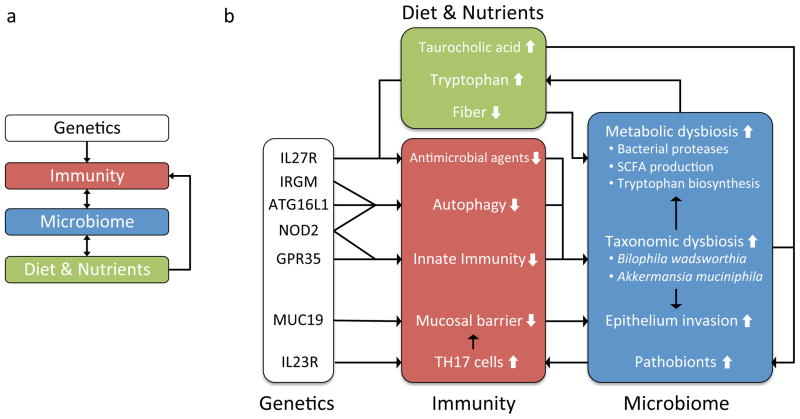
Studies of the genetics underlying inflammatory bowel diseases have increased our understanding of the pathways involved in both ulcerative colitis and Crohn's disease and focused attention on the role of the microbiome in these diseases. Full understanding of pathogenesis will require a comprehensive grasp of the delicate homeostasis between gut bacteria and the human host. In this review, we present current evidence of microbiome-gene interactions in the context of other known risk factors and mechanisms, and describe the next steps necessary to pair genetic variant and microbiome sequencing data from patient cohorts. We discuss the concept of dysbiosis, proposing that the functional composition of the gut microbiome may provide a more consistent definition of dysbiosis and may more readily provide evidence of genome-microbiome interactions in future exploratory studies.
对炎症性肠病相关遗传因素的研究增进了我们对溃疡性结肠炎和克罗恩病相关通路的了解,并促使人们关注微生物组在这些疾病中的作用。要全面了解发病机制,就需要综合掌握肠道细菌和人体宿主之间微妙的平衡状态。在这篇综述中,我们结合其他已知风险因素和机制,介绍了微生物组与基因相互作用的现有证据,并描述了将患者队列的遗传变异和微生物组测序数据进行配对所需的下一步措施。我们讨论了菌群失调的概念,提出肠道微生物组的功能组成可能为菌群失调提供更一致的定义,并可能在未来的探索性研究中更直接地提供基因组-微生物组相互作用的证据。