Department of Biological Sciences, Chungnam National University, Daejeon, Korea.
PLoS One. 2013 Sep 11;8(9):e72178. doi: 10.1371/journal.pone.0072178. eCollection 2013.
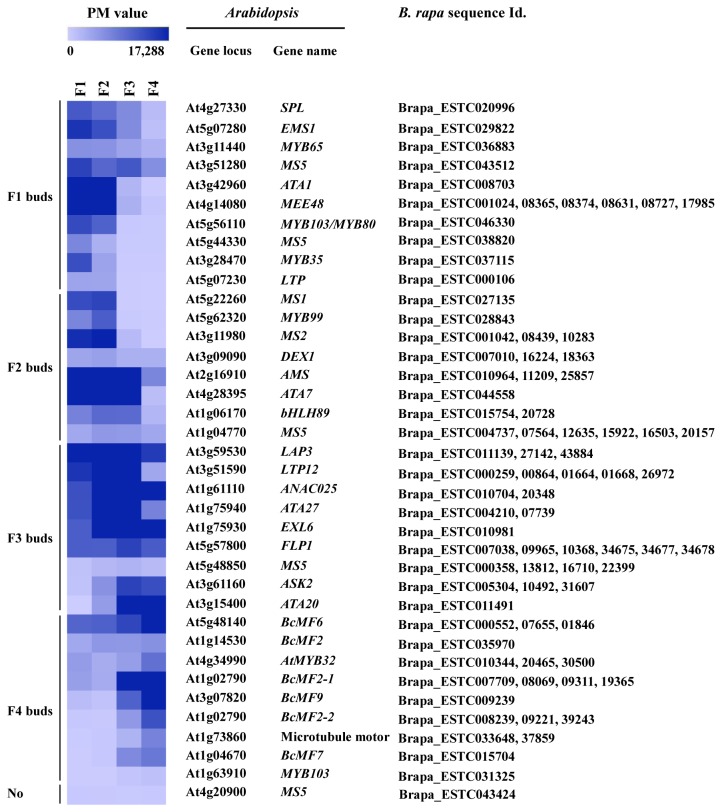
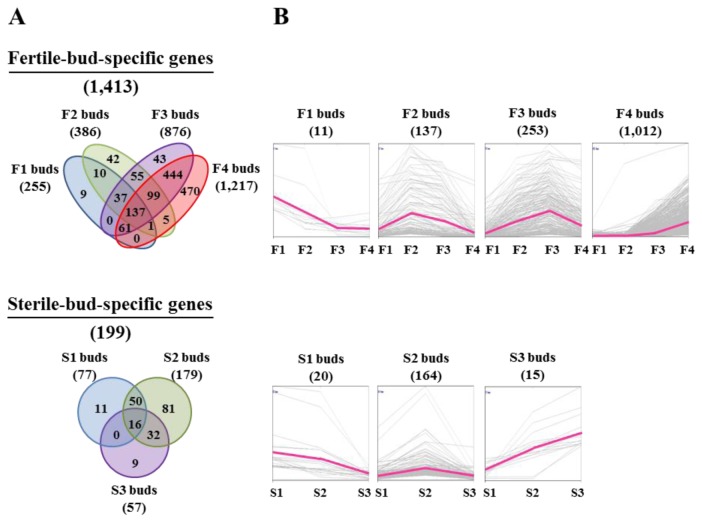
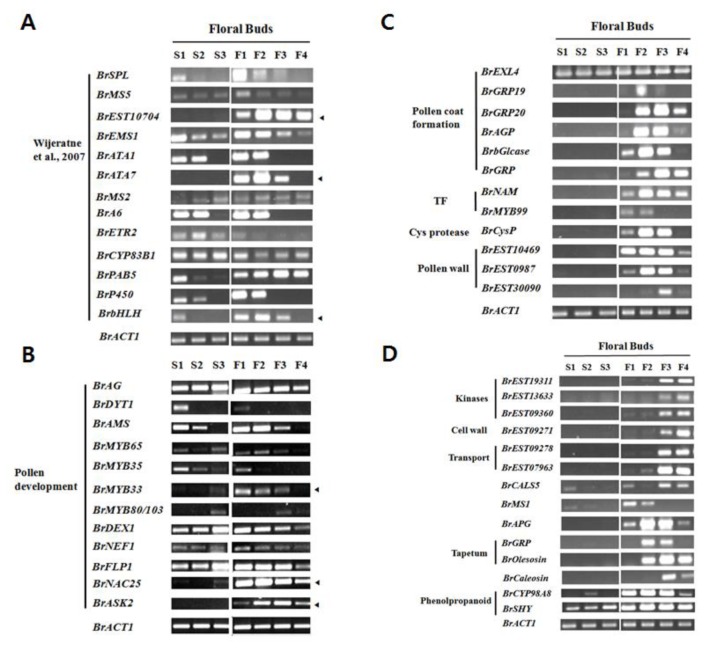
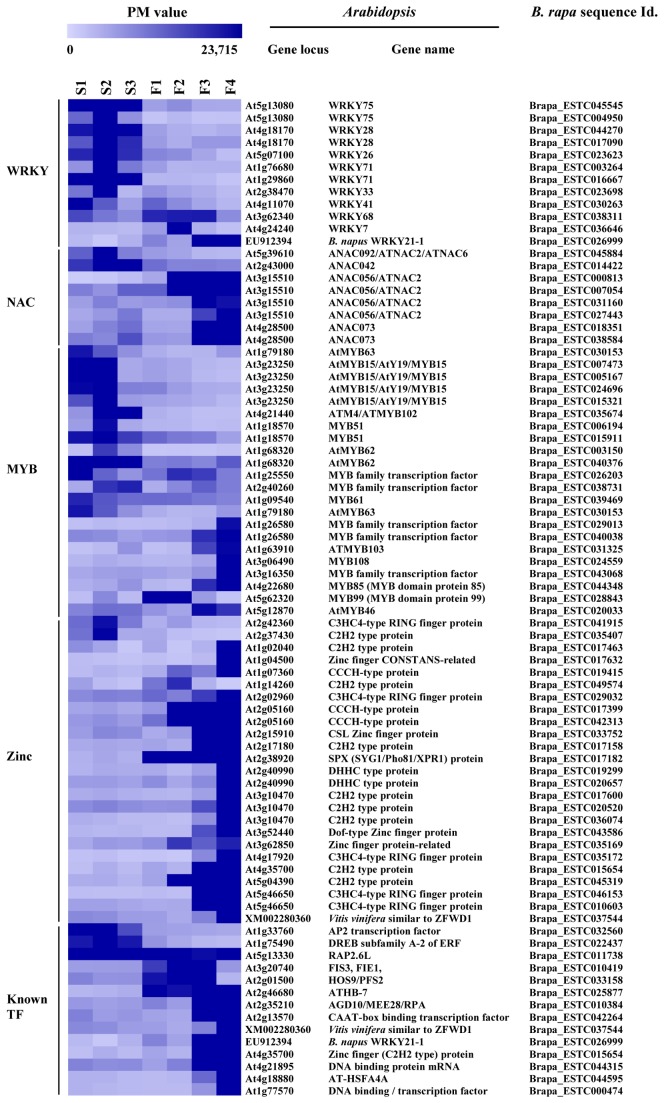
To identify genes associated with genic male sterility (GMS) that could be useful for hybrid breeding in Chinese cabbage (Brassicarapa ssp. pekinensis), floral bud transcriptome analysis was carried out using a B. rapa microarray with 300,000 probes (Br300K). Among 47,548 clones deposited on a Br300K microarray with seven probes of 60 nt length within the 3' 150 bp region, a total of 10,622 genes were differentially expressed between fertile and sterile floral buds; 4,774 and 5,848 genes were up-regulated over 2-fold in fertile and sterile buds, respectively. However, the expression of 1,413 and 199 genes showed fertile and sterile bud-specific features, respectively. Genes expressed specifically in fertile buds, possibly GMS-related genes, included homologs of several Arabidopsis male sterility-related genes, genes associated with the cell wall and synthesis of its surface proteins, pollen wall and coat components, signaling components, and nutrient supplies. However, most early genes for pollen development, genes for primexine and callose formation, and genes for pollen maturation and anther dehiscence showed no difference in expression between fertile and sterile buds. Some of the known genes associated with Arabidopsis pollen development showed similar expression patterns to those seen in this study, while others did not. BrbHLH89 and BrMYP99 are putative GMS genes. Additionally, 17 novel genes identified only in B. rapa were specifically and highly expressed only in fertile buds, implying the possible involvement in male fertility. All data suggest that Chinese cabbage GMS might be controlled by genes acting in post-meiotic tapetal development that are different from those known to be associated with Arabidopsis male sterility.
为了鉴定与甘蓝型油菜基因雄性不育(GMS)相关的基因,这些基因可能对白菜杂种优势育种有用,我们进行了花芽转录组分析,使用带有 30 万个探针(Br300K)的油菜微阵列。在 Br300K 微阵列上,有 7 个 60nt 长的探针位于 3'端的 150bp 区域内,共有 47548 个克隆被沉积,共鉴定出 10622 个在可育和不育花芽之间差异表达的基因;在可育和不育芽中,分别有 4774 和 5848 个基因的表达上调了 2 倍以上。然而,有 1413 和 199 个基因的表达具有可育和不育芽的特异性特征。在可育芽中特异性表达的基因,可能是与 GMS 相关的基因,包括几个拟南芥雄性不育相关基因的同源物、与细胞壁及其表面蛋白合成、花粉壁和外套成分、信号成分和养分供应相关的基因。然而,大多数花粉发育的早期基因、原壳和胼胝质形成基因以及花粉成熟和花药开裂基因的表达在可育和不育芽之间没有差异。一些与拟南芥花粉发育相关的已知基因的表达模式与本研究中观察到的相似,而另一些则没有。BrbHLH89 和 BrMYP99 是假定的 GMS 基因。此外,仅在油菜中鉴定到的 17 个新基因仅在可育芽中特异性且高度表达,暗示其可能参与雄性育性。所有数据表明,白菜型油菜 GMS 可能受与拟南芥雄性不育相关的基因不同的、在后减数分裂绒毡层发育中起作用的基因控制。