Department of Physiology and Experimental Medicine, The Hospital for Sick Children, Toronto, Ontario, Canada.
PLoS One. 2013 Sep 9;8(9):e72668. doi: 10.1371/journal.pone.0072668. eCollection 2013.
Congenital heart block (CHB) is a transplacentally acquired autoimmune disease associated with anti-Ro/SSA and anti-La/SSB maternal autoantibodies and is characterized primarily by atrioventricular (AV) block of the fetal heart. This study aims to investigate whether the T-type calcium channel subunit α1G may be a fetal target of maternal sera autoantibodies in CHB.
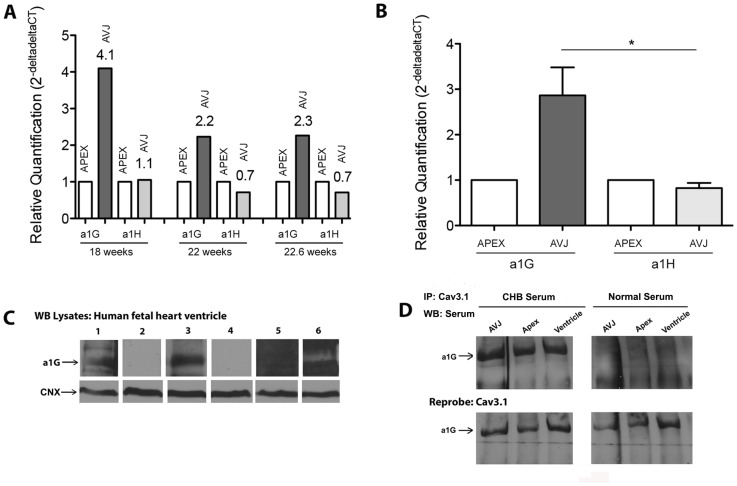
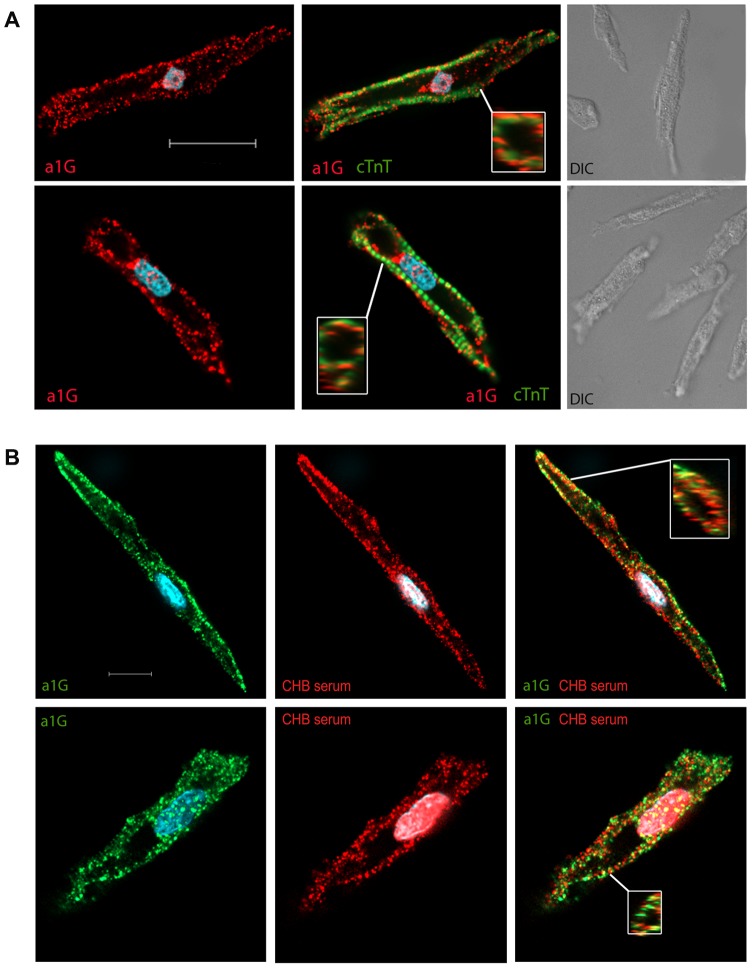
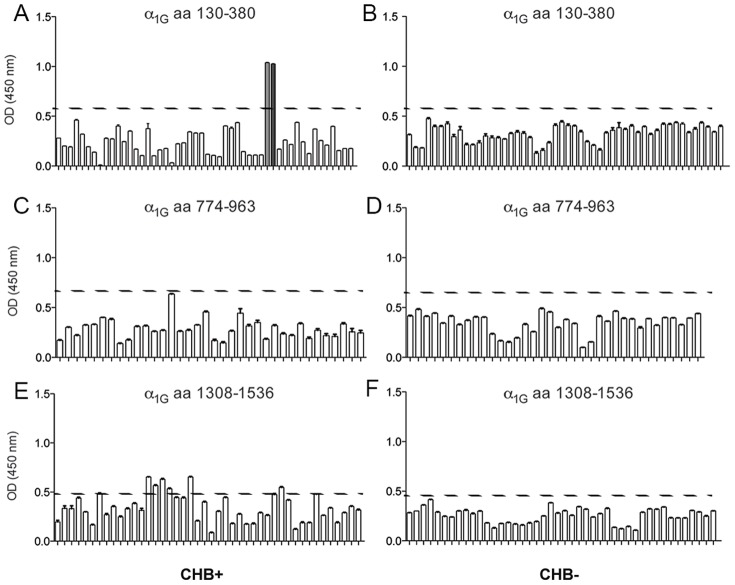
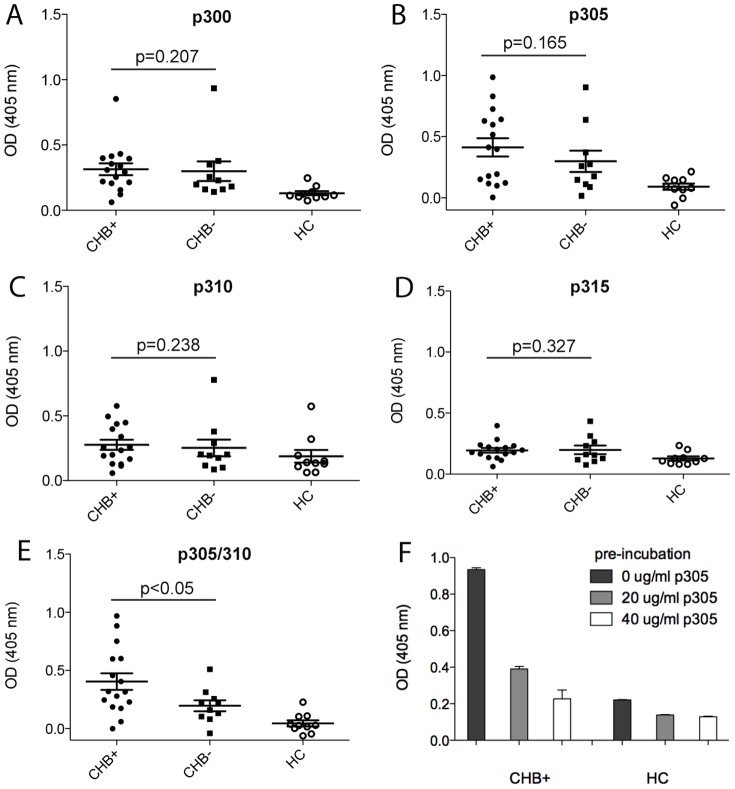
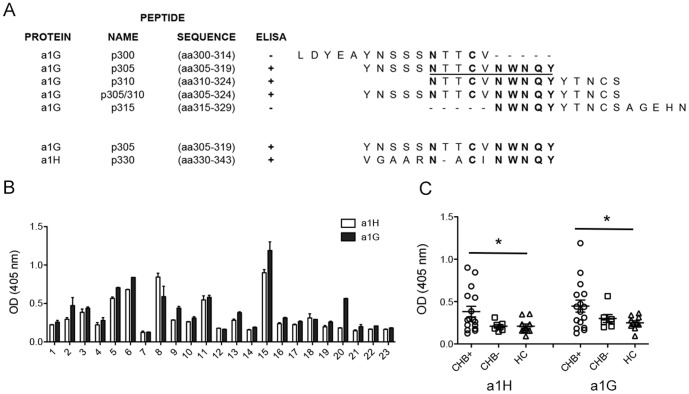
METHODOLOGY/PRINCIPAL FINDINGS: We demonstrate differential mRNA expression of the T-type calcium channel CACNA1G (α1G gene) in the AV junction of human fetal hearts compared to the apex (18-22.6 weeks gestation). Using human fetal hearts (20-22 wks gestation), our immunoprecipitation (IP), Western blot analysis and immunofluorescence (IF) staining results, taken together, demonstrate accessibility of the α1G epitope on the surfaces of cardiomyocytes as well as reactivity of maternal serum from CHB affected pregnancies to the α1G protein. By ELISA we demonstrated maternal sera reactivity to α1G was significantly higher in CHB maternal sera compared to controls, and reactivity was epitope mapped to a peptide designated as p305 (corresponding to aa305-319 of the extracellular loop linking transmembrane segments S5-S6 in α1G repeat I). Maternal sera from CHB affected pregnancies also reacted more weakly to the homologous region (7/15 amino acids conserved) of the α1H channel. Electrophysiology experiments with single-cell patch-clamp also demonstrated effects of CHB maternal sera on T-type current in mouse sinoatrial node (SAN) cells.
CONCLUSIONS/SIGNIFICANCE: Taken together, these results indicate that CHB maternal sera antibodies readily target an extracellular epitope of α1G T-type calcium channels in human fetal cardiomyocytes. CHB maternal sera also show reactivity for α1H suggesting that autoantibodies can target multiple fetal targets.
先天性心脏传导阻滞(CHB)是一种通过胎盘获得的自身免疫性疾病,与抗 Ro/SSA 和抗 La/SSB 自身抗体有关,其特征主要为胎儿心脏房室(AV)传导阻滞。本研究旨在探讨 T 型钙通道亚基α1G 是否可能是 CHB 母血清自身抗体的胎儿靶标。
方法/主要发现:我们证明了 T 型钙通道 CACNA1G(α1G 基因)在人类胎儿心脏房室结中的差异 mRNA 表达与心尖(18-22.6 周妊娠)相比。使用人类胎儿心脏(20-22 周妊娠),我们的免疫沉淀(IP)、Western blot 分析和免疫荧光(IF)染色结果表明,母血清自身抗体可与心肌细胞表面的α1G 表位结合,同时,CHB 受影响妊娠的母血清可与α1G 蛋白发生反应。通过 ELISA,我们证明了 CHB 母血清中对α1G 的反应性明显高于对照组,并且反应性被映射到一个称为 p305 的肽上(对应于α1G 重复 I 中连接跨膜片段 S5-S6 的细胞外环中的 aa305-319)。CHB 受影响妊娠的母血清也对α1H 通道的同源区域(7/15 个氨基酸保守)反应较弱。用单细胞膜片钳进行的电生理学实验也证明了 CHB 母血清对小鼠窦房结(SAN)细胞 T 型电流的影响。
结论/意义:综上所述,这些结果表明,CHB 母血清自身抗体容易靶向人类胎儿心肌细胞α1G T 型钙通道的细胞外表位。CHB 母血清也对α1H 有反应性,表明自身抗体可以靶向多个胎儿靶标。