Wang Tianyu, Peng Zheng, Wang Yuhang, Tang Jing, Zheng Gengfeng
Laboratory of Advanced Materials, Department of Chemistry, Fudan University, Shanghai, China.
Sci Rep. 2013;3:2693. doi: 10.1038/srep02693.
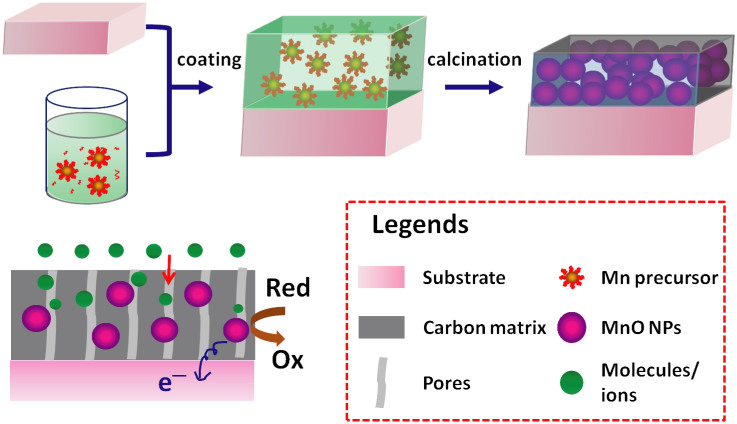
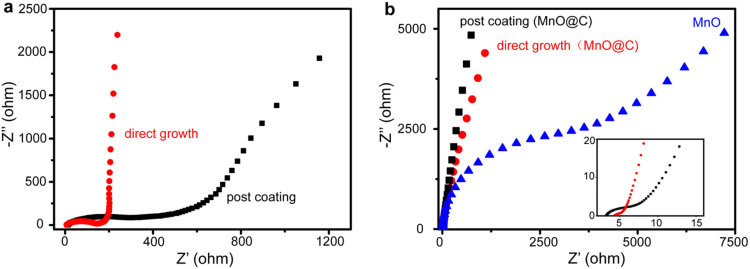
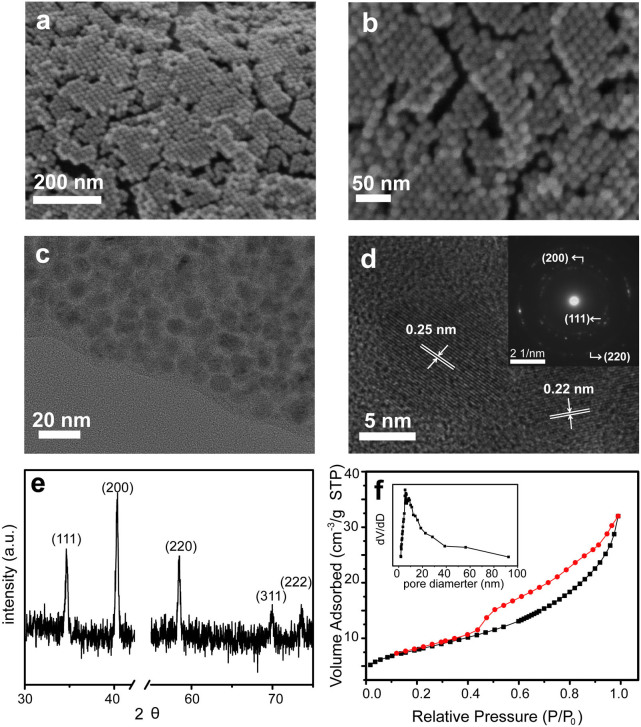
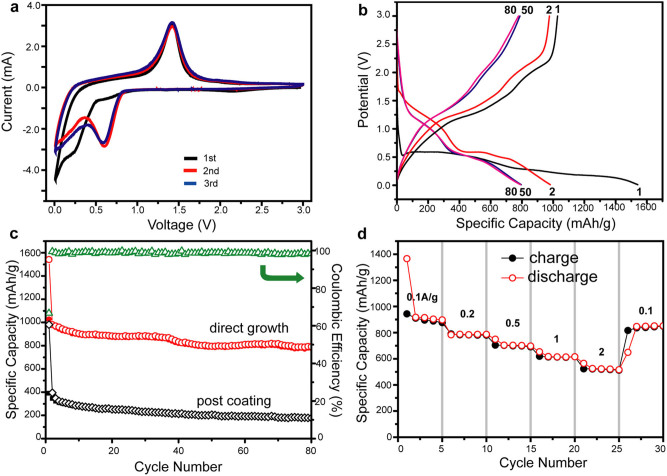
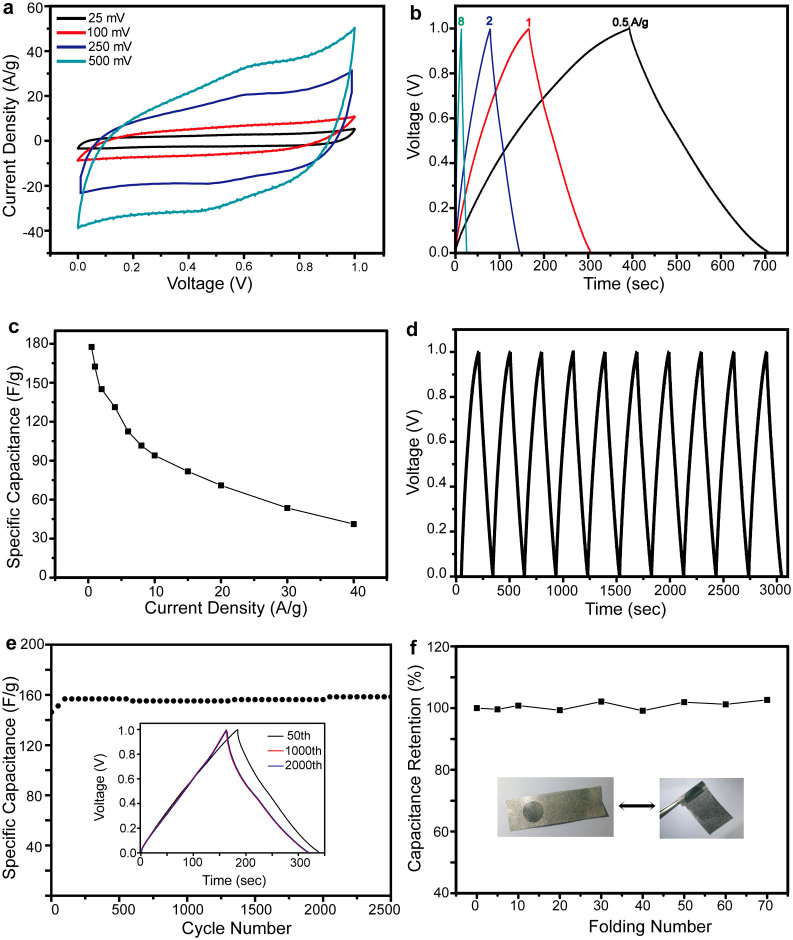
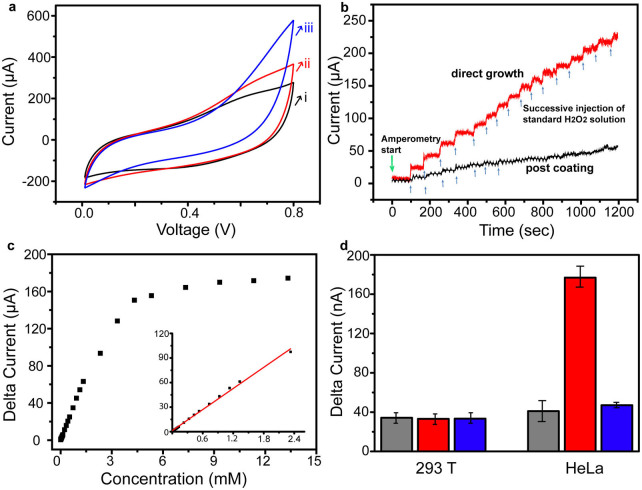
We demonstrate a facile, two-step coating/calcination approach to grow a uniform MnO nanoparticle@mesoporous carbon (MnO@C) composite on conducting substrates, by direct coating of the Mn-oleate precursor solution without any conducting/binding reagents, and subsequent thermal calcination. The monodispersed, sub-10 nm MnO nanoparticles offer high theoretical energy storage capacities and catalytic properties, and the mesoporous carbon coating allows for enhanced electrolyte transport and charge transfer towards/from MnO surface. In addition, the direct growth and attachment of the MnO@C nanocomposite in the supporting conductive substrates provide much reduced contact resistances and efficient charge transfer. These excellent features allow the use of MnO@C nanocomposites as lithium-ion battery and supercapacitor electrodes for energy storage, with high reversible capacity at large current densities, as well as excellent cycling and mechanical stabilities. Moreover, this MnO@C nanocomposite has also demonstrated a high sensitivity for H2O2 detection, and also exhibited attractive potential for the tumor cell analysis.
我们展示了一种简便的两步涂覆/煅烧方法,通过直接涂覆油酸锰前驱体溶液(无需任何导电/粘结试剂)并随后进行热煅烧,在导电基底上生长出均匀的MnO纳米颗粒@介孔碳(MnO@C)复合材料。单分散的、尺寸小于10 nm的MnO纳米颗粒具有高理论能量存储容量和催化性能,介孔碳涂层可增强电解质向MnO表面的传输以及电荷在MnO表面的转移。此外,MnO@C纳米复合材料在支撑导电基底上的直接生长和附着大大降低了接触电阻并实现了高效电荷转移。这些优异特性使得MnO@C纳米复合材料可作为锂离子电池和超级电容器电极用于能量存储,在大电流密度下具有高可逆容量,以及出色的循环稳定性和机械稳定性。此外,这种MnO@C纳米复合材料对H₂O₂检测也表现出高灵敏度,并且在肿瘤细胞分析方面也展现出诱人的潜力。