Schandl Anna, Bottai Matteo, Hellgren Elisabeth, Sundin Orjan, Sackey Peter V
Crit Care. 2013 Sep 24;17(5):R210. doi: 10.1186/cc13018.
Guidelines recommend follow-up for patients after an intensive care unit (ICU) stay. Methods for identifying patients with psychological problems after intensive care would be of value, to optimize treatment and to improve adequate resource allocation in ICU follow-up of ICU survivors. The aim of the study was to develop a predictive screening instrument, for use at ICU discharge, to identify patients at risk for post-traumatic stress, anxiety or depression.
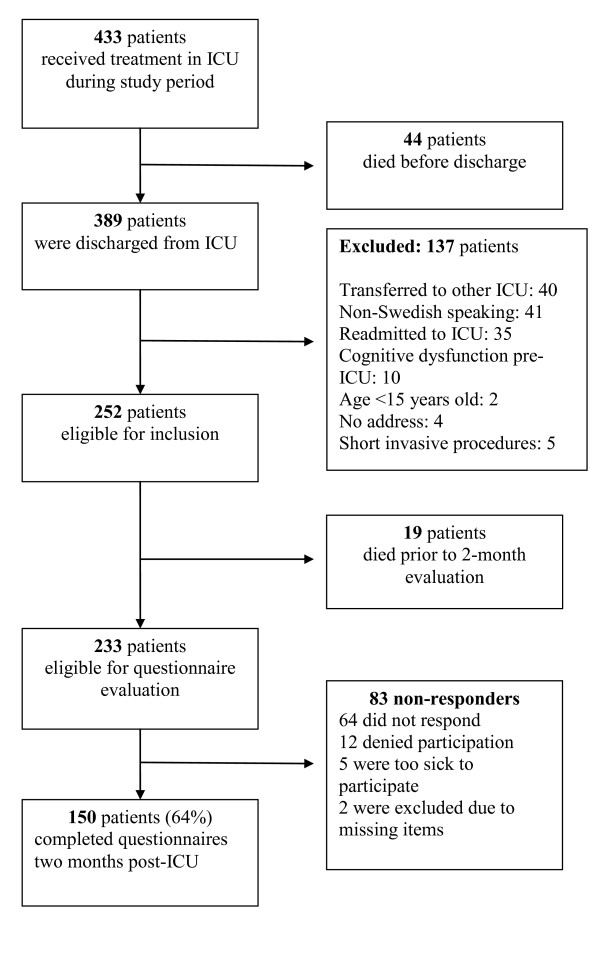
Twenty-one potential risk factors for psychological problems - patient characteristics and ICU-related variables - were prospectively collected at ICU discharge. Two months after ICU discharge 252 ICU survivors received the questionnaires Post-Traumatic Stress Symptom scale -10 (PTSS-10) and Hospital Anxiety and Depression Scale (HADS) to estimate the degree of post-traumatic stress, anxiety and depression.
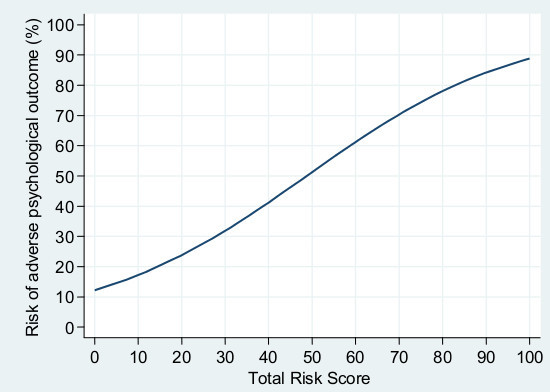
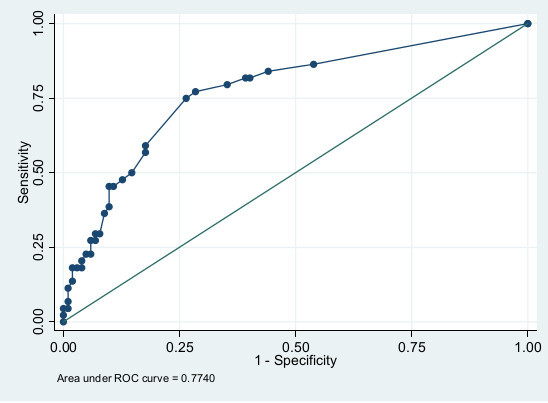
Of the 150 responders, 46 patients (31%) had adverse psychological outcome, defined as PTSS-10 >35 and/or HADS subscales ≥8. After analysis, six predictors were included in the screening instrument: major pre-existing disease, being a parent to children younger than 18 years of age, previous psychological problems, in-ICU agitation, being unemployed or on sick-leave at ICU admission and appearing depressed in the ICU. The total risk score was related to the probability for adverse psychological outcome in the individual patient. The predictive accuracy of the screening instrument, as assessed with area under the receiver operating characteristic curve, was 0.77. When categorizing patients in three risk probability groups - low (0 to 29%), moderate (30 to 59%) high risk (60 to 100%), the actual prevalence of adverse psychological outcome in respective groups was 12%, 50% and 63%.
The screening instrument developed in this study may aid ICU clinicians in identifying patients at risk for adverse psychological outcome two months after critical illness. Prior to wider clinical use, external validation is needed.
指南建议对重症监护病房(ICU)住院后的患者进行随访。识别重症监护后有心理问题的患者的方法将很有价值,有助于优化治疗并改善ICU幸存者随访中的资源合理分配。本研究的目的是开发一种预测性筛查工具,用于在ICU出院时识别有创伤后应激障碍、焦虑或抑郁风险的患者。
前瞻性收集了21个心理问题的潜在风险因素——患者特征和与ICU相关的变量——在ICU出院时。ICU出院两个月后,252名ICU幸存者接受了创伤后应激症状量表-10(PTSS-10)和医院焦虑抑郁量表(HADS)问卷,以评估创伤后应激、焦虑和抑郁的程度。
在150名应答者中,46名患者(31%)有不良心理结局,定义为PTSS-10>35和/或HADS子量表≥8。经过分析,筛查工具纳入了六个预测因素:主要既往疾病、是18岁以下儿童的父母、既往心理问题、ICU内躁动、ICU入院时失业或病假以及在ICU时表现出抑郁。总风险评分与个体患者不良心理结局的概率相关。筛查工具的预测准确性,通过受试者操作特征曲线下面积评估,为0.77。当将患者分为三个风险概率组——低(0至29%)、中(30至59%)、高风险(60至100%)时,各组不良心理结局的实际患病率分别为12%、50%和63%。
本研究开发的筛查工具可能有助于ICU临床医生识别危重症后两个月有不良心理结局风险的患者。在更广泛临床应用之前,需要进行外部验证。