University of California-San Francisco.
J Am Acad Child Adolesc Psychiatry. 2013 Oct;52(10):1076-1091.e2. doi: 10.1016/j.jaac.2013.07.008. Epub 2013 Jul 25.
Although substantial literature has reported regional cerebral blood flow (rCBF) abnormalities in adults with depression, these studies commonly necessitated the injection of radioisotopes into subjects. The recent development of arterial spin labeling (ASL), however, allows noninvasive measurements of rCBF. Currently, no published ASL studies have examined cerebral perfusion in adolescents with depression. Thus, the aim of the present study was to examine baseline cerebral perfusion in adolescent depression using a newly developed ASL technique: pseudocontinuous arterial spin labeling (PCASL).
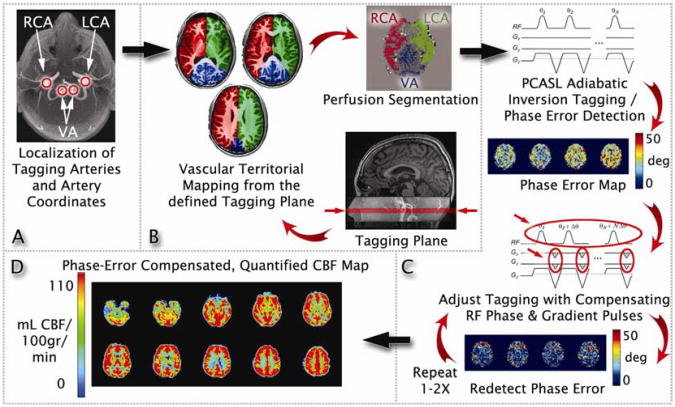
A total of 25 medication-naive adolescents (13-17 years of age) diagnosed with major depressive disorder (MDD) and 26 well-matched control subjects underwent functional magnetic resonance imaging. Baseline rCBF was measured via a novel PCASL method that optimizes tagging efficiency.
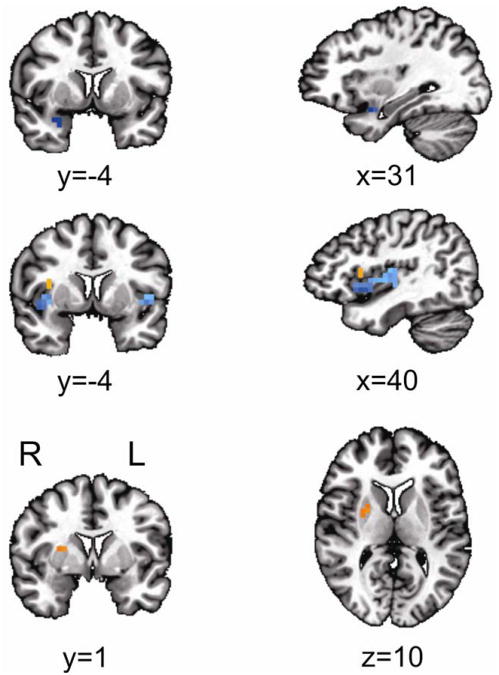
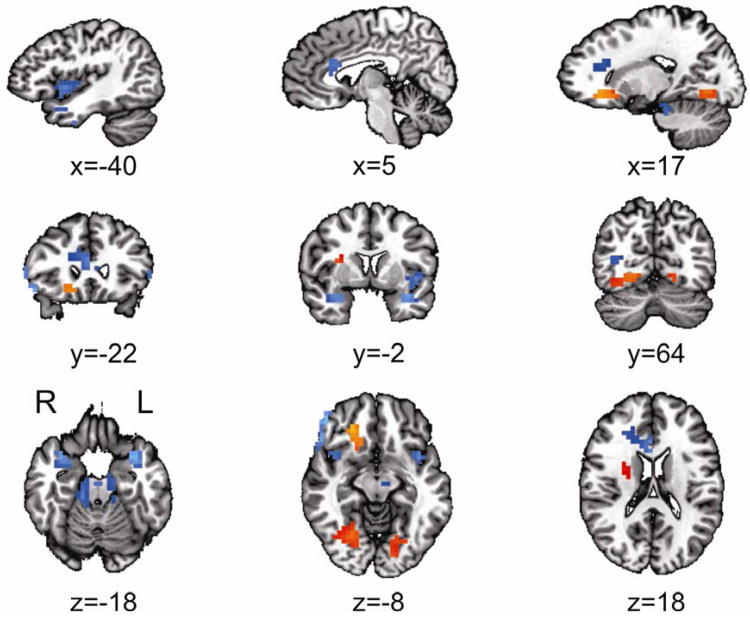
Voxel-based whole brain analyses revealed significant frontal, limbic, paralimbic, and cingulate hypoperfusion in the group with depression (p < .05, corrected). Hyperperfusion was also observed within the subcallosal cingulate, putamen, and fusiform gyrus (p < .05, corrected). Similarly, region-of-interest analyses revealed amygdalar and insular hypoperfusion in the group with depression, as well as hyperperfusion in the putamen and superior insula (p < .05, corrected).
Adolescents with depression and healthy adolescents appear to differ on rCBF in executive, affective, and motor networks. Dysfunction in these regions may contribute to the cognitive, emotional, and psychomotor symptoms commonly present in adolescent depression. These findings point to possible biomarkers for adolescent depression that could inform early interventions and treatments, and establishes a methodology for using PCASL to noninvasively measure rCBF in clinical and healthy adolescent populations.
尽管大量文献报道了成人抑郁症患者存在区域性脑血流(rCBF)异常,但这些研究通常需要将放射性同位素注入研究对象体内。然而,最近动脉自旋标记(ASL)的发展使得 rCBF 的非侵入性测量成为可能。目前,尚无发表的 ASL 研究检查过青少年抑郁症患者的脑灌注情况。因此,本研究旨在使用新开发的 ASL 技术:伪连续动脉自旋标记(PCASL)检查青少年抑郁症患者的基线脑灌注情况。
共 25 名未经药物治疗的青少年(13-17 岁)被诊断为重度抑郁症(MDD),26 名年龄匹配的对照组接受了功能磁共振成像检查。通过优化标记效率的新型 PCASL 方法测量基线 rCBF。
基于体素的全脑分析显示,抑郁组存在显著的额、边缘、旁边缘和扣带回灌注不足(p<0.05,校正)。扣带回下纵束、壳核和梭状回也存在灌注过度(p<0.05,校正)。同样,感兴趣区分析显示抑郁组杏仁核和岛叶灌注不足,壳核和上岛叶灌注过度(p<0.05,校正)。
青少年抑郁症患者和健康青少年在执行、情感和运动网络中的 rCBF 似乎存在差异。这些区域的功能障碍可能导致青少年抑郁症中常见的认知、情感和精神运动症状。这些发现为青少年抑郁症提供了可能的生物标志物,可以为早期干预和治疗提供信息,并建立了使用 PCASL 无创测量临床和健康青少年人群 rCBF 的方法。