Department of Neurology, Mayo Clinic, Rochester, MN.
Mayo Clin Proc. 2013 Oct;88(10):1056-65. doi: 10.1016/j.mayocp.2013.07.015.
To consolidate the evidence from randomized trials for the use of endovascular therapy (ET) in patients with acute ischemic stroke.
We searched major databases (MEDLINE, EMBASE, Cochrane Central Register of Controlled Trials, Cochrane Database of Systematic Reviews, and Scopus) from their inception to February 12, 2013, for randomized trials evaluating the efficacy of ET compared with standard of care for acute ischemic stroke. Pooled absolute and relative risk estimates were synthesized by using a random-effects model. Heterogeneity was assessed by using Q statistic and I(2) statistic. Subset analysis was performed for patients with severe stroke (National Institutes of Health Stroke Scale score ≥20). The study was conducted from January 15, 2013 to April 30, 2013.
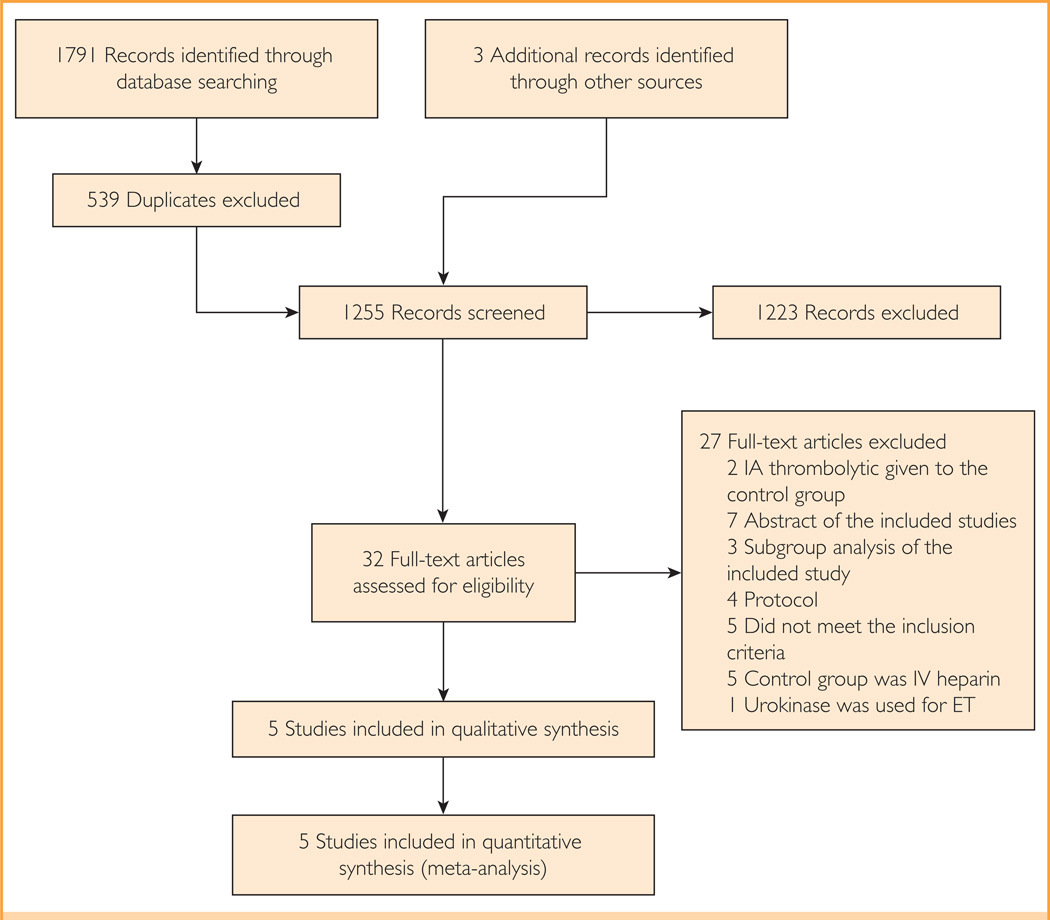
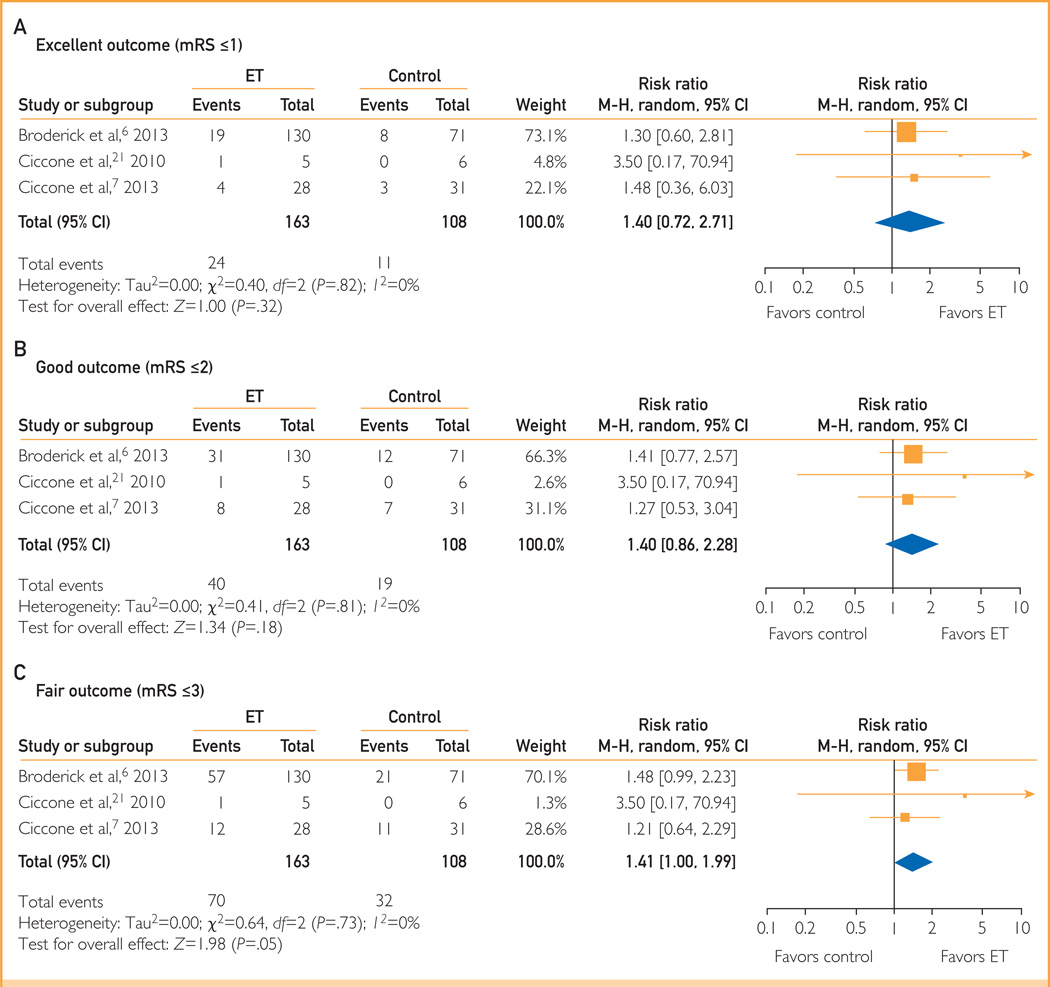
Of the 1252 retrieved articles, 5 randomized trials enrolling 1197 patients with acute ischemic stroke were included. Seven hundred eleven patients received ET, and 486 received intravenous (IV) tissue plasminogen activator. There was no significant improvement in any of the outcomes in patients receiving ET compared with those receiving IV thrombolysis. On subgroup analysis, ET was found to have better outcomes in patients with severe stroke (National Institutes of Health Stroke Scale score ≥20), showing a dose-response gradient and improving excellent, good, and fair outcomes by an additional 4%, 7%, and 13%, respectively, compared with IV thrombolysis.
Overall, ET is not superior to IV thrombolysis for acute ischemic strokes (level B recommendation). However, ET showed promise and improved outcomes in patients with severe strokes, but the evidence is limited due to sample size. There is a need for further trials evaluating the role of ET in this high-risk group.
整合随机试验的证据,评估血管内治疗(ET)在急性缺血性脑卒中患者中的应用。
我们检索了主要数据库(MEDLINE、EMBASE、Cochrane 对照试验中心注册库、Cochrane 系统评价数据库和 Scopus),检索时间截至 2013 年 2 月 12 日,以评估 ET 与急性缺血性脑卒中标准治疗相比的疗效。采用随机效应模型综合汇总了绝对和相对风险估计值。通过 Q 统计量和 I(2)统计量评估异质性。对 NIHSS 评分≥20 的重度脑卒中患者进行亚组分析。研究于 2013 年 1 月 15 日至 2013 年 4 月 30 日进行。
在检索到的 1252 篇文章中,有 5 项随机试验纳入了 1197 例急性缺血性脑卒中患者。711 例患者接受了 ET,486 例患者接受了静脉(IV)组织型纤溶酶原激活剂治疗。与 IV 溶栓治疗相比,接受 ET 治疗的患者在任何结局上均未表现出显著改善。在亚组分析中,发现 ET 在 NIHSS 评分≥20 的重度脑卒中患者中具有更好的结局,与 IV 溶栓治疗相比,ET 可分别额外提高 4%、7%和 13%的优秀、良好和中等结局。
总体而言,ET 并不优于 IV 溶栓治疗急性缺血性脑卒中(B 级推荐)。然而,ET 在重度脑卒中患者中显示出了希望,改善了结局,但由于样本量有限,证据有限。需要进一步的试验来评估 ET 在这一高危人群中的作用。