Siddappa Jagdeesh K, Singla Saurabh, Al Ameen Mohammed, Rakshith S C, Kumar Naveen
Department of Radiodiagnosis, M. S. Ramaiah Medical College, Bangalore, India.
J Clin Imaging Sci. 2013 Jun 30;3:28. doi: 10.4103/2156-7514.114809. eCollection 2013.
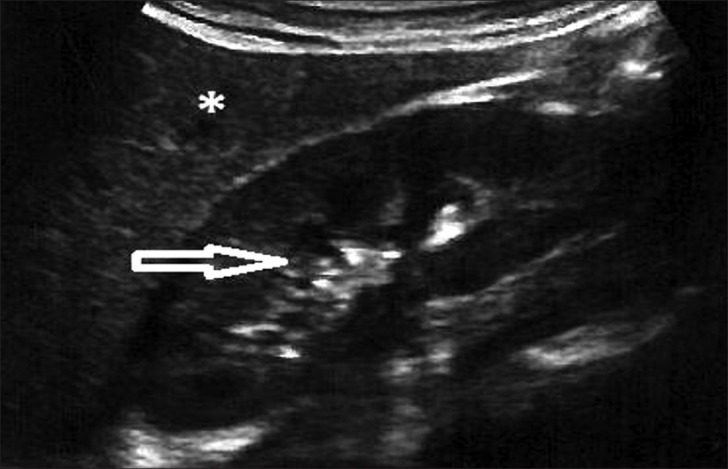
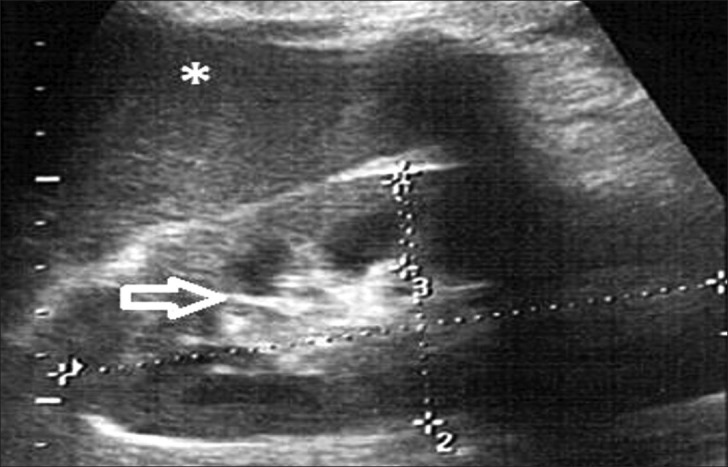
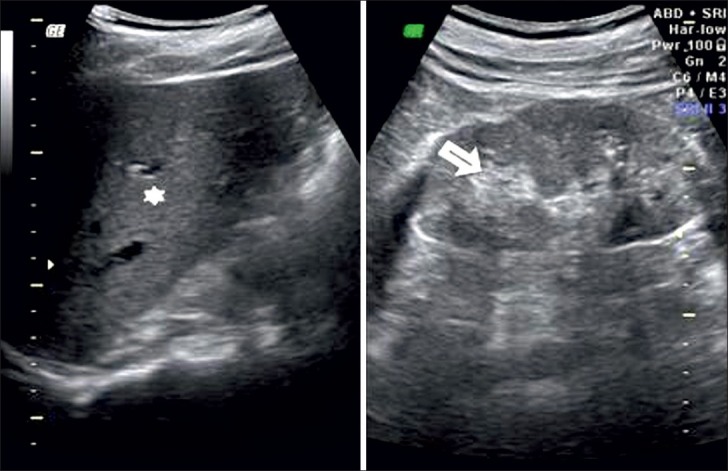
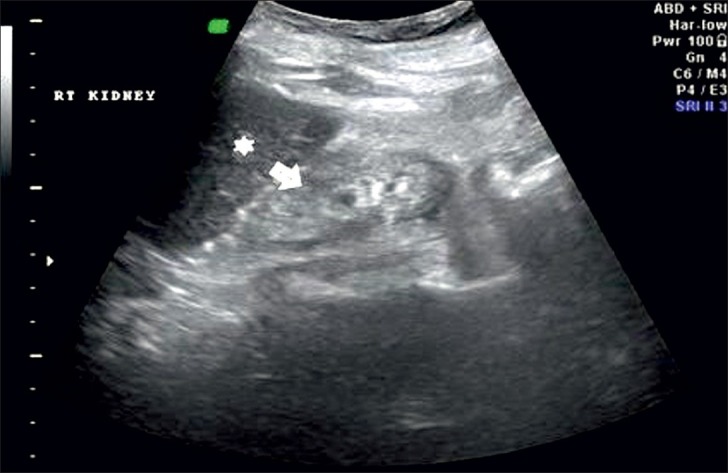
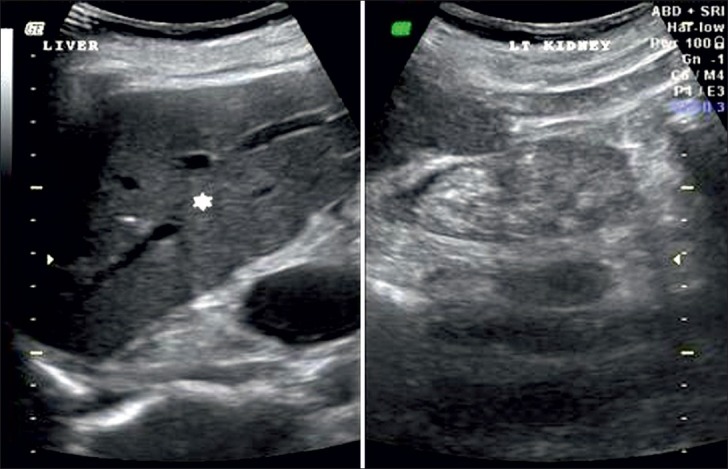
The purpose of our study is to correlate renal echogenicity with serum creatinine in order to determine the significance of renal echogenicity when it comes to identifying the progression of chronic kidney disease (CKD) and for the sonographic grading of CKD.
Sixty patients above 30 years of age who had been diagnosed with CKD according to the guidelines of the National Kidney Foundation were included in the study. Patients on kidney replacement therapy or with fatty liver findings on ultrasonography were excluded. Ultrasounds of kidneys were performed by two radiologists who were blind to the patients' serum creatinine levels. Renal cortical echogenicity was compared with serum creatinine. Statistical analysis was performed using one-way ANOVA followed by Scheffe's test. The relationship between serum creatinine and sonographic features was assessed by correlation coefficient analysis. A P value less than 0.05 was considered statistically significant.
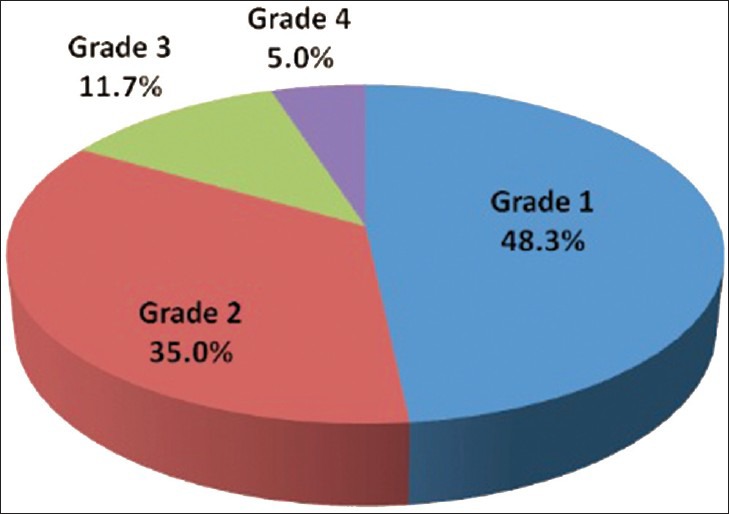
Mean serum creatinine was 2.80 mg/dl for Grade 1 (range: 0.9-9.2 mg/dl), 3.69 mg/dl for Grade 2 (range: 1.2-10.3 mg/dl), 3.86 mg/dl for Grade 3 (range: 1.1-6.5 mg/dl), and 7.90 mg/dl for Grade 4 (range: 3.1-11.4 mg/dl). The grades being determined by cortical echogenicity on imaging A statistically significant, positive correlation was observed between serum creatinine and grading based on cortical echogenicity (P = 0.004).
Renal echogenicity and its grading correlates better with serum creatinine in CKD than other sonographic parameters such as longitudinal size, parenchymal thickness, and cortical thickness. Hence, renal echogenicity is a better parameter than serum creatinine for estimating renal function in CKD, and has the added advantage of irreversibility.
我们研究的目的是将肾脏回声与血清肌酐相关联,以确定肾脏回声在识别慢性肾脏病(CKD)进展及CKD超声分级方面的意义。
根据美国国家肾脏基金会指南被诊断为CKD的60例30岁以上患者纳入本研究。排除接受肾脏替代治疗或超声检查发现有脂肪肝的患者。由两名对患者血清肌酐水平不知情的放射科医生对肾脏进行超声检查。将肾皮质回声与血清肌酐进行比较。采用单因素方差分析及谢费检验进行统计分析。通过相关系数分析评估血清肌酐与超声特征之间的关系。P值小于0.05被认为具有统计学意义。
1级患者的平均血清肌酐为2.80mg/dl(范围:0.9 - 9.2mg/dl),2级为3.69mg/dl(范围:1.2 - 10.3mg/dl),3级为3.86mg/dl(范围:1.1 - 6.5mg/dl),4级为7.90mg/dl(范围:3.1 - 11.4mg/dl)。分级通过影像学上的皮质回声来确定。血清肌酐与基于皮质回声的分级之间存在统计学上显著的正相关(P = 0.004)。
在CKD中,肾脏回声及其分级与血清肌酐的相关性优于其他超声参数,如纵向尺寸、实质厚度和皮质厚度。因此,对于评估CKD患者的肾功能,肾脏回声是比血清肌酐更好的参数,并且具有不可逆性这一额外优势。