Department of Clinical Laboratory Medicine, Shiga University of Medical Science, Otsu, Shiga, Japan ; Department of Oral and Maxillofacial Surgery, Shiga University of Medical Science, Otsu, Shiga, Japan.
PLoS One. 2013 Sep 24;8(9):e74398. doi: 10.1371/journal.pone.0074398. eCollection 2013.
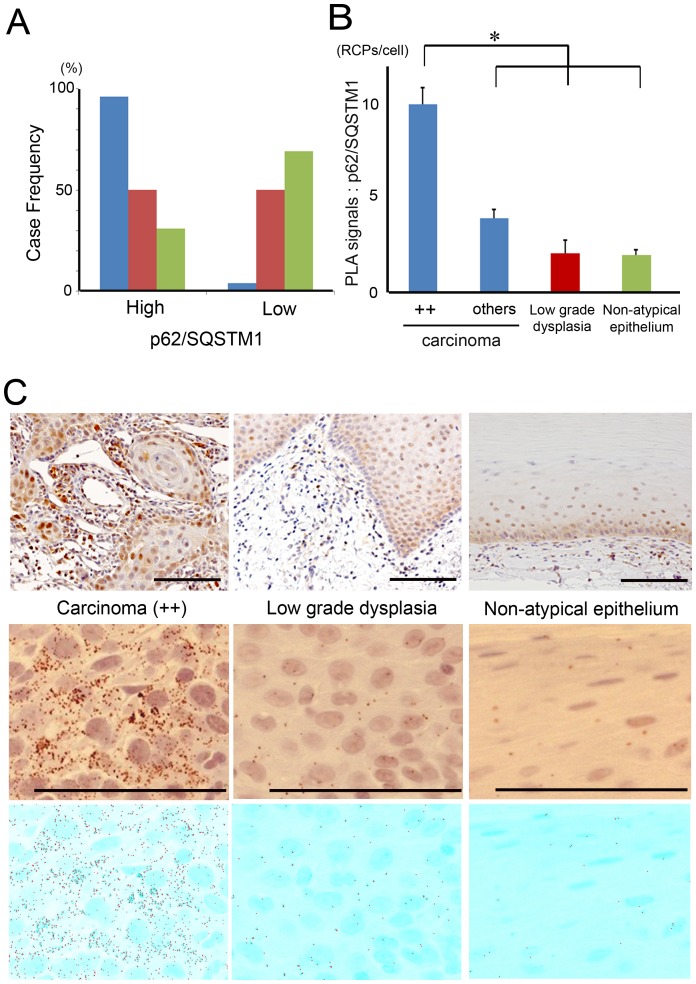
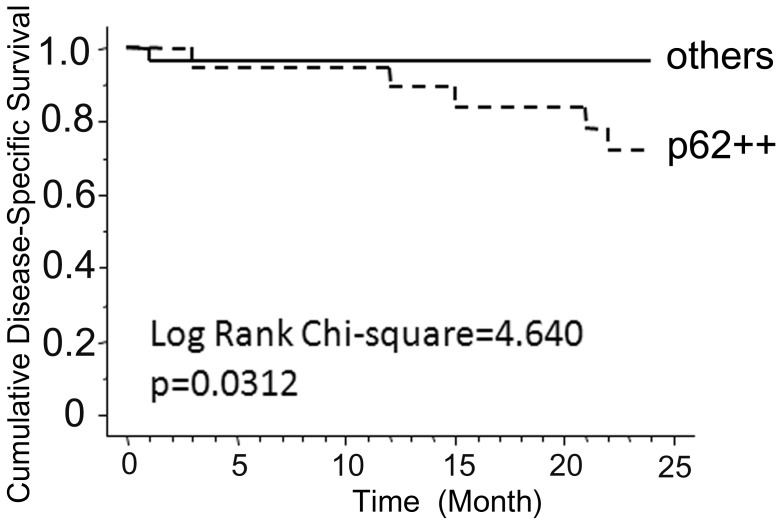
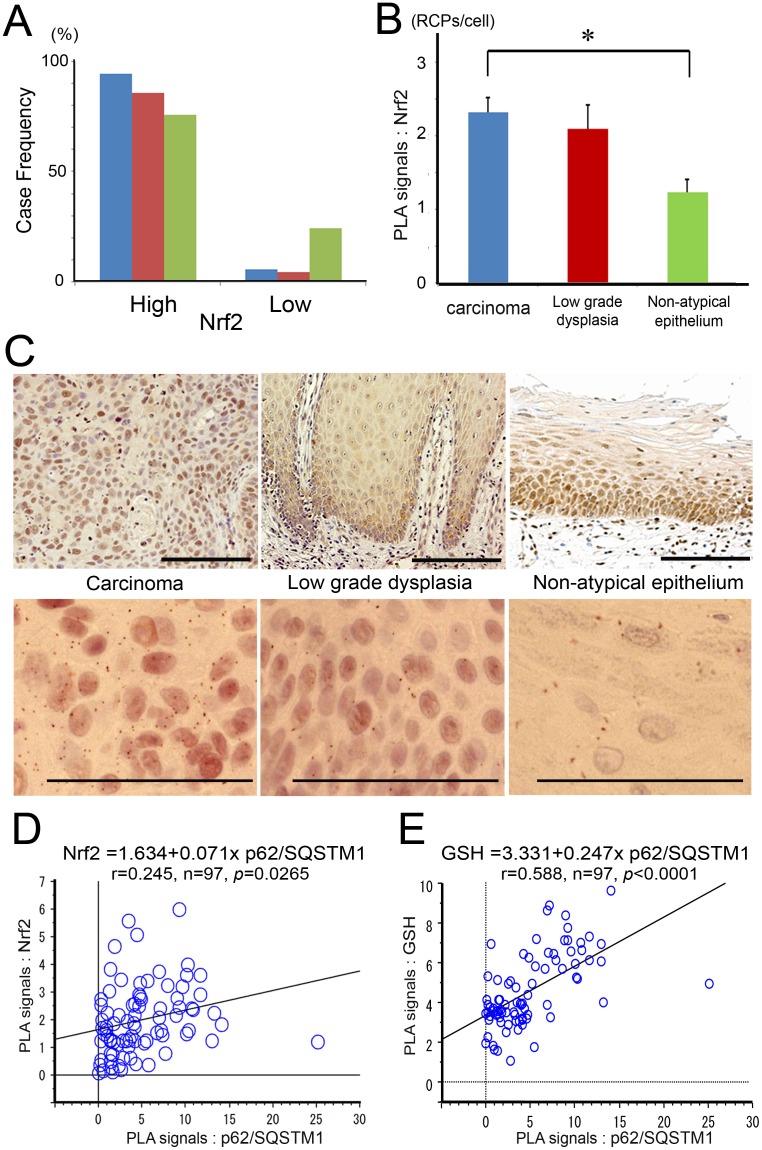
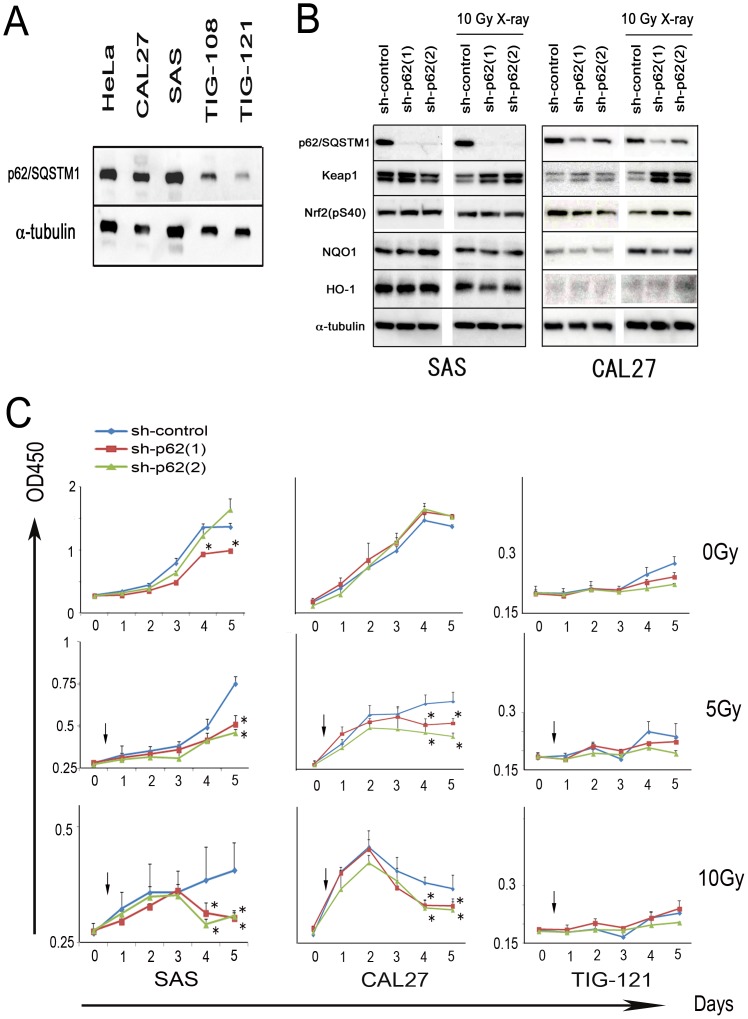
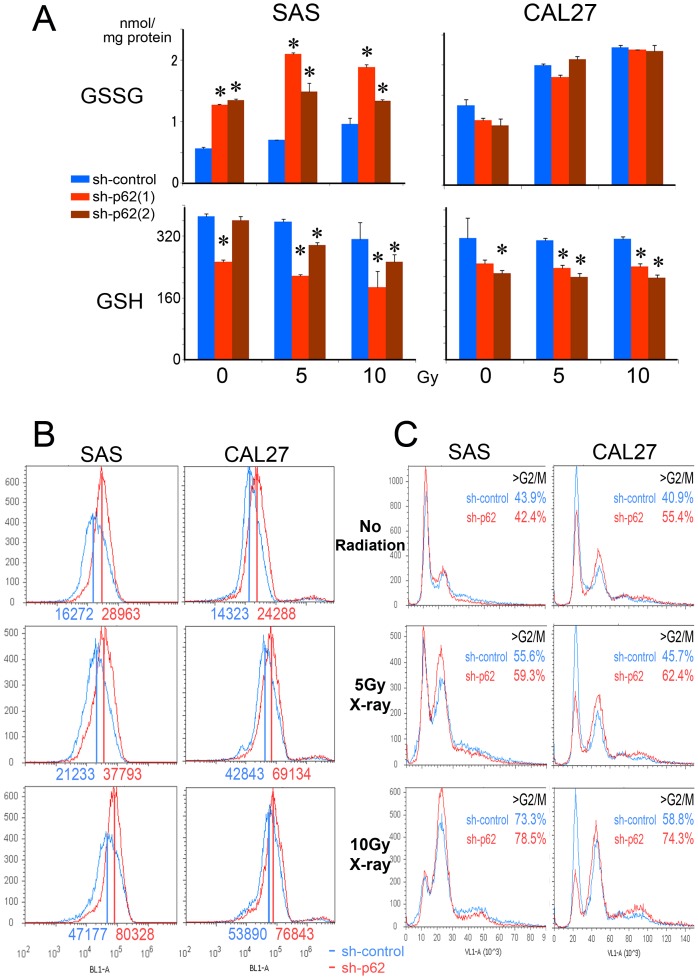
p62/SQSTM1 (sequestosome1) has never been evaluated in oral epithelium. In order to clarify the role of p62/SQSTM1 in carcinogenesis in oral epithelium, both p62/SQSTM1 and Nrf2 were immunohistochemically evaluated in 54 carcinomas and 14 low grade dysplasias. p62/SQSTM1 knockdowns were also designed in oral cancer cells, and we analyzed the Nrf2 pathway, GSH contents and ROS accumulation. The association between p62/SQSTM1 excess and prognosis was addressed in a clinical cohort of oral carcinoma cases. p62/SQSTM1 excess was more obvious in carcinomas, but Nrf2 was abundant in almost all samples of the oral epithelium. In oral carcinoma cells, p62/SQSTM1 knockdown did not affect the Nrf2-Keap1 pathway but did significantly reduce GSH content with subsequent ROS accumulation, and caused cell growth inhibition in the irradiated condition. Finally, p62/SQSTM1 excess was associated with poor prognosis in a clinical cohort. In oral epithelial carcinogenesis, p62/SQSTM1 excess played a role in GSH induction rather than Nrf2 accumulation, and may cause resistance to cytotoxic stresses such as radiation or chemotherapy. Immunohistochemical evaluation of p62/SQSTM1 may be a potential significant marker to identify early carcinogenesis, chemo-radiotherapeutic resistance or poor prognosis of oral squamous cell carcinomas.
p62/SQSTM1(自噬相关蛋白 1)从未在口腔上皮中进行过评估。为了阐明 p62/SQSTM1 在口腔上皮癌发生中的作用,我们对 54 例癌和 14 例低级别上皮内瘤变中的 p62/SQSTM1 和 Nrf2 进行了免疫组织化学评估。我们还在口腔癌细胞中设计了 p62/SQSTM1 敲低实验,并分析了 Nrf2 通路、GSH 含量和 ROS 积累。在口腔癌病例的临床队列中,我们研究了 p62/SQSTM1 过量与预后之间的关系。p62/SQSTM1 过量在癌组织中更为明显,但 Nrf2 在口腔上皮的几乎所有样本中都很丰富。在口腔癌细胞中,p62/SQSTM1 敲低不影响 Nrf2-Keap1 通路,但会显著降低 GSH 含量,随后 ROS 积累,并在照射条件下导致细胞生长抑制。最后,p62/SQSTM1 过量与临床队列中的不良预后相关。在口腔上皮癌发生过程中,p62/SQSTM1 过量在 GSH 诱导中起作用,而不是 Nrf2 积累,并且可能导致对细胞毒性应激如辐射或化疗的耐药性。p62/SQSTM1 的免疫组织化学评估可能是识别口腔鳞状细胞癌早期癌变、化疗放疗耐药或不良预后的潜在重要标志物。