Division of Hematology-Oncology, Department of Internal Medicine, Kaohsiung Medical University Hospital, Kaohsiung 807, Taiwan.
Department of Internal Medicine, Faculty of Medicine, College of Medicine, Kaohsiung Medical University, Kaohsiung 807, Taiwan.
Mar Drugs. 2020 Jul 23;18(8):382. doi: 10.3390/md18080382.
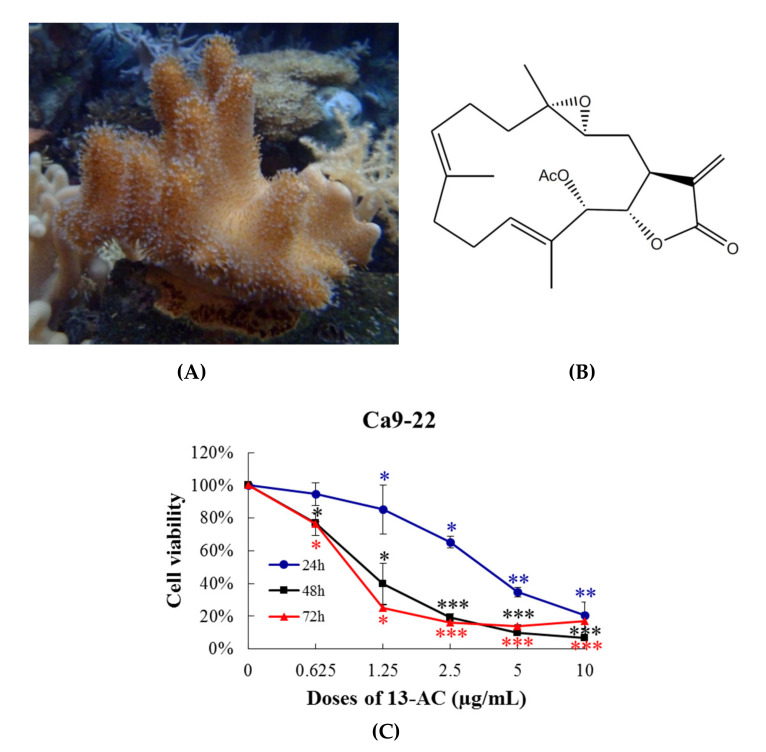
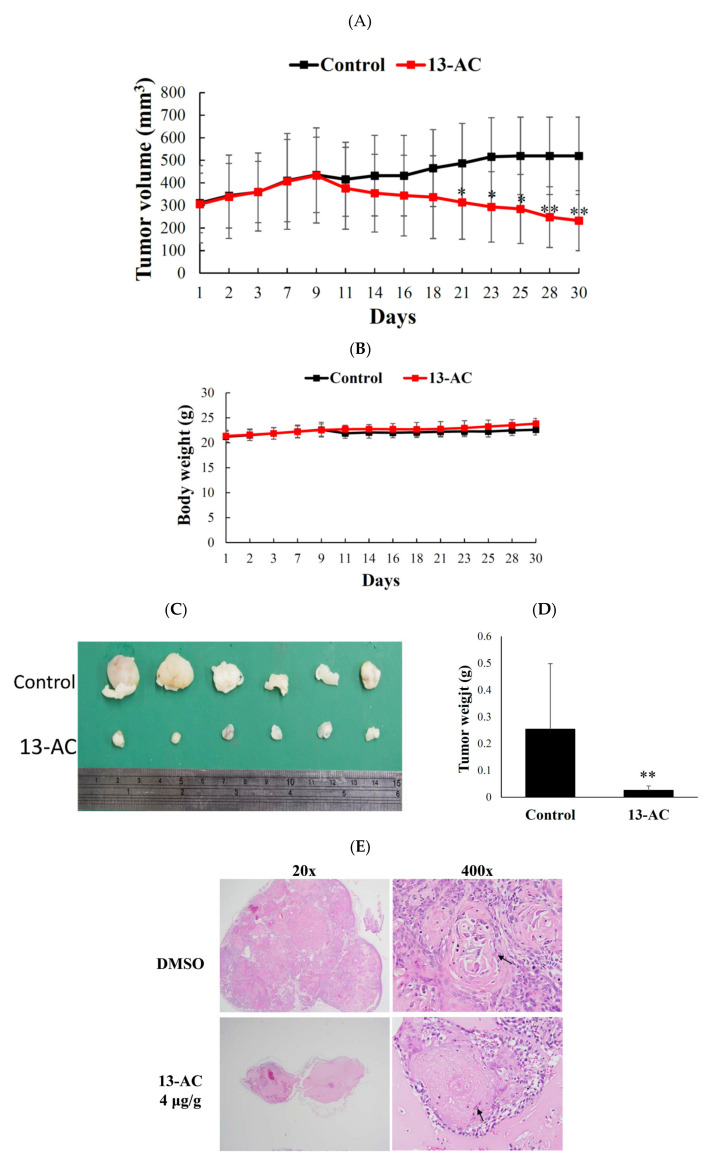
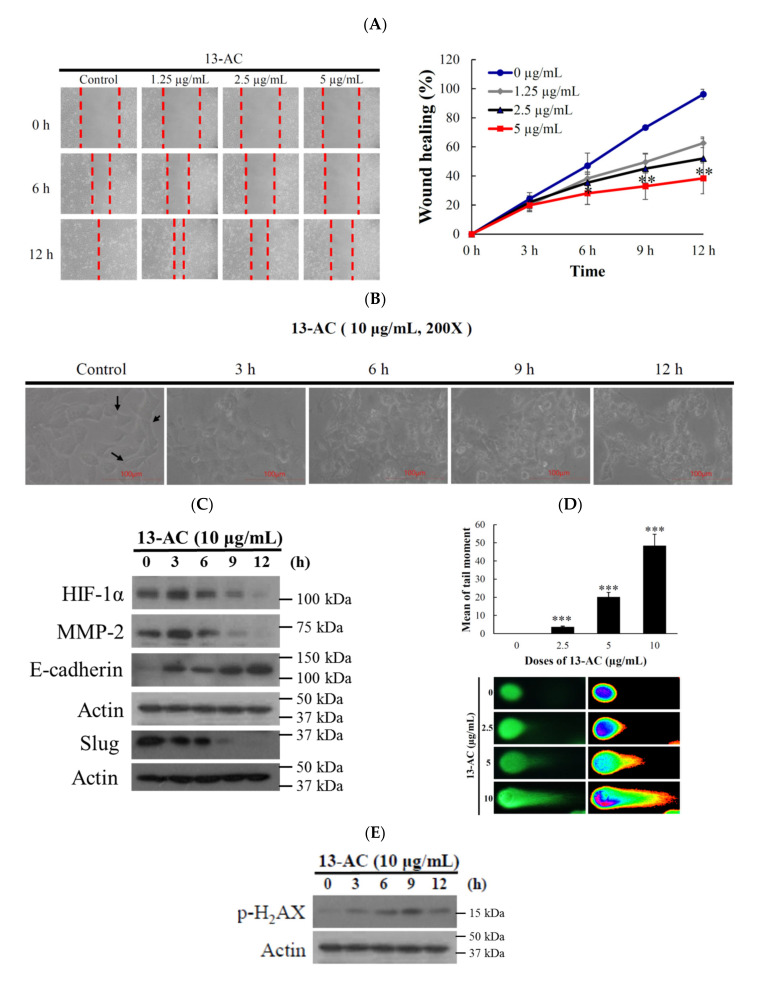
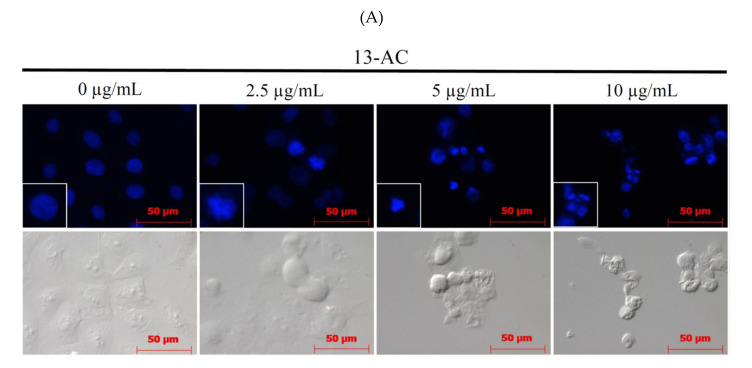
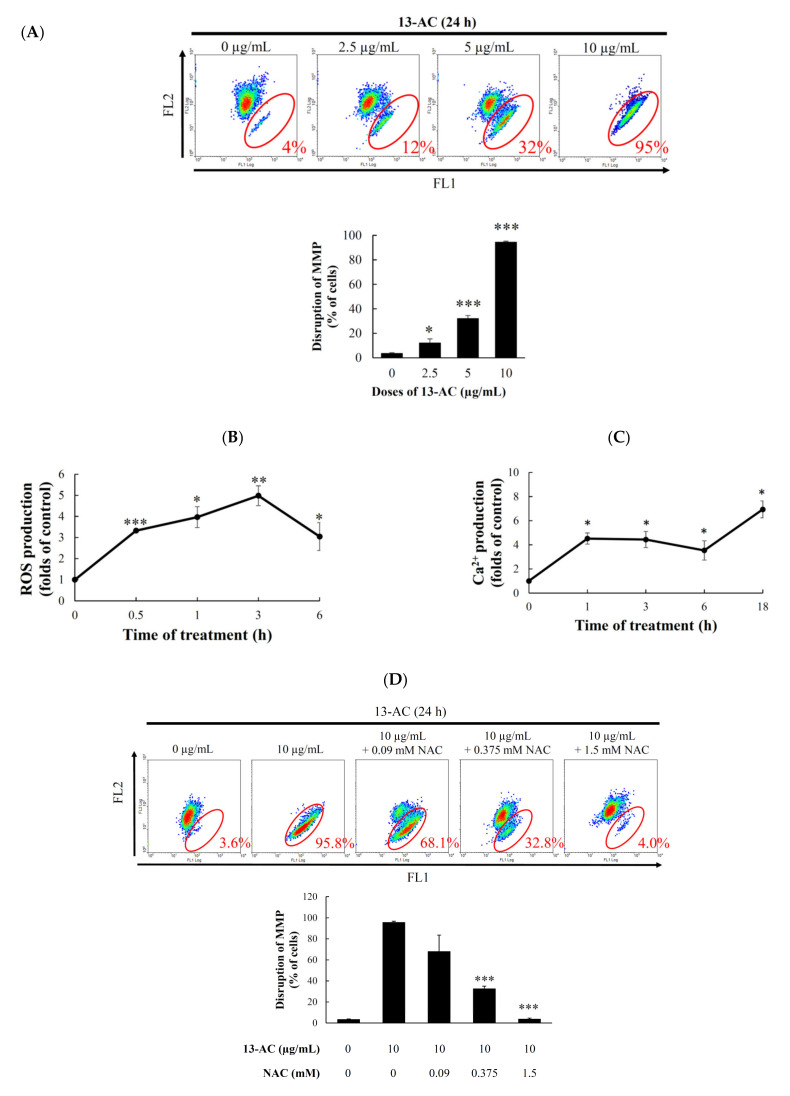
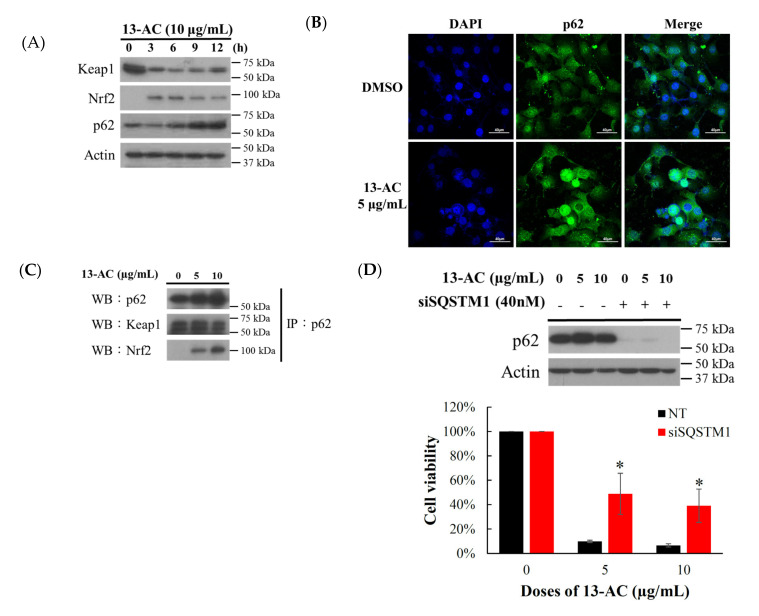
13-Acetoxysarcocrassolide (13-AC), a marine cytotoxic product isolated from the alcyonacean coral , exhibited potent antitumor and immunostimulant effects as reported in previous studies. However, the 13-AC antitumor mechanism of action against oral cancer cells remains unclear. The activity of 13-AC against Ca9-22 cancer cells was determined using MTT assay, flow cytometric analysis, immunofluorescence, immunoprecipitation, Western blotting, and siRNA. 13-AC induced apoptosis in oral cancer cells Ca9-22 through the disruption of mitochondrial membrane potential (MMP) and the stimulation of reactive oxygen species (ROS) generation. It increased the expression of apoptosis- and DNA damage-related proteins in a concentration- and time-dependent manner. It exerted potent antitumor effect against oral cancer cells, as demonstrated by the in vivo xenograft animal model. It significantly reduced the tumor volume (55.29%) and tumor weight (90.33%). The pretreatment of Ca9-22 cells with N-acetylcysteine (NAC) inhibited ROS production resulting in the attenuation of the cytotoxic activity of 13-AC. The induction of the Keap1-Nrf2 pathway and the promotion of p62/SQSTM1 were observed in Ca9-22 cells treated with 13-AC. The knockdown of p62 expression by siRNA transfection significantly attenuated the effect of 13-AC on the inhibition of cell viability. Our results indicate that 13-AC exerted its cytotoxic activity through the promotion of ROS generation and the suppression of the antioxidant enzyme activity. The apoptotic effect of 13-AC was found to be mediated through the interruption of the Keap1/Nrf2/p62/SQSTM1 pathway, suggesting its potential future application as an anticancer agent.
13-乙酰基鲨肌醇内酯(13-AC)是一种从柳珊瑚中分离出来的海洋细胞毒性产物,在之前的研究中表现出很强的抗肿瘤和免疫刺激作用。然而,13-AC 对口腔癌细胞的抗肿瘤作用机制尚不清楚。采用 MTT 法、流式细胞术分析、免疫荧光、免疫沉淀、Western blot 和 siRNA 检测 13-AC 对 Ca9-22 癌细胞的活性。13-AC 通过破坏线粒体膜电位(MMP)和刺激活性氧(ROS)的产生,诱导口腔癌细胞 Ca9-22 凋亡。它以浓度和时间依赖的方式增加凋亡和 DNA 损伤相关蛋白的表达。体内异种移植动物模型显示,13-AC 对口腔癌细胞具有很强的抗肿瘤作用,显著降低肿瘤体积(55.29%)和肿瘤重量(90.33%)。N-乙酰半胱氨酸(NAC)预处理 Ca9-22 细胞可抑制 ROS 产生,从而减弱 13-AC 的细胞毒性作用。在 13-AC 处理的 Ca9-22 细胞中观察到 Keap1-Nrf2 通路的诱导和 p62/SQSTM1 的促进。siRNA 转染下调 p62 表达可显著减弱 13-AC 对细胞活力抑制的作用。我们的结果表明,13-AC 通过促进 ROS 生成和抑制抗氧化酶活性发挥其细胞毒性作用。13-AC 的凋亡作用是通过中断 Keap1/Nrf2/p62/SQSTM1 通路介导的,这表明它作为一种抗癌剂具有潜在的未来应用前景。