Laboratorio Ecotono, INIBIOMA (CONICET-Universidad Nacional del Comahue), Bariloche, Argentina.
PLoS One. 2013 Sep 26;8(9):e75821. doi: 10.1371/journal.pone.0075821. eCollection 2013.
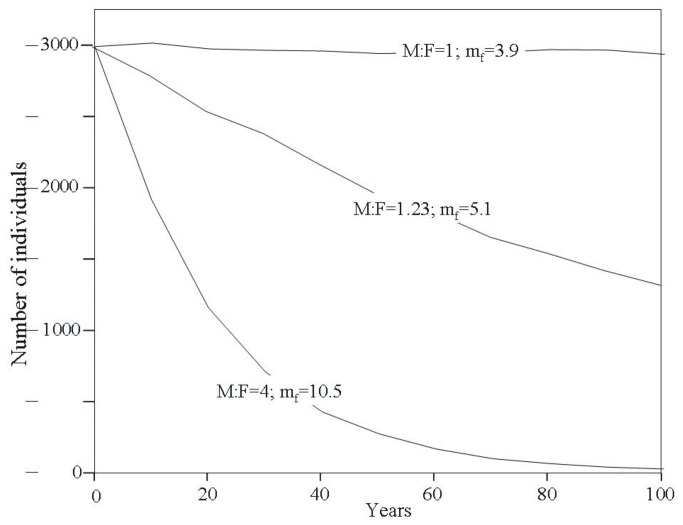
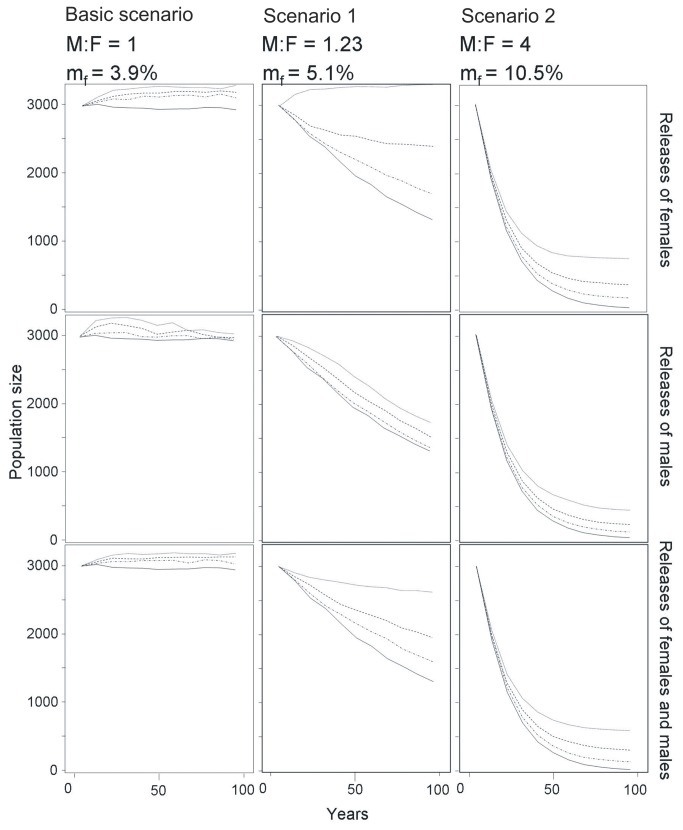
Reintroduction or reinforcement (RorR) of wild populations is a common conservation strategy. Many conservation projects involve the release of individuals of poorly studied species. This may lead to inefficient results or negative impacts on the conservation efforts. Here, we provide new insights into the conservation implications and potential consequences of a skew in the sex ratio of released birds and of the number of birds supplemented for the demography of a long-lived dimorphic bird species, the Andean condor (Vulturgryphus). We demonstrate that a RorR conservation program may be less effective in conserving a species if the sex ratios of the releases and the recipient populations are not considered. We also show that releases can reduce population declines but only if carried out over long periods (i.e., several decades). This can mean high costs for release programs and the added challenge of maintaining programs over time. If RorR programs are to be implemented, bearing in mind the importance of properly assessing their effectiveness, we urge conservation researchers and managers to consider the implications of sex ratio biases for wild populations, and particularly for dimorphic species with sexually despotic behaviour.
重新引入或强化(RorR)野生种群是一种常见的保护策略。许多保护项目都涉及到释放研究不足的物种个体。这可能导致低效的结果或对保护工作产生负面影响。在这里,我们提供了对释放鸟类性别比例偏斜和补充鸟类数量对长寿二态性鸟类物种安第斯秃鹫(Vulturgryphus)的种群动态的保护意义和潜在后果的新见解。我们表明,如果不考虑释放和接受种群的性别比例,重新引入保护计划可能对保护物种的效果较差。我们还表明,释放可以减少种群下降,但只有在长期进行(即几十年)的情况下才可以。这可能意味着释放计划的成本很高,并且随着时间的推移维护计划的挑战也会增加。如果要实施重新引入计划,我们强烈敦促保护研究人员和管理人员牢记正确评估其有效性的重要性,考虑性别比例偏差对野生种群的影响,特别是对具有性支配行为的二态性物种。