Coxiella Pathogenesis Section, Laboratory of Intracellular Parasites, Rocky Mountain Laboratories, National Institute of Allergy and Infectious Diseases, National Institutes of Health, Hamilton, MT 59840, USA.
BMC Microbiol. 2013 Oct 5;13:222. doi: 10.1186/1471-2180-13-222.
Coxiella burnetii is a Gram-negative intracellular bacterial pathogen that replicates within a phagolysosome-like parasitophorous vacuole (PV) of macrophages. PV formation requires delivery of effector proteins directly into the host cell cytoplasm by a type IVB secretion system. However, additional secretion systems are likely responsible for modification of the PV lumen microenvironment that promote pathogen replication.
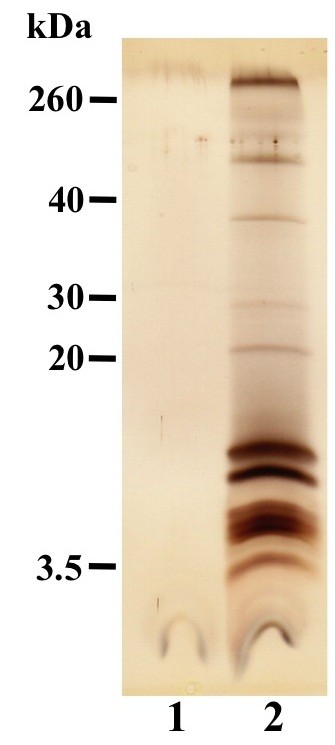
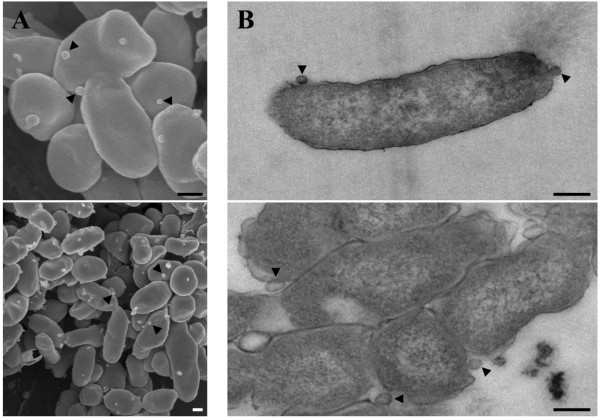
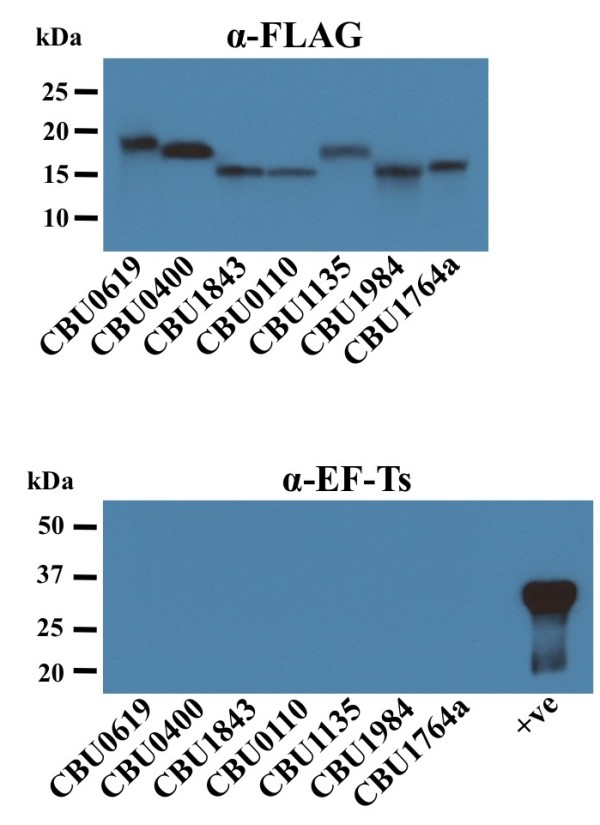
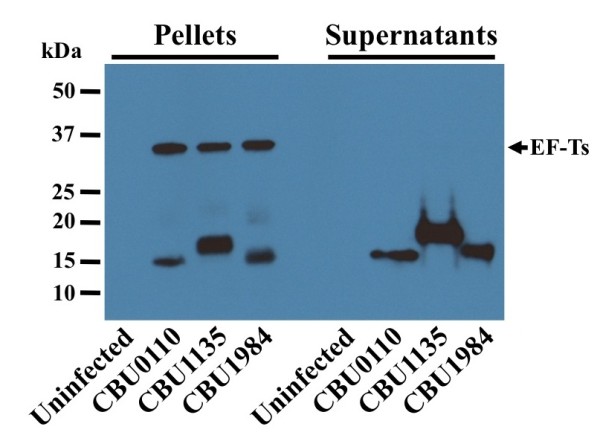
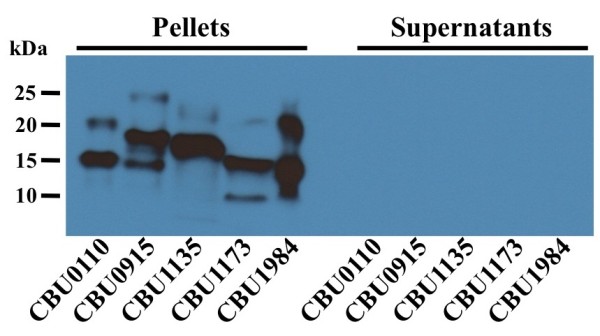
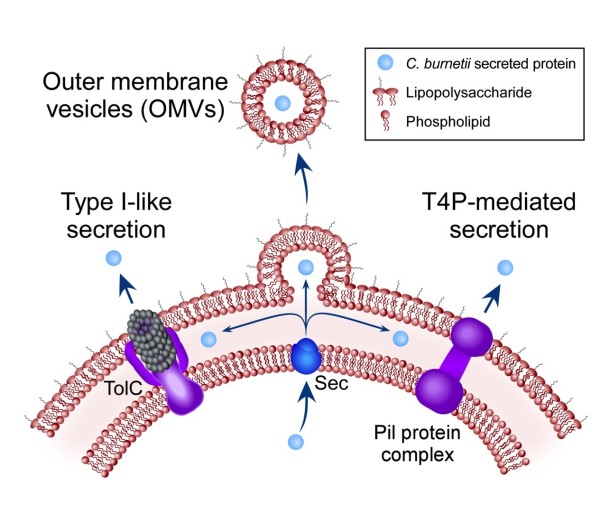
To assess the potential of C. burnetii to secrete proteins into the PV, we analyzed the protein content of modified acidified citrate cysteine medium for the presence of C. burnetii proteins following axenic (host cell-free) growth. Mass spectrometry generated a list of 105 C. burnetii proteins that could be secreted. Based on bioinformatic analysis, 55 proteins were selected for further study by expressing them in C. burnetii with a C-terminal 3xFLAG-tag. Secretion of 27 proteins by C. burnetii transformants was confirmed by immunoblotting culture supernatants. Tagged proteins expressed by C. burnetii transformants were also found in the soluble fraction of infected Vero cells, indicating secretion occurs ex vivo. All secreted proteins contained a signal sequence, and deletion of this sequence from selected proteins abolished secretion. These data indicate protein secretion initially requires translocation across the inner-membrane into the periplasm via the activity of the Sec translocase.
C. burnetii secretes multiple proteins, in vitro and ex vivo, in a Sec-dependent manner. Possible roles for secreted proteins and secretion mechanisms are discussed.
贝氏柯克斯体是一种革兰氏阴性的细胞内细菌病原体,在巨噬细胞的吞噬溶酶体样寄生空泡(PV)内复制。PV 的形成需要通过 IVB 型分泌系统将效应蛋白直接输送到宿主细胞质中。然而,其他分泌系统可能负责修饰 PV 腔微环境,从而促进病原体的复制。
为了评估贝氏柯克斯体将蛋白分泌到 PV 中的潜力,我们分析了经酸化柠檬酸盐胱氨酸培养基中经无细胞(无宿主细胞)生长后的贝氏柯克斯体蛋白的存在情况。质谱分析生成了 105 种可能分泌的贝氏柯克斯体蛋白列表。基于生物信息学分析,选择了 55 种蛋白进行进一步研究,通过在贝氏柯克斯体中表达它们的 C 末端 3xFLAG 标签。通过免疫印迹法检测培养上清液,证实了 27 种蛋白由贝氏柯克斯体转化子分泌。在感染的 Vero 细胞的可溶性部分也发现了由 C. burnetii 转化子表达的标记蛋白,表明分泌发生在体外。所有分泌蛋白都含有信号序列,从选定蛋白中删除此序列会阻止分泌。这些数据表明蛋白分泌最初需要通过 Sec 易位酶的活性穿过内膜进入周质。
贝氏柯克斯体以 Sec 依赖的方式在体外和体内分泌多种蛋白。讨论了分泌蛋白和分泌机制的可能作用。