Department of Clinical Pharmacology, TN Medical College and BYL Nair Charitable Hospital, Mumbai Central, Mumbai 400 008, India.
BMC Complement Altern Med. 2013 Oct 5;13:257. doi: 10.1186/1472-6882-13-257.
Both experimental and clinical studies suggest that oxidative stress plays a major role in the pathogenesis of both types of diabetes mellitus. This oxidative stress leads to β-cell destruction by apoptosis. Hence exploring agents modulating oxidative stress is an effective strategy in the treatment of both Type I and Type II diabetes. Plants are a major source of anti-oxidants and exert protective effects against oxidative stress in biological systems. Phyllanthus emblica, Curcuma longa and Tinospora cordifolia are three such plants widely used in Ayurveda for their anti-hyperglycemic activity. Additionally their anti-oxidant properties have been scientifically validated in various experimental in vitro and in vivo models. Hence the present in vitro study was planned to assess whether the anti-hyperglycemic effects of the hydro-alcoholic extracts of Phyllanthus emblica (Pe) and Curcuma longa (Cl) and aqueous extract of Tinospora cordifolia (Tc) are mediated through their antioxidant and/or anti-apoptotic property in a streptozotocin induced stress model.
RINm5F cell line was used as a model of pancreatic β-cells against stress induced by streptozotocin (2 mM). Non-toxic concentrations of the plant extracts were identified using MTT assay. Lipid peroxidation through MDA release, modulation of apoptosis and insulin release were the variables measured to assess streptozotocin induced damage and protection afforded by the plant extracts.
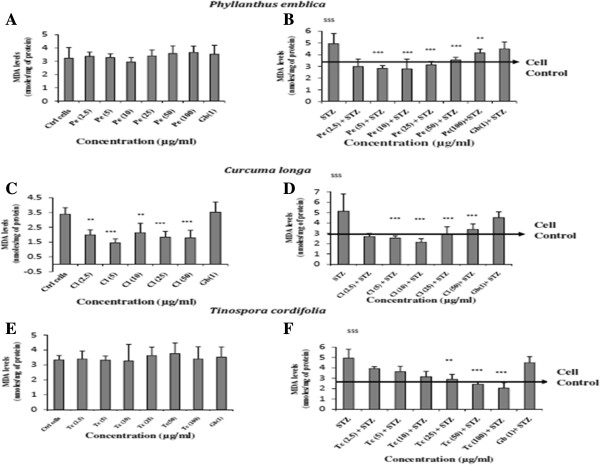
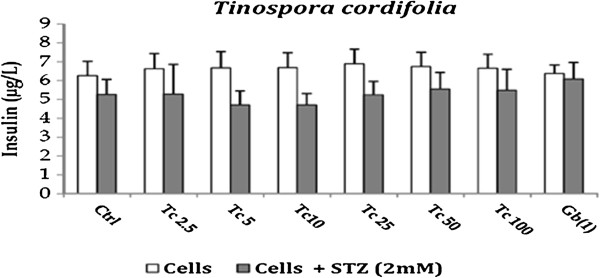
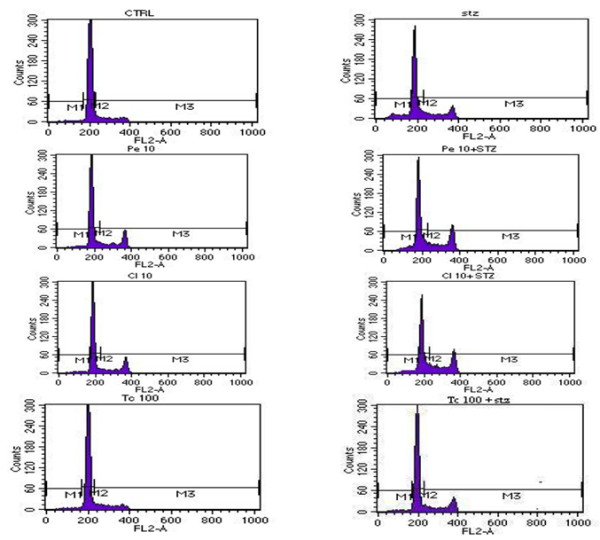
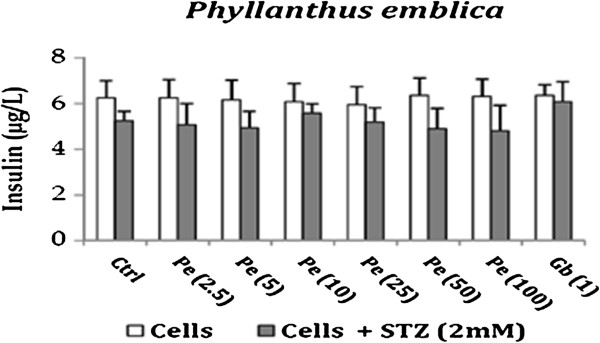
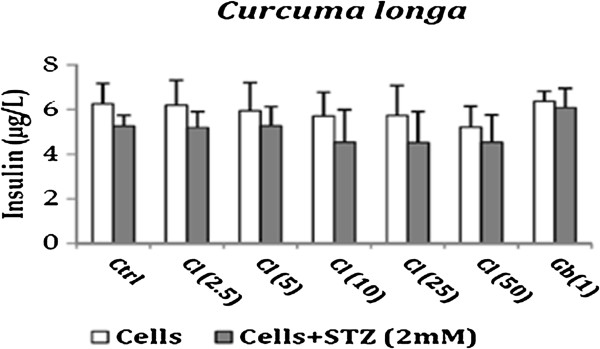
All 3 plants extracts significantly inhibited MDA release from RIN cells indicating protective effect against STZ induced oxidative damage. They also exhibited a dose dependent anti-apoptotic effect as seen by a decrease in the sub G0 population in response to STZ. None of the plant extracts affected insulin secretion from the cells to a great extent.
The present study thus demonstrated that the protective effect of the selected medicinal plants against oxidative stress induced by STZ in vitro, which was exerted through their anti-oxidant and anti-apoptotic actions.
实验和临床研究都表明氧化应激在 1 型和 2 型糖尿病的发病机制中起着重要作用。这种氧化应激导致β细胞通过细胞凋亡而被破坏。因此,探索调节氧化应激的药物是治疗 1 型和 2 型糖尿病的有效策略。植物是抗氧化剂的主要来源,并在生物系统中对氧化应激发挥保护作用。余甘子、姜黄和三叶鬼针草是三种在阿育吠陀中广泛用于降血糖的植物。此外,它们的抗氧化特性已在各种体外和体内实验模型中得到科学验证。因此,本体外研究旨在评估余甘子(Pe)和姜黄(Cl)的水醇提取物以及三叶鬼针草(Tc)的水提物的降血糖作用是否通过其抗氧化和/或抗细胞凋亡特性在链脲佐菌素诱导的应激模型中发挥作用。
RINm5F 细胞系被用作胰腺β细胞模型,以应对链脲佐菌素(2 mM)引起的应激。使用 MTT 测定法确定植物提取物的无毒浓度。通过 MDA 释放测量脂质过氧化、细胞凋亡的调节和胰岛素释放,以评估植物提取物对链脲佐菌素诱导的损伤的保护作用。
所有 3 种植物提取物均能显著抑制 RIN 细胞中 MDA 的释放,表明对 STZ 诱导的氧化损伤具有保护作用。它们还表现出剂量依赖性的抗细胞凋亡作用,表现为对 STZ 反应的 G0 期细胞减少。植物提取物对细胞胰岛素分泌的影响不大。
本研究表明,所选药用植物对 STZ 诱导的体外氧化应激的保护作用是通过其抗氧化和抗细胞凋亡作用实现的。