Key Laboratory of Behavioral Science, Institute of Psychology, Chinese Academy of Sciences Beijing, China.
Front Hum Neurosci. 2013 Sep 27;7:619. doi: 10.3389/fnhum.2013.00619. eCollection 2013.
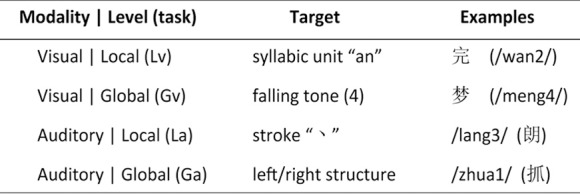
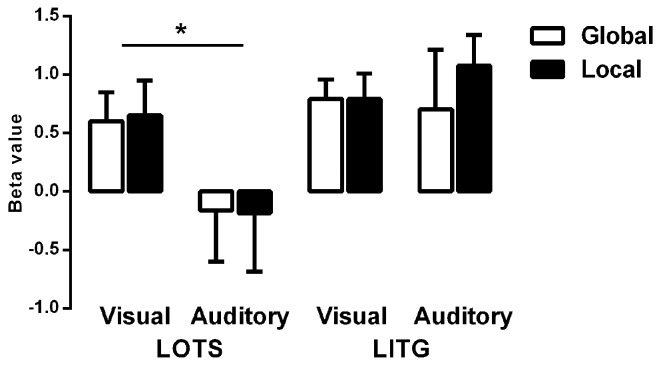
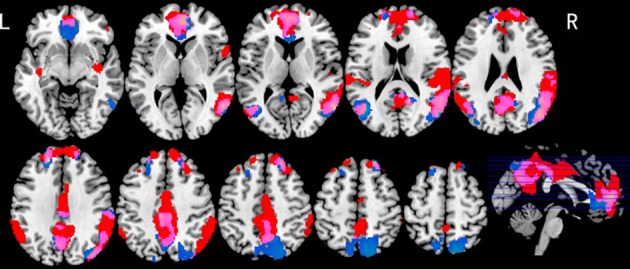
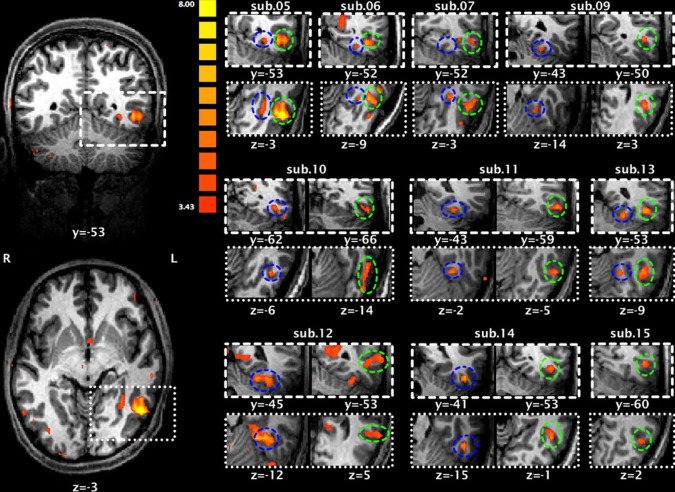
The human neocortex appears to contain a dedicated visual word form area (VWFA) and an adjacent multimodal (visual/auditory) area. However, these conclusions are based on functional magnetic resonance imaging (fMRI) of alphabetic language processing, languages that have clear grapheme-to-phoneme correspondence (GPC) rules that make it difficult to disassociate visual-specific processing from form-to-sound mapping. In contrast, the Chinese language has no clear GPC rules. Therefore, the current study examined whether native Chinese readers also have the same VWFA and multimodal area. Two cross-modal tasks, phonological retrieval of visual words and orthographic retrieval of auditory words, were adopted. Different task requirements were also applied to explore how different levels of cognitive processing modulate activation of putative VWFA-like and multimodal-like regions. Results showed that the left occipitotemporal sulcus (LOTS) responded exclusively to visual inputs and an adjacent region, the left inferior temporal gyrus (LITG), showed comparable activation for both visual and auditory inputs. Surprisingly, processing levels did not significantly alter activation of these two regions. These findings indicated that there are both unimodal and multimodal word areas for non-alphabetic language reading, and that activity in these two word-specific regions are independent of task demands at the linguistic level.
人类新皮质似乎包含一个专门的视觉词形区(VWFA)和一个相邻的多模态(视觉/听觉)区。然而,这些结论是基于对字母语言处理的功能磁共振成像(fMRI)得出的,这些语言具有明确的字母到音素对应(GPC)规则,这使得很难将视觉特定处理与形到音映射分开。相比之下,汉语没有明确的 GPC 规则。因此,本研究探讨了母语为汉语的读者是否也具有相同的 VWFA 和多模态区。采用了两种跨模态任务,即视觉词的语音检索和听觉词的正字法检索。还应用了不同的任务要求来探索不同水平的认知处理如何调节假定的 VWFA 样和多模态样区域的激活。结果表明,左侧枕颞沟(LOTS)仅对视觉输入有反应,而左侧颞下回(LITG)对视觉和听觉输入有相似的激活。令人惊讶的是,处理水平并没有显著改变这两个区域的激活。这些发现表明,非字母语言阅读既有单模态又有多模态的词区,并且这两个词特异性区域的活动与语言水平的任务要求无关。