Fraser Hunter B
Genome Biol. 2013;14(10):R111. doi: 10.1186/gb-2013-14-10-r111.
Eukaryotic DNA replication follows a specific temporal program, with some genomic regions consistently replicating earlier than others, yet what determines this program is largely unknown. Highly transcribed regions have been observed to replicate in early S-phase in all plant and animal species studied to date, but this relationship is thought to be absent from both budding yeast and fission yeast. No association between cell-cycle regulated transcription and replication timing has been reported for any species.
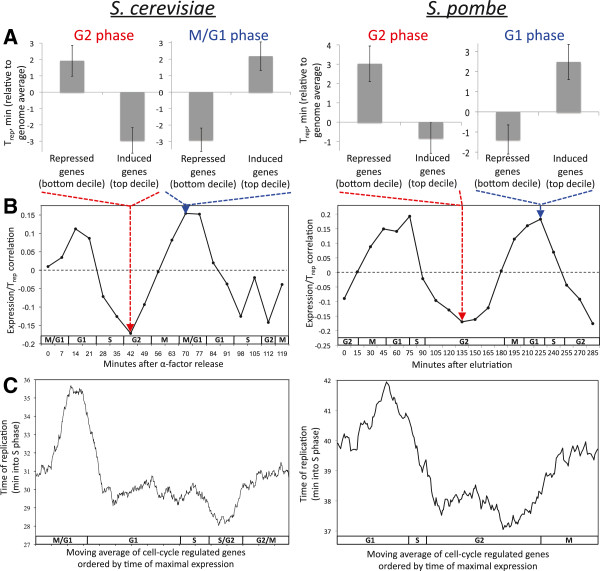
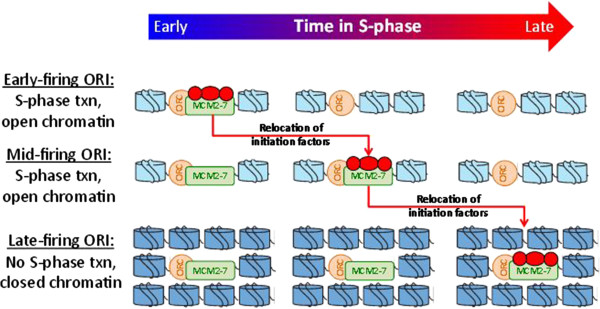
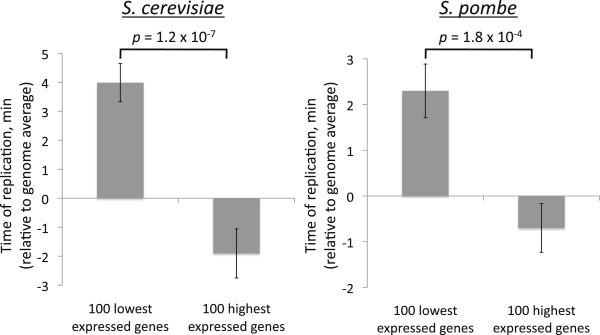
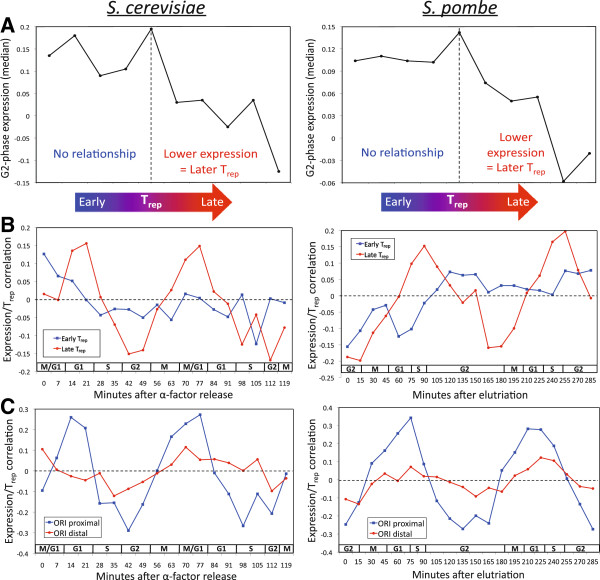
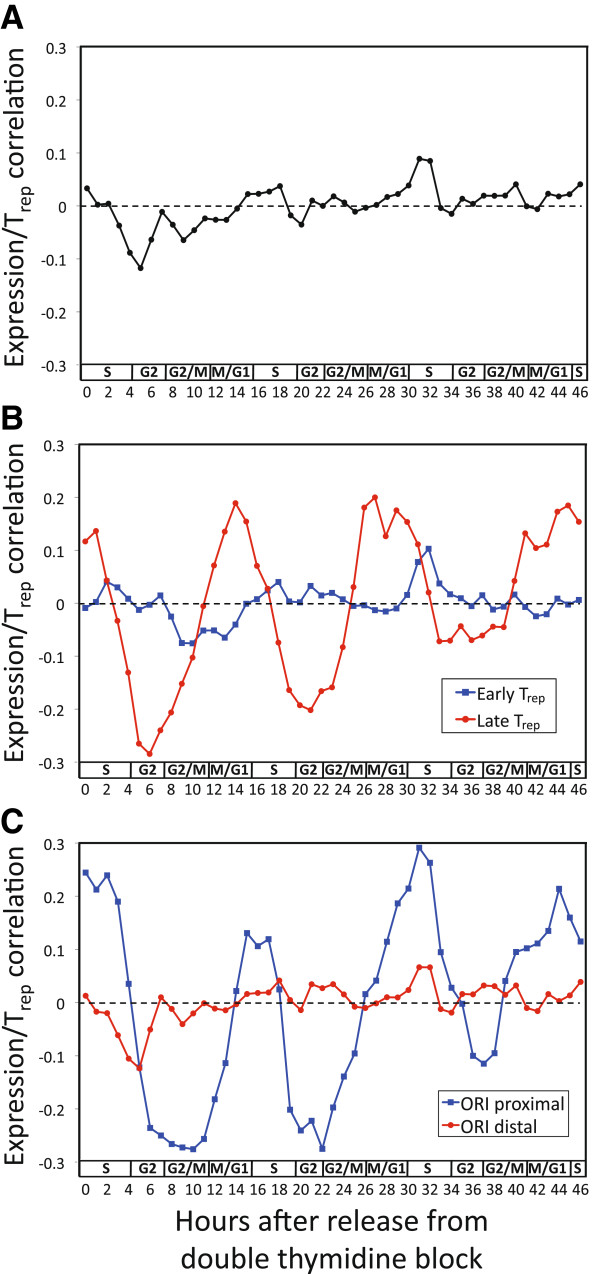
Here I show that in budding yeast, fission yeast, and human, the genes most highly transcribed during S-phase replicate early, whereas those repressed in S-phase replicate late. Transcription during other cell-cycle phases shows either the opposite correlation with replication timing, or no relation. The relationship is strongest near late-firing origins of replication, which is not consistent with a previously proposed model—that replication timing may affect transcription—and instead suggests a potential mechanism involving the recruitment of limiting replication initiation factors during S-phase.
These results suggest that S-phase transcription may be an important determinant of DNA replication timing across eukaryotes, which may explain the well-established association between transcription and replication timing.
真核生物DNA复制遵循特定的时间程序,一些基因组区域始终比其他区域更早复制,但决定该程序的因素在很大程度上尚不清楚。在迄今研究的所有动植物物种中,高度转录的区域都在S期早期复制,但据认为在芽殖酵母和裂殖酵母中不存在这种关系。尚未有任何物种报道细胞周期调控的转录与复制时间之间存在关联。
在这里我表明,在芽殖酵母、裂殖酵母和人类中,在S期转录最高的基因早期复制,而在S期被抑制的基因则晚期复制。其他细胞周期阶段的转录与复制时间呈现相反的相关性,或者没有关系。这种关系在接近晚期激活的复制起点处最强,这与先前提出的模型不一致,即复制时间可能影响转录,相反,这表明了一种潜在机制,涉及在S期招募有限的复制起始因子。
这些结果表明,S期转录可能是真核生物中DNA复制时间的一个重要决定因素,这可能解释了转录与复制时间之间已确立的关联。