Wilson Thomas E, Arlt Martin F, Park So Hae, Rajendran Sountharia, Paulsen Michelle, Ljungman Mats, Glover Thomas W
Department of Pathology, Department of Human Genetics,
Department of Human Genetics.
Genome Res. 2015 Feb;25(2):189-200. doi: 10.1101/gr.177121.114. Epub 2014 Nov 4.
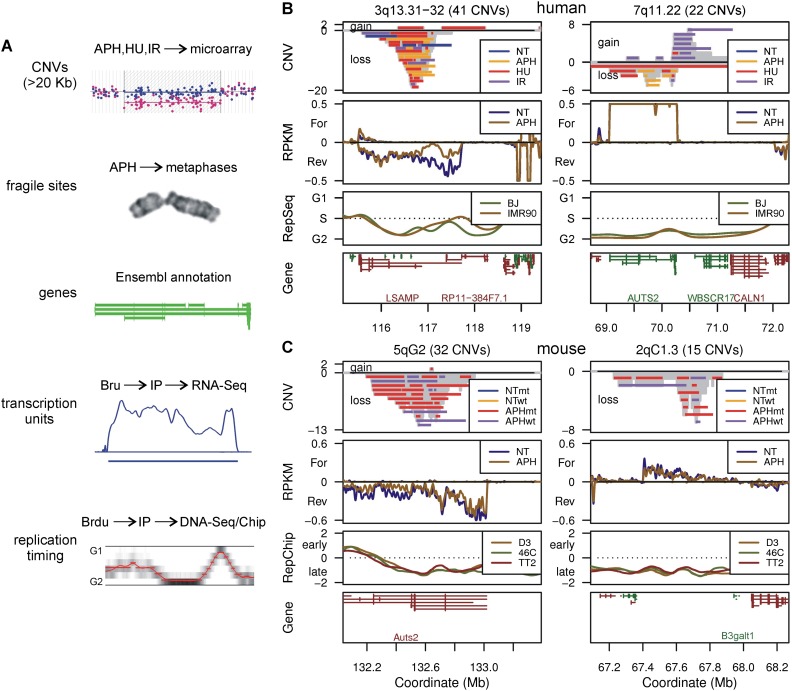
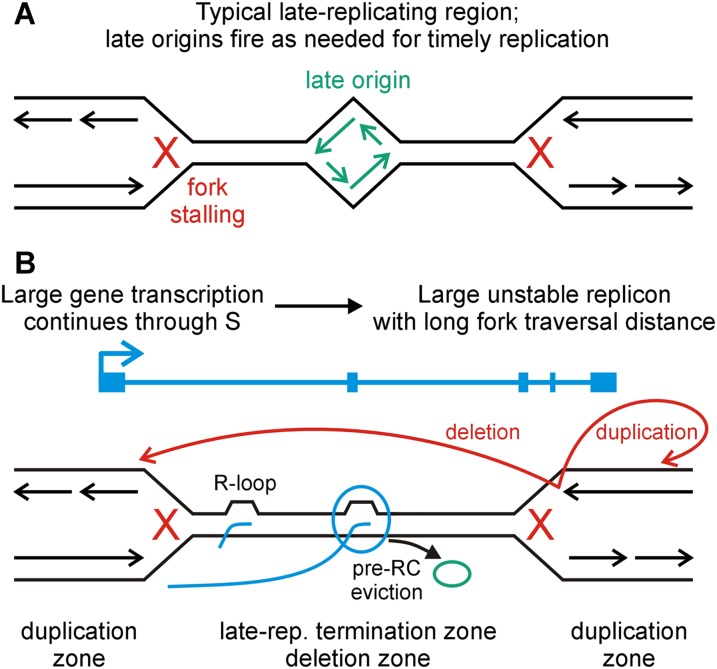
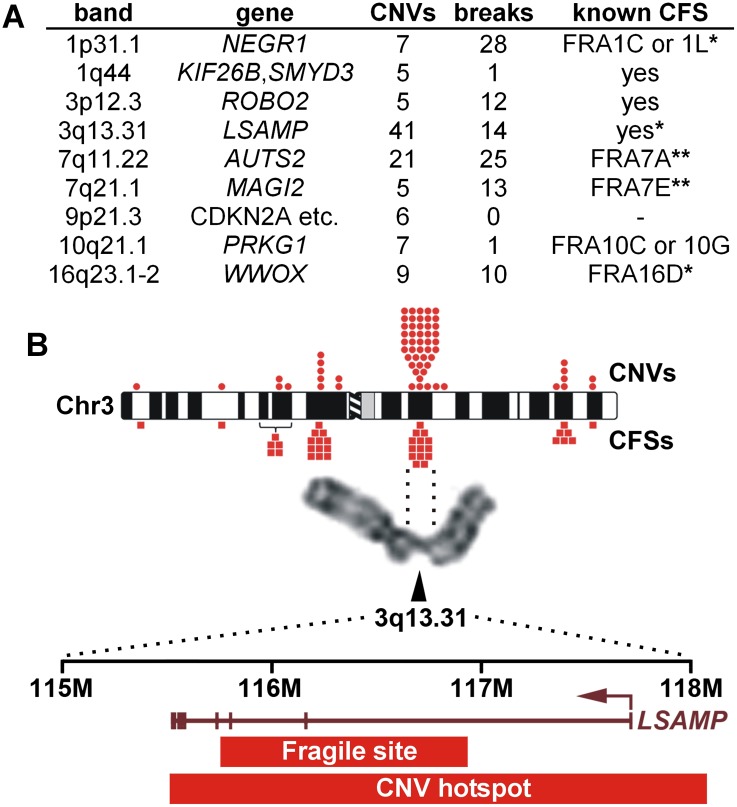
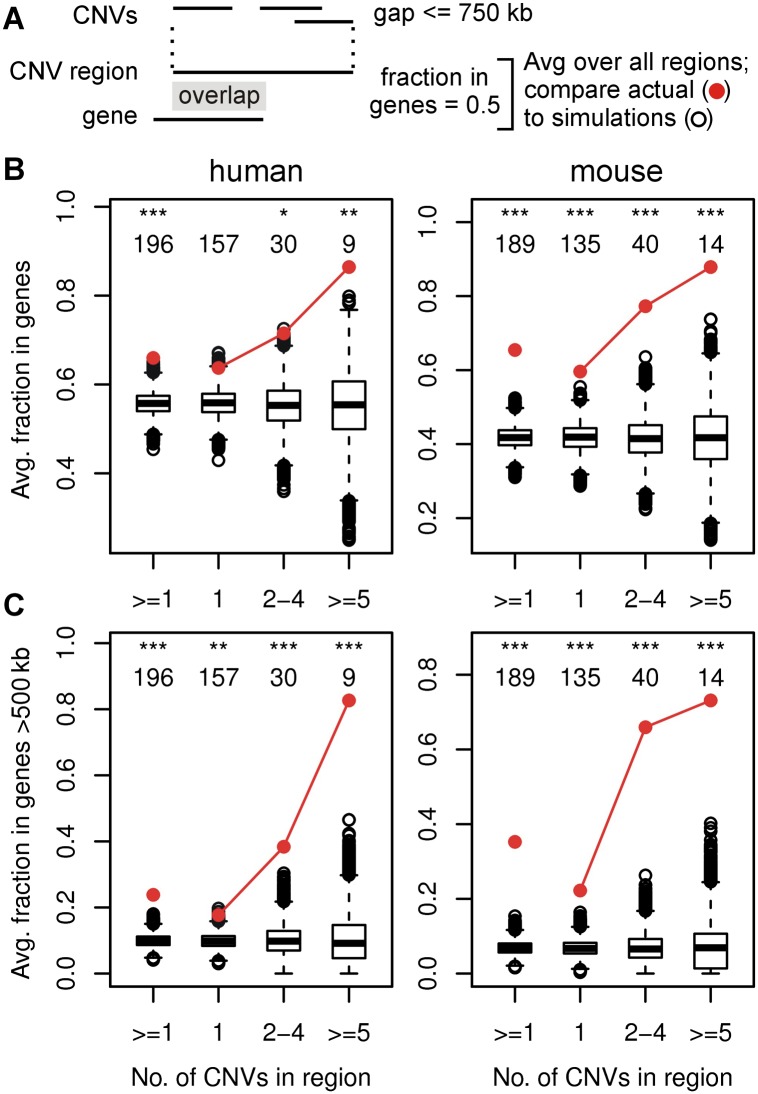
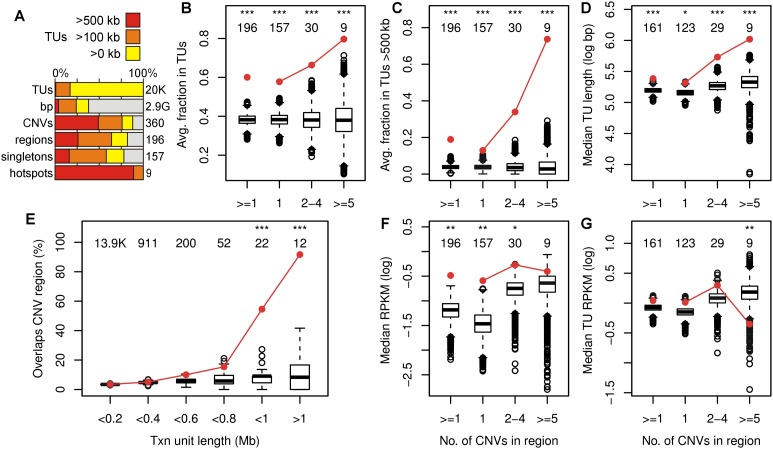
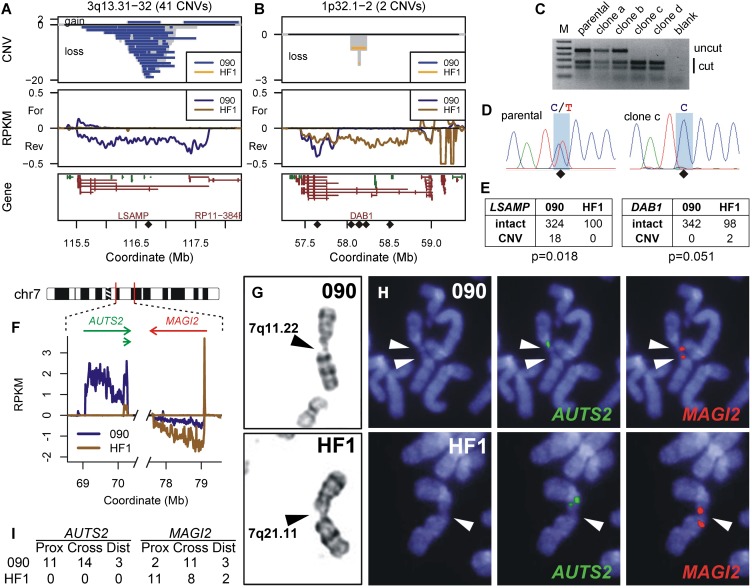
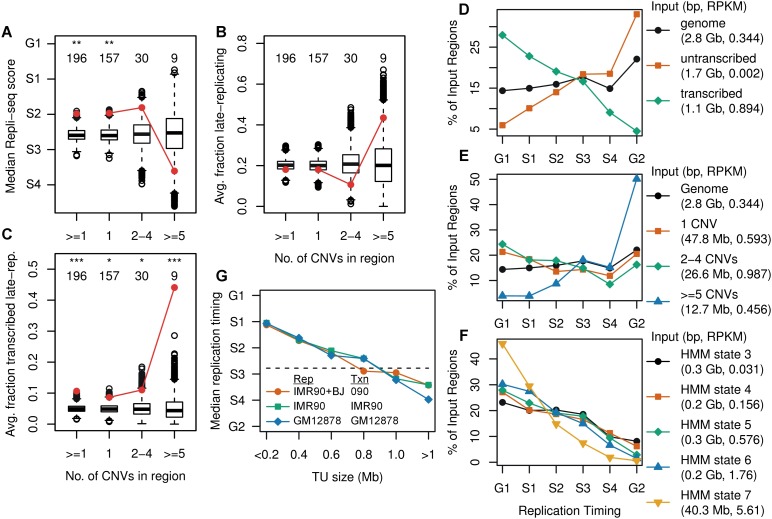
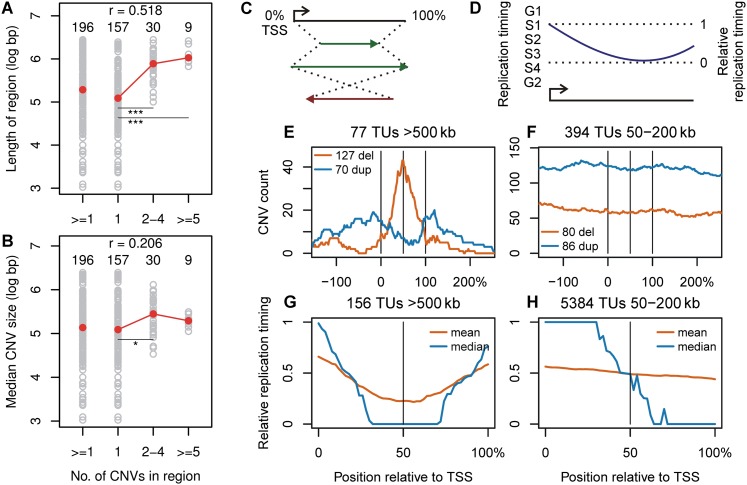
Copy number variants (CNVs) resulting from genomic deletions and duplications and common fragile sites (CFSs) seen as breaks on metaphase chromosomes are distinct forms of structural chromosome instability precipitated by replication inhibition. Although they share a common induction mechanism, it is not known how CNVs and CFSs are related or why some genomic loci are much more prone to their occurrence. Here we compare large sets of de novo CNVs and CFSs in several experimental cell systems to each other and to overlapping genomic features. We first show that CNV hotpots and CFSs occurred at the same human loci within a given cultured cell line. Bru-seq nascent RNA sequencing further demonstrated that although genomic regions with low CNV frequencies were enriched in transcribed genes, the CNV hotpots that matched CFSs specifically corresponded to the largest active transcription units in both human and mouse cells. Consistently, active transcription units >1 Mb were robust cell-type-specific predictors of induced CNV hotspots and CFS loci. Unlike most transcribed genes, these very large transcription units replicated late and organized deletion and duplication CNVs into their transcribed and flanking regions, respectively, supporting a role for transcription in replication-dependent lesion formation. These results indicate that active large transcription units drive extreme locus- and cell-type-specific genomic instability under replication stress, resulting in both CNVs and CFSs as different manifestations of perturbed replication dynamics.
由基因组缺失和重复产生的拷贝数变异(CNV)以及在中期染色体上表现为断裂的常见脆性位点(CFS)是复制抑制引发的染色体结构不稳定的不同形式。尽管它们具有共同的诱导机制,但尚不清楚CNV和CFS之间的关系,也不清楚为什么某些基因组位点更容易发生这些情况。在这里,我们在几个实验细胞系统中相互比较并与重叠的基因组特征比较了大量的新生CNV和CFS。我们首先表明,在给定的培养细胞系中,CNV热点和CFS出现在相同的人类基因座上。Bru-seq新生RNA测序进一步表明,尽管低CNV频率的基因组区域富含转录基因,但与CFS匹配的CNV热点特别对应于人和小鼠细胞中最大的活性转录单位。一致地,大于1 Mb的活性转录单位是诱导的CNV热点和CFS位点的强大细胞类型特异性预测因子。与大多数转录基因不同,这些非常大的转录单位复制较晚,并分别将缺失和重复CNV组织到它们的转录区域和侧翼区域,支持转录在复制依赖性损伤形成中的作用。这些结果表明,活跃的大转录单位在复制应激下驱动极端的基因座和细胞类型特异性基因组不稳定,导致CNV和CFS作为复制动力学扰动的不同表现形式。