Department of Medical Biochemistry, Charles University in Prague, Faculty of Medicine in Hradec Kralove, Hradec Kralove, Czech Republic.
Oncol Rep. 2013 Dec;30(6):2593-602. doi: 10.3892/or.2013.2778. Epub 2013 Oct 2.
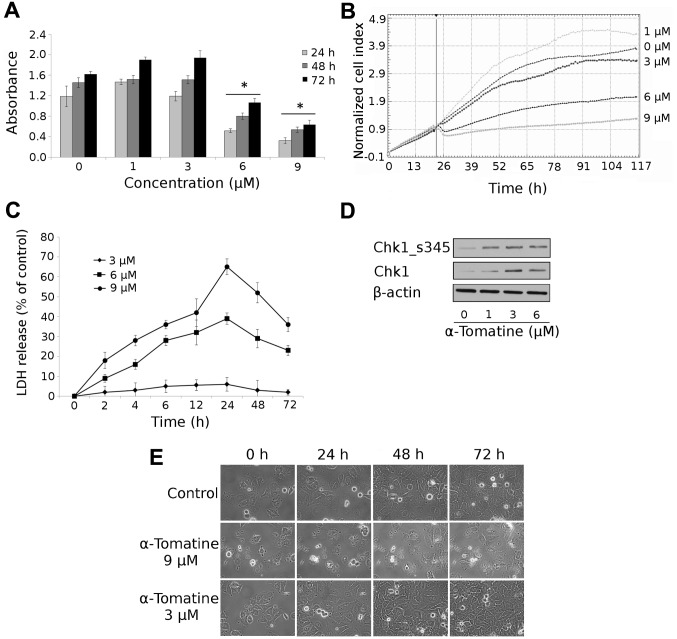
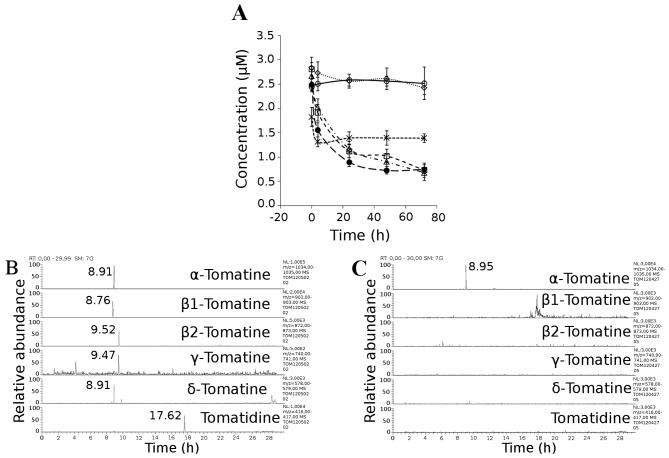
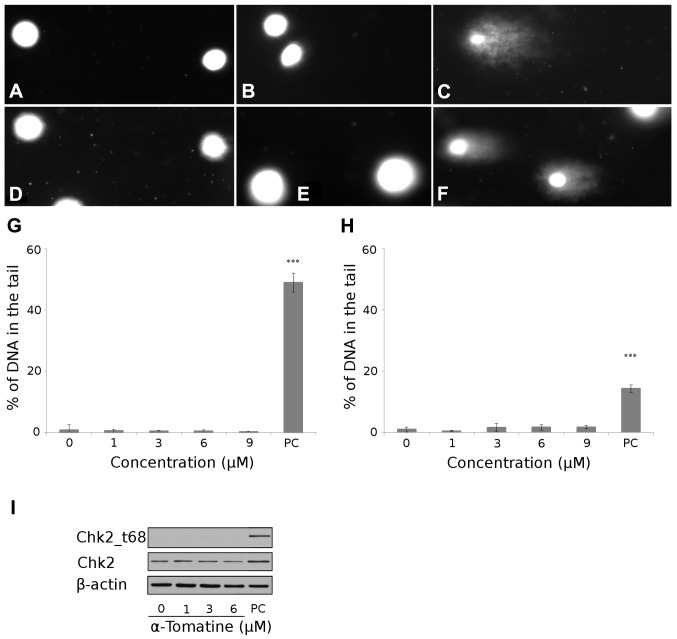
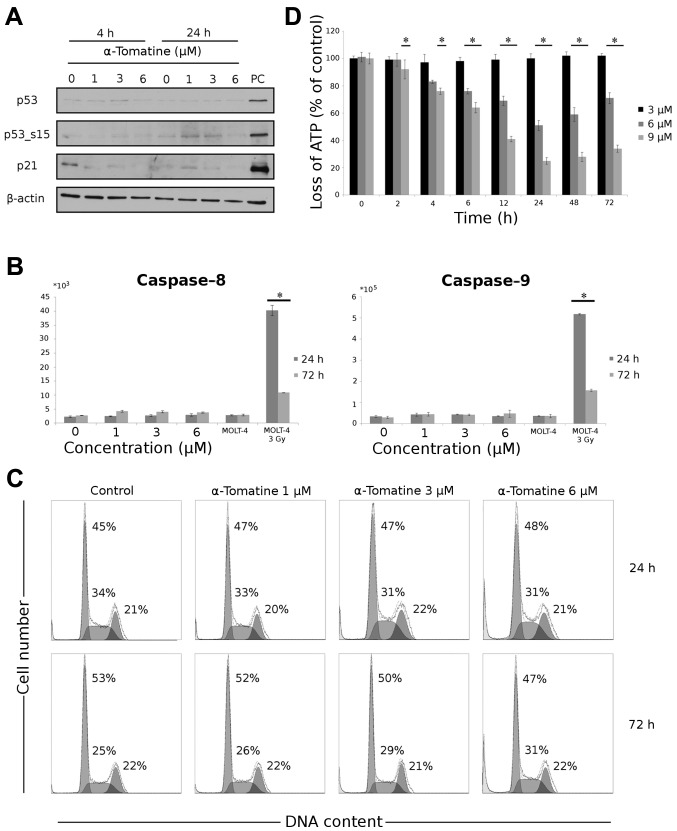
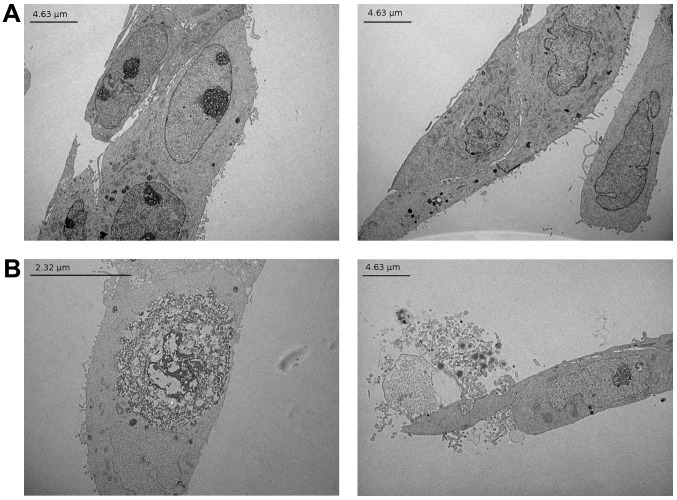
In recent years, α-tomatine has been studied for its anticancer activity. In the present study, we focused on the cytotoxic effect of α-tomatine in the MCF-7 human breast adenocarcinoma cell line, its mechanism of action, biotransformation and stability in the culture medium. We observed an inhibition of cell proliferation and viability at concentrations of 6 and 9 µM but then a recovery of cells occurred. The recovery was not caused by the biotransformation of α-tomatine in MCF-7 cells, but by a substantial decrease in the concentration of α-tomatine in the culture medium due to its binding with cholesterol. Regarding the mechanism of action of α-tomatine, we observed no DNA damage, no changes in the levels of the proteins p53 and p21(WAF1/Cip1), and no apoptosis (neither activated caspase-8 and -9, nor sub-G1 peak, or morphological signs). We found a loss of ATP in α-tomatine-treated cells. These results support the conclusion that α-tomatine does not induce apoptosis in the MCF-7 cell line.
近年来,α-茄碱的抗癌活性受到了研究关注。在本研究中,我们专注于 α-茄碱对 MCF-7 人乳腺癌腺癌细胞系的细胞毒性作用、作用机制、生物转化和在培养基中的稳定性。我们观察到在 6 和 9 μM 浓度下抑制细胞增殖和活力,但随后细胞恢复。这种恢复不是由 MCF-7 细胞中 α-茄碱的生物转化引起的,而是由于 α-茄碱与胆固醇结合,导致培养基中 α-茄碱浓度大幅下降。关于 α-茄碱的作用机制,我们没有观察到 DNA 损伤,p53 和 p21(WAF1/Cip1) 蛋白水平没有变化,也没有细胞凋亡(既没有激活的 caspase-8 和 caspase-9,也没有亚 G1 峰或形态学迹象)。我们发现 α-茄碱处理的细胞中 ATP 丢失。这些结果支持 α-茄碱不会诱导 MCF-7 细胞系细胞凋亡的结论。