van den Dries Niels, Giannì Sergio, Czerednik Anna, Krens Frans A, de Klerk Geert-Jan M
Wageningen UR Plant Breeding, Droevendaalsesteeg 1, 6700 AA Wageningen, The Netherlands.
J Exp Bot. 2013 Nov;64(16):5221-30. doi: 10.1093/jxb/ert315. Epub 2013 Oct 11.
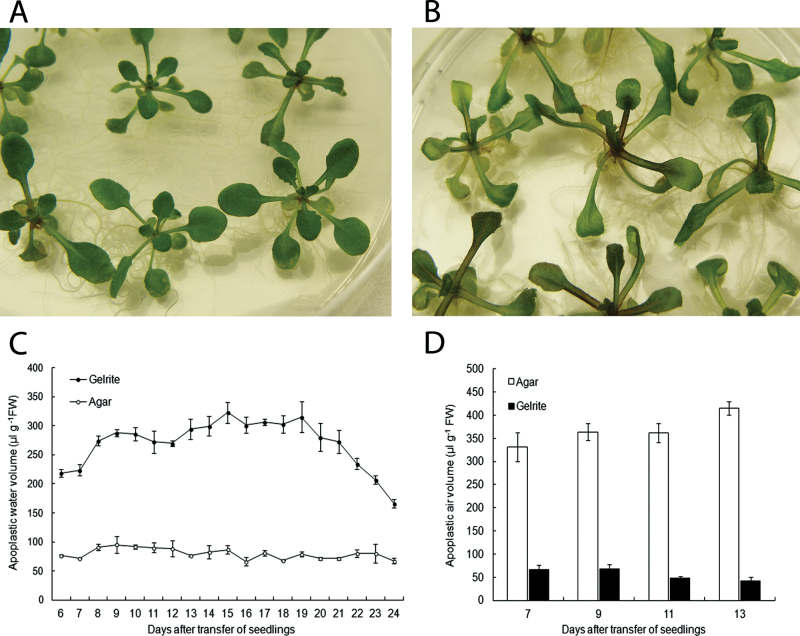
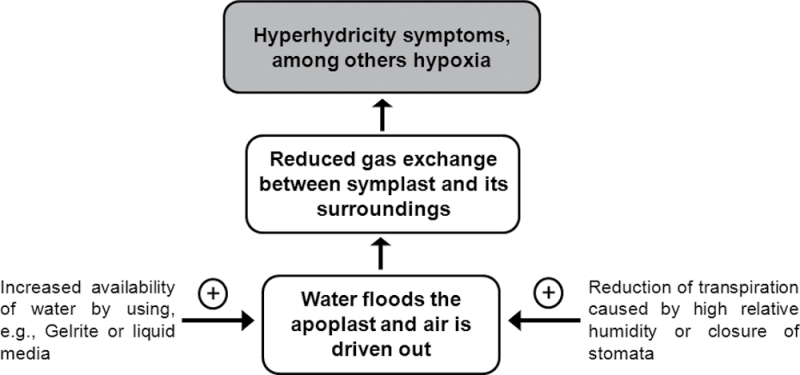
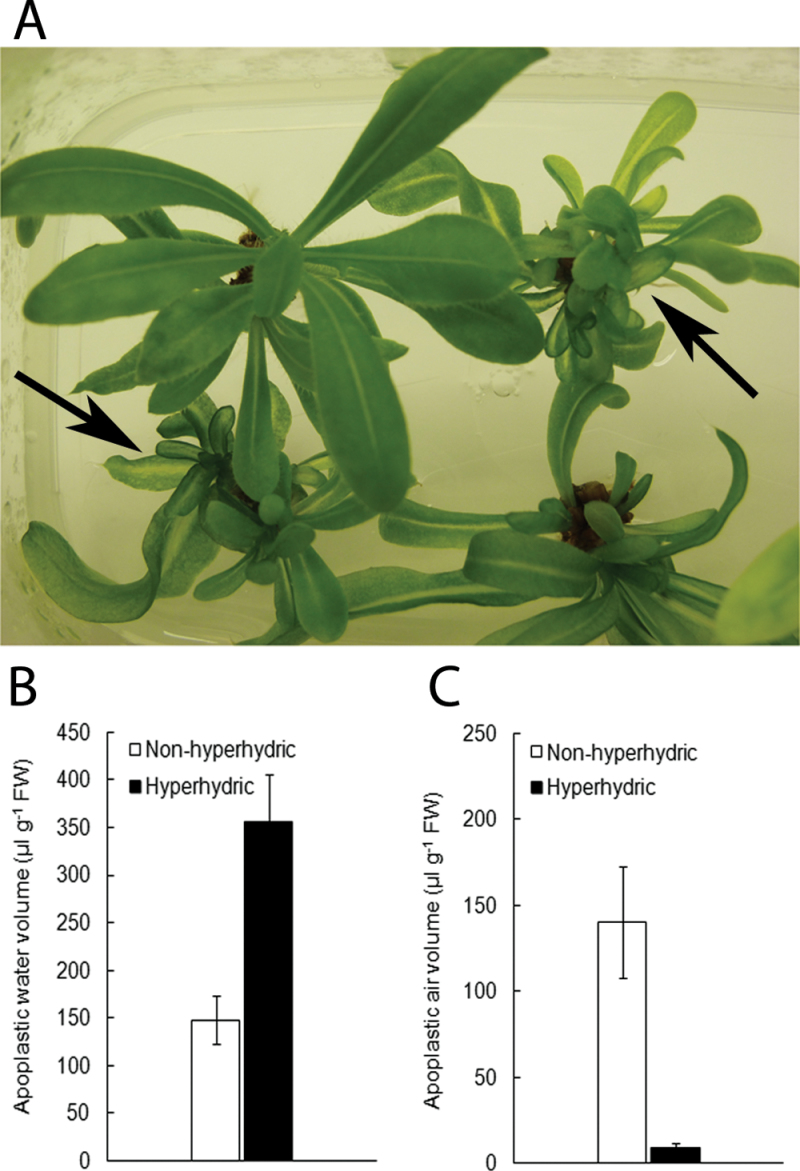
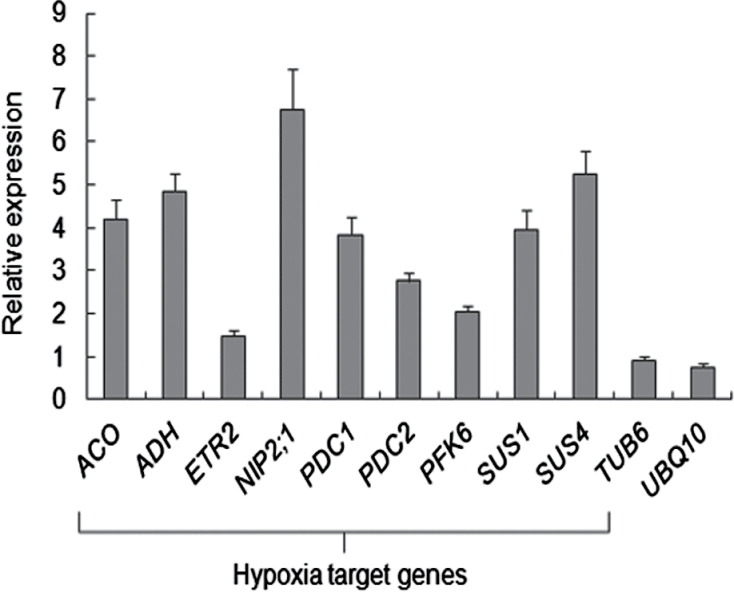
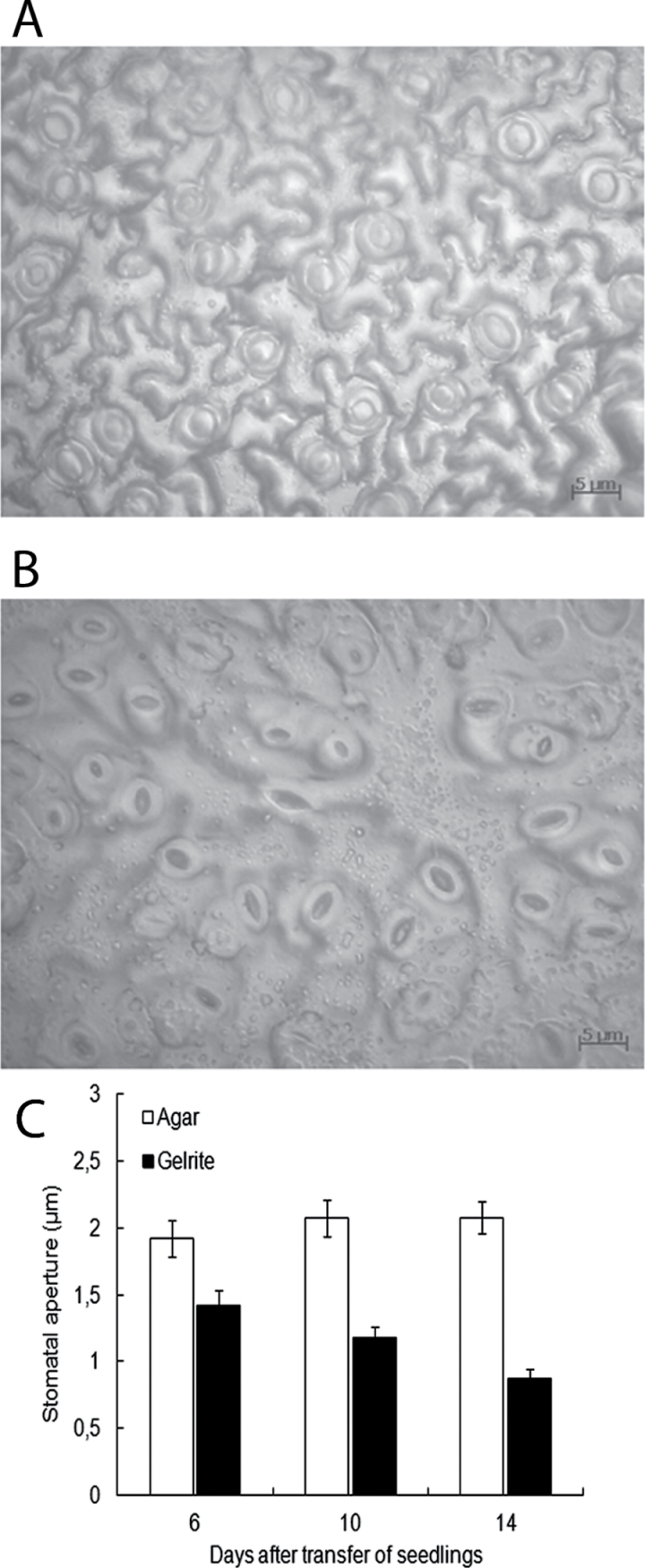
The physiological disorder hyperhydricity occurs frequently in tissue culture and causes several morphological abnormalities such as thick, brittle, curled, and translucent leaves. It is well known that hyperhydric shoots are characterized by a high water content, but how this is related to the abnormalities is not clear. It was observed that water accumulated extensively in the apoplast of leaves of hyperhydric Arabidopsis seedlings and flooded apoplastic air spaces almost completely. In hyperhydric Arabidopsis seedlings, the volume of apoplastic air was reduced from 85% of the apoplast to only 15%. Similar results were obtained with hyperhydric shoots of statice. The elevated expression of hypoxia-responsive genes in hyperhydric seedlings showed that the water saturation of the apoplast decreased oxygen supply. This demonstrates a reduced gas exchange between the symplast and its surroundings, which will consequently lead to the accumulation of gases in the symplast, for example ethylene and methyl jasmonate. The impairment of gas exchange probably brings about the symptoms of hyperhydricity. Interestingly, stomatal aperture was reduced in hyperhydric plants, a previously reported response to injection of water into the apoplast. Closure of the stomata and the accumulation of water in the apoplast may be the reasons why seedlings with a low level of hyperhydricity showed improved acclimatization after planting into soil.
生理紊乱“玻璃化”现象在组织培养中频繁发生,并导致多种形态异常,如叶片增厚、变脆、卷曲和半透明。众所周知,玻璃化苗的特点是含水量高,但这与异常现象之间的关系尚不清楚。据观察,在玻璃化拟南芥幼苗的叶片质外体中大量积水,几乎完全淹没了质外体中的气隙。在玻璃化拟南芥幼苗中,质外体气隙的体积从质外体的85%减少到仅15%。补血草的玻璃化苗也得到了类似的结果。玻璃化幼苗中缺氧响应基因的表达升高表明,质外体的水饱和降低了氧气供应。这表明共质体与其周围环境之间的气体交换减少,从而导致共质体中气体的积累,例如乙烯和茉莉酸甲酯。气体交换受损可能导致玻璃化症状。有趣的是,玻璃化植株的气孔孔径减小,这是先前报道的对向质外体注水的反应。气孔关闭和质外体中积水可能是低水平玻璃化的幼苗移栽到土壤后适应性提高的原因。