University of Groningen, University Medical Center Groningen, W. J. Kolff Institute, Department of Biomedical Engineering, Groningen, The Netherlands.
mBio. 2013 Oct 15;4(5):e00497-13. doi: 10.1128/mBio.00497-13.
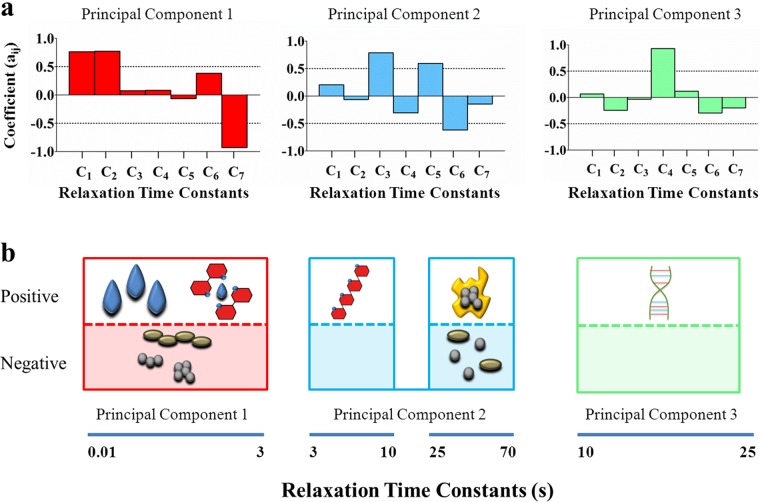
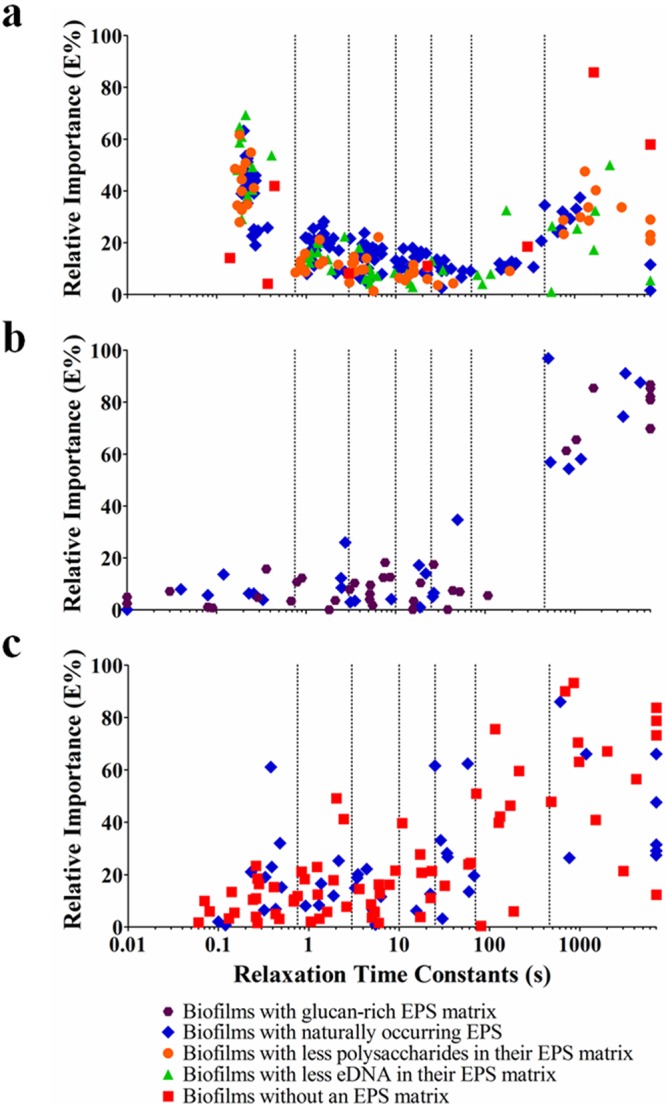
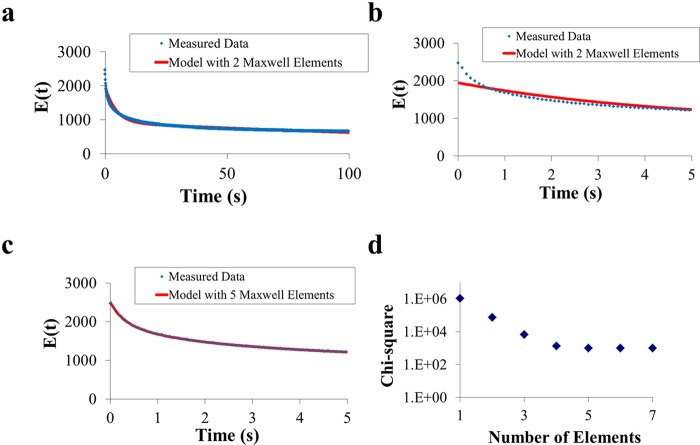
Bacteria in the biofilm mode of growth are protected against chemical and mechanical stresses. Biofilms are composed, for the most part, of extracellular polymeric substances (EPSs). The extracellular matrix is composed of different chemical constituents, such as proteins, polysaccharides, and extracellular DNA (eDNA). Here we aimed to identify the roles of different matrix constituents in the viscoelastic response of biofilms. Staphylococcus aureus, Staphylococcus epidermidis, Streptococcus mutans, and Pseudomonas aeruginosa biofilms were grown under different conditions yielding distinct matrix chemistries. Next, biofilms were subjected to mechanical deformation and stress relaxation was monitored over time. A Maxwell model possessing an average of four elements for an individual biofilm was used to fit the data. Maxwell elements were defined by a relaxation time constant and their relative importance. Relaxation time constants varied widely over the 104 biofilms included and were divided into seven ranges (<1, 1 to 5, 5 to 10, 10 to 50, 50 to 100, 100 to 500, and >500 s). Principal-component analysis was carried out to eliminate related time constant ranges, yielding three principal components that could be related to the known matrix chemistries. The fastest relaxation component (<3 s) was due to the presence of water and soluble polysaccharides, combined with the absence of bacteria, i.e., the heaviest masses in a biofilm. An intermediate component (3 to 70 s) was related to other EPSs, while a distinguishable role was assigned to intact eDNA, which possesses a unique principal component with a time constant range (10 to 25 s) between those of EPS constituents. This implies that eDNA modulates its interaction with other matrix constituents to control its contribution to viscoelastic relaxation under mechanical stress.
The protection offered by biofilms to organisms that inhabit it against chemical and mechanical stresses is due in part to its matrix of extracellular polymeric substances (EPSs) in which biofilm organisms embed themselves. Mechanical stresses lead to deformation and possible detachment of biofilm organisms, and hence, rearrangement processes occur in a biofilm to relieve it from these stresses. Maxwell analysis of stress relaxation allows the determination of characteristic relaxation time constants, but the biofilm components and matrix constituents associated with different stress relaxation processes have never been identified. Here we grew biofilms with different matrix constituents and used principal-component analysis to reveal that the presence of water and soluble polysaccharides, together with the absence of bacteria, is associated with the fastest relaxation, while other EPSs control a second, slower relaxation. Extracellular DNA, as a matrix constituent, had a distinguishable role with its own unique principal component in stress relaxation with a time constant range between those of other EPSs.
生物膜模式生长的细菌受到化学和机械应激的保护。生物膜主要由细胞外聚合物(EPS)组成。细胞外基质由不同的化学物质组成,如蛋白质、多糖和细胞外 DNA(eDNA)。在这里,我们旨在确定不同基质成分在生物膜粘弹性响应中的作用。在不同条件下培养金黄色葡萄球菌、表皮葡萄球菌、变形链球菌和铜绿假单胞菌生物膜,产生不同的基质化学物质。接下来,对生物膜进行机械变形,并监测随时间的应力松弛。使用具有平均四个元素的 Maxwell 模型来拟合单个生物膜的数据。Maxwell 元素由松弛时间常数和它们的相对重要性定义。松弛时间常数在包括的 104 个生物膜中变化很大,分为七个范围(<1、1 至 5、5 至 10、10 至 50、50 至 100、100 至 500 和>500 s)。进行主成分分析以消除相关的时间常数范围,产生三个可以与已知基质化学相关的主成分。最快的松弛分量(<3 s)归因于水和可溶性多糖的存在,同时没有细菌,即生物膜中最重的物质。中间分量(3 至 70 s)与其他 EPS 有关,而完整的 eDNA 则具有独特的主成分,其时间常数范围(10 至 25 s)介于 EPS 成分之间。这意味着 eDNA 调节其与其他基质成分的相互作用,以控制其在机械应力下对粘弹性松弛的贡献。
生物膜为栖息在其中的生物体提供的对化学和机械应激的保护部分归因于其细胞外聚合物(EPS)基质,生物膜生物体将自身嵌入其中。机械应激会导致生物膜生物的变形和可能的脱落,因此,生物膜中会发生重新排列过程以减轻这些应激。通过对应力松弛的 Maxwell 分析,可以确定特征松弛时间常数,但与不同的应力松弛过程相关的生物膜成分和基质成分从未被确定。在这里,我们用不同的基质成分培养生物膜,并使用主成分分析来揭示水和可溶性多糖的存在,加上细菌的不存在,与最快的松弛有关,而其他 EPS 则控制第二慢的松弛。细胞外 DNA 作为基质成分,具有独特的主成分,在应力松弛中具有独特的作用,其时间常数范围介于其他 EPS 之间。