The Division of Plant Sciences, College of Life Science, University of Dundee at the James Hutton Institute, Invergowrie, Dundee, United Kingdom ; Dundee Effector Consortium, James Hutton Institute, Invergowrie, Dundee, United Kingdom.
PLoS Pathog. 2013;9(10):e1003670. doi: 10.1371/journal.ppat.1003670. Epub 2013 Oct 10.
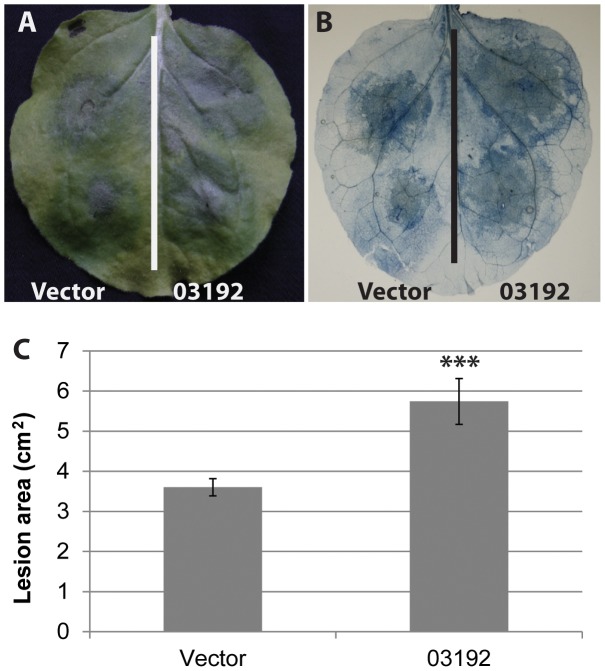
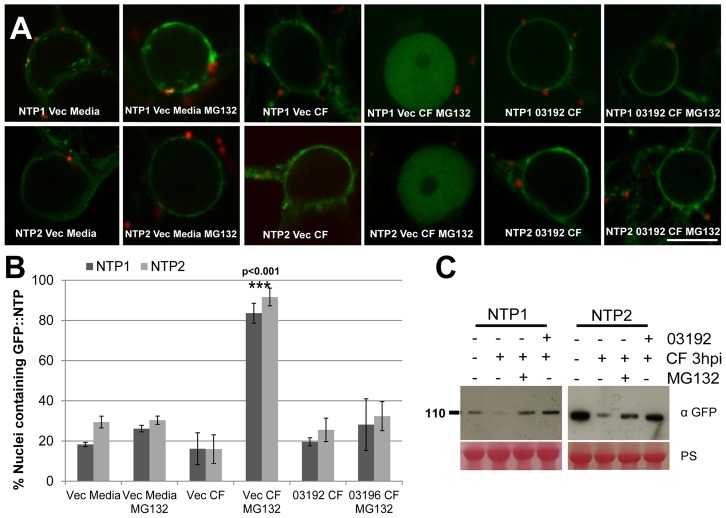
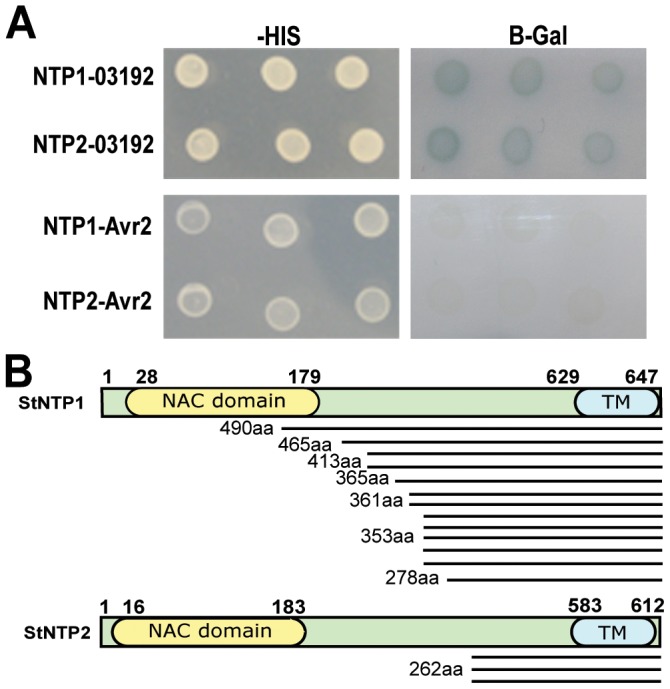
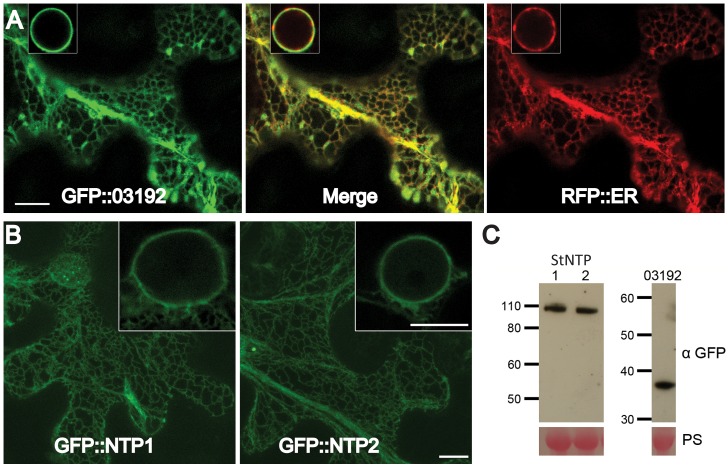
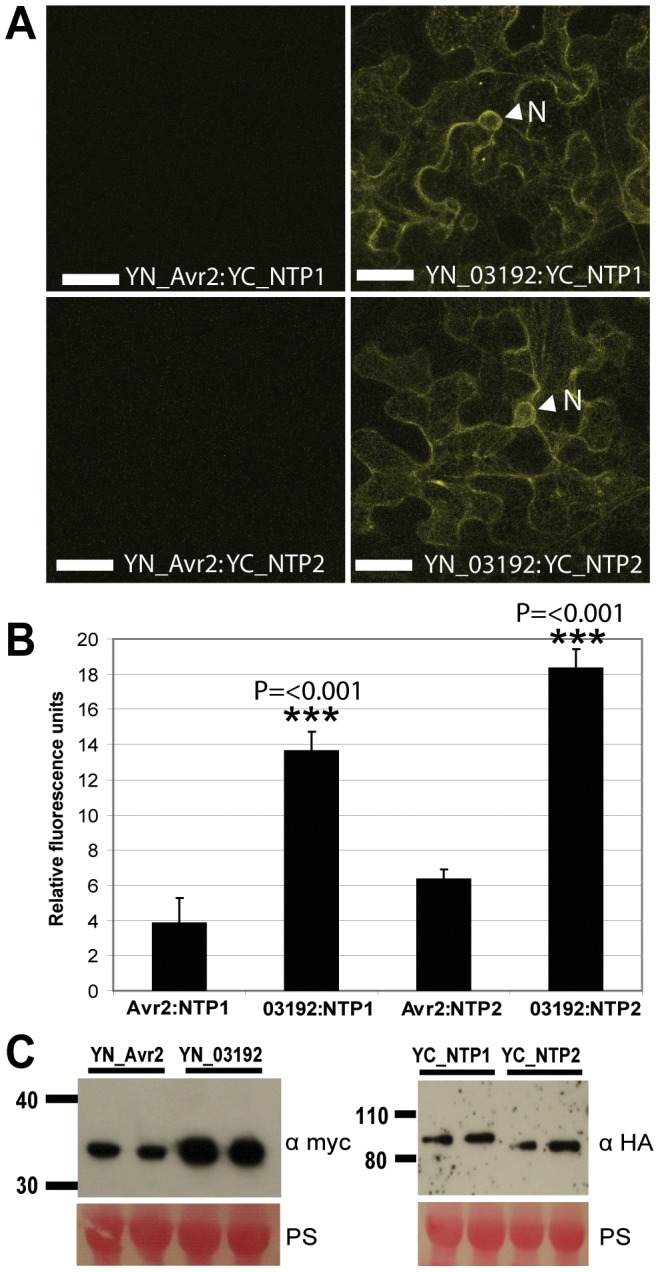
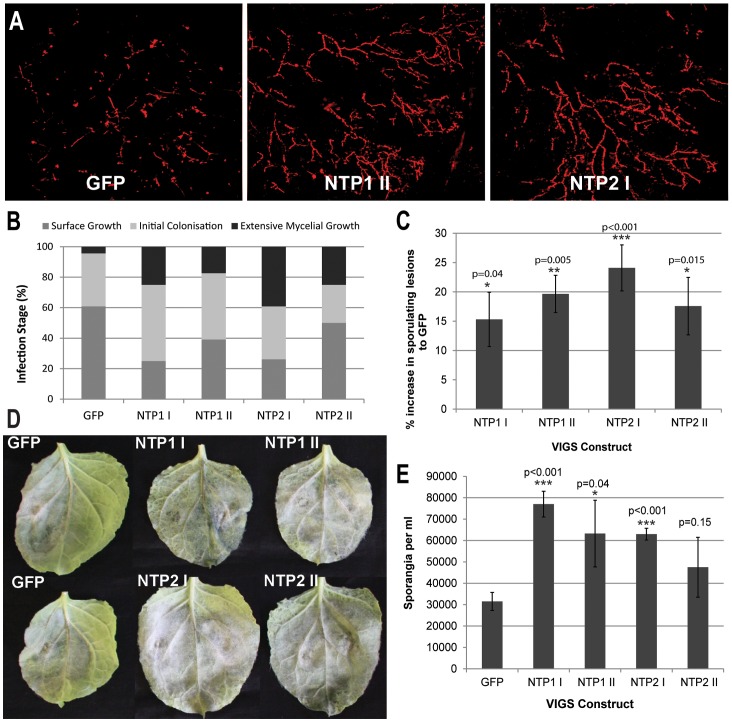
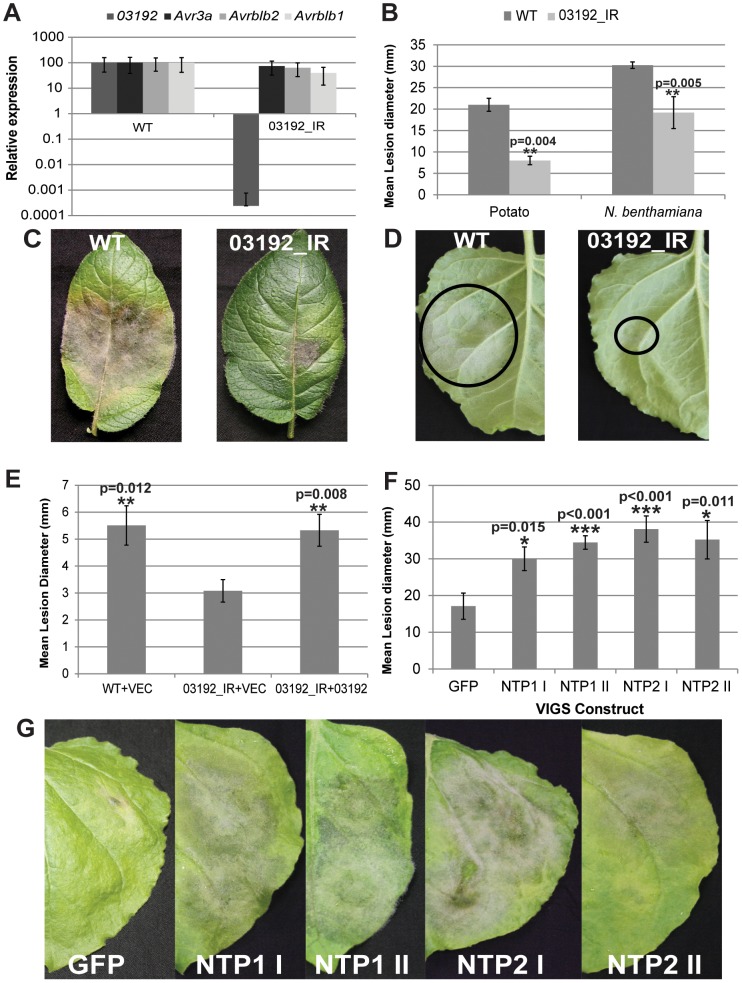
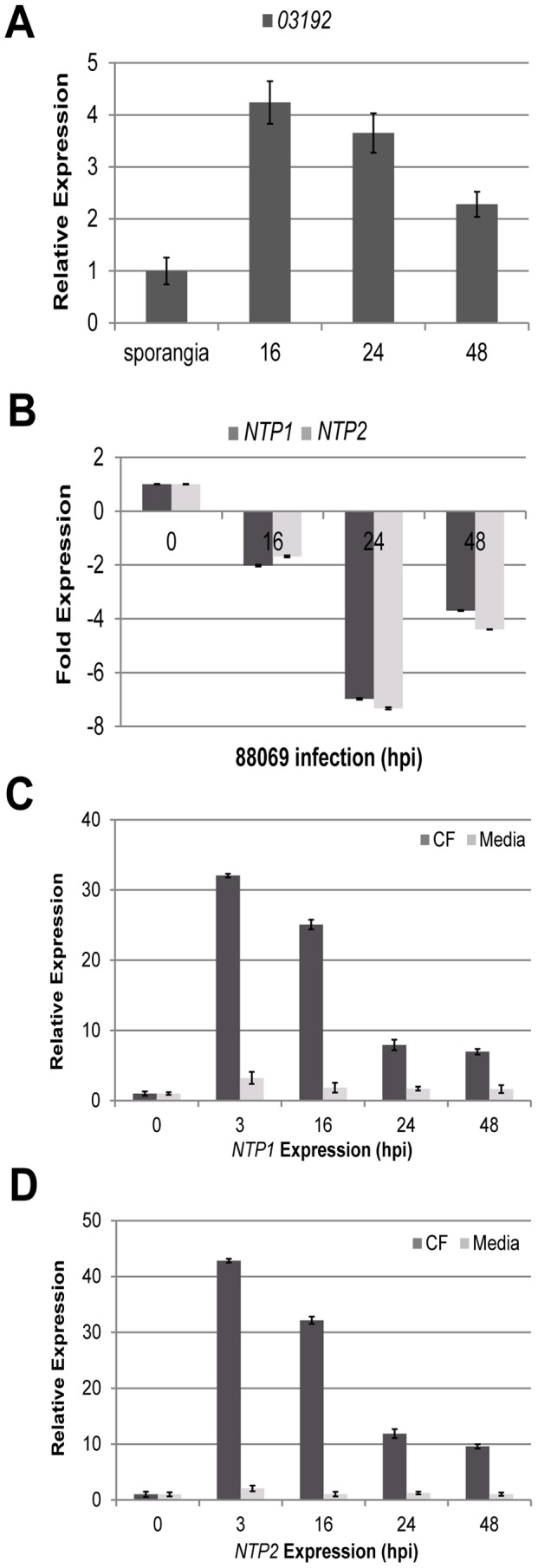
The potato late blight pathogen Phytophthora infestans secretes an array of effector proteins thought to act in its hosts by disarming defences and promoting pathogen colonisation. However, little is known about the host targets of these effectors and how they are manipulated by the pathogen. This work describes the identification of two putative membrane-associated NAC transcription factors (TF) as the host targets of the RxLR effector PITG_03192 (Pi03192). The effector interacts with NAC Targeted by Phytophthora (NTP) 1 and NTP2 at the endoplasmic reticulum (ER) membrane, where these proteins are localised. Transcripts of NTP1 and NTP2 rapidly accumulate following treatment with culture filtrate (CF) from in vitro grown P. infestans, which acts as a mixture of Phytophthora PAMPs and elicitors, but significantly decrease during P. infestans infection, indicating that pathogen activity may prevent their up-regulation. Silencing of NTP1 or NTP2 in the model host plant Nicotiana benthamiana increases susceptibility to P. infestans, whereas silencing of Pi03192 in P. infestans reduces pathogenicity. Transient expression of Pi03192 in planta restores pathogenicity of the Pi03192-silenced line. Moreover, colonisation by the Pi03192-silenced line is significantly enhanced on N. benthamiana plants in which either NTP1 or NTP2 have been silenced. StNTP1 and StNTP2 proteins are released from the ER membrane following treatment with P. infestans CF and accumulate in the nucleus, after which they are rapidly turned over by the 26S proteasome. In contrast, treatment with the defined PAMP flg22 fails to up-regulate NTP1 and NTP2, or promote re-localisation of their protein products to the nucleus, indicating that these events follow perception of a component of CF that appears to be independent of the FLS2/flg22 pathway. Importantly, Pi03192 prevents CF-triggered re-localisation of StNTP1 and StNTP2 from the ER into the nucleus, revealing a novel effector mode-of-action to promote disease progression.
马铃薯晚疫病菌分泌一系列效应蛋白,被认为通过破坏防御和促进病原体定殖来作用于宿主。然而,人们对这些效应物的宿主靶标以及病原体如何操纵它们知之甚少。这项工作描述了鉴定两个假定的膜相关 NAC 转录因子(TF)作为 RxLR 效应物 PITG_03192(Pi03192)的宿主靶标的过程。该效应物与内质网(ER)膜上的 NAC Targeted by Phytophthora(NTP)1 和 NTP2 相互作用,这些蛋白定位于内质网。用体外培养的马铃薯晚疫病菌培养滤液(CF)处理后,NTP1 和 NTP2 的转录本迅速积累,CF 作为混合物包含了植物病原菌相关分子模式(PAMP)和激发子,但在马铃薯晚疫病菌感染过程中显著减少,表明病原体的活性可能阻止它们的上调。在模式宿主植物烟草原生质体中沉默 NTP1 或 NTP2 会增加对马铃薯晚疫病菌的敏感性,而在马铃薯晚疫病菌中沉默 Pi03192 会降低其致病性。在体内瞬时表达 Pi03192 可恢复 Pi03192 沉默系的致病性。此外,Pi03192 沉默系在烟草原生质体中对 NTP1 或 NTP2 沉默的植株的定殖能力显著增强。StNTP1 和 StNTP2 蛋白在用马铃薯晚疫病菌 CF 处理后从 ER 膜上释放出来,并在细胞核中积累,然后被 26S 蛋白酶体迅速降解。相比之下,用定义明确的 PAMP flg22 处理不会上调 NTP1 和 NTP2,也不会促进其蛋白产物重新定位于细胞核,这表明这些事件是在感知 CF 的一个成分后发生的,该成分似乎独立于 FLS2/flg22 途径。重要的是,Pi03192 阻止 CF 触发的 StNTP1 和 StNTP2 从 ER 重新定位到细胞核,揭示了一种促进疾病进展的新型效应物作用模式。