Department of Civil Engineering, Johns Hopkins University, Baltimore, Maryland, United States of America ; Department of Civil Engineering, Shanghai Jiao Tong University, Shanghai, China.
PLoS One. 2013 Oct 17;8(10):e77417. doi: 10.1371/journal.pone.0077417. eCollection 2013.
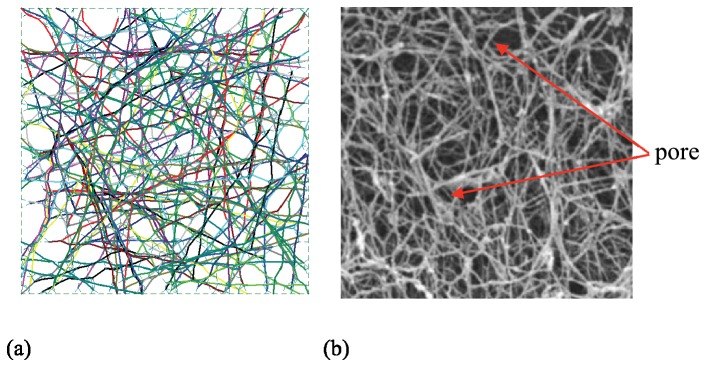
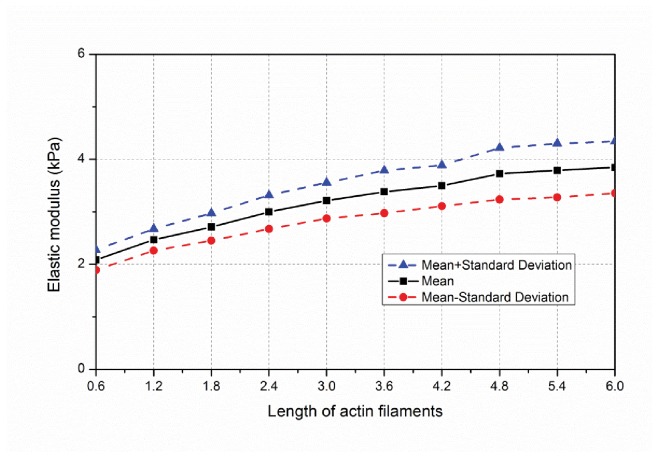
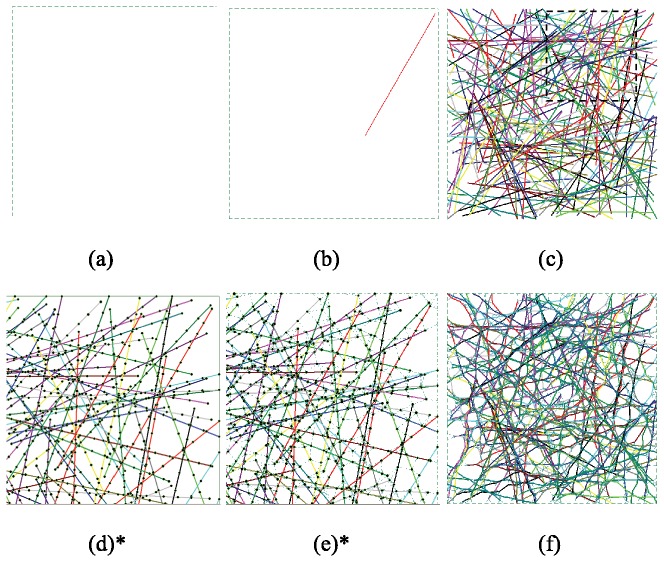
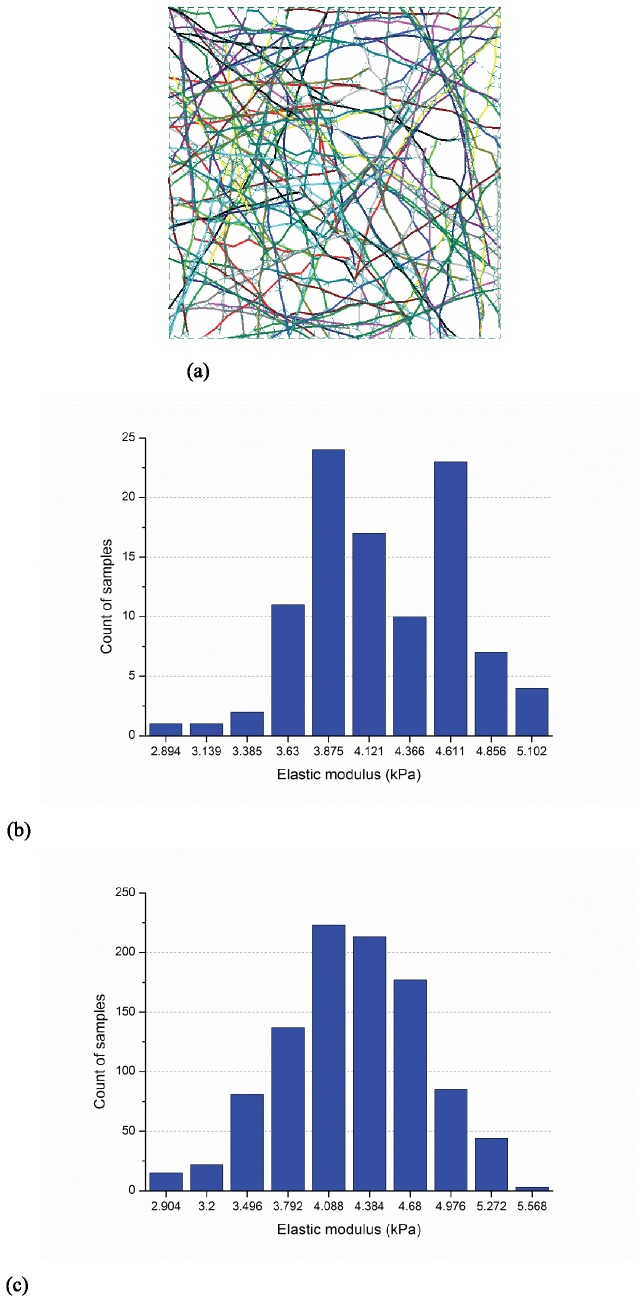
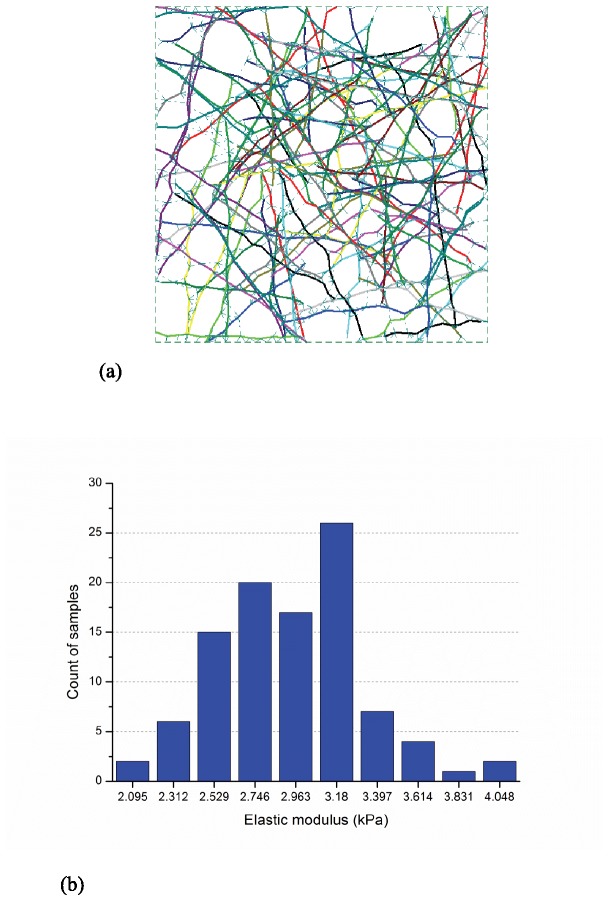
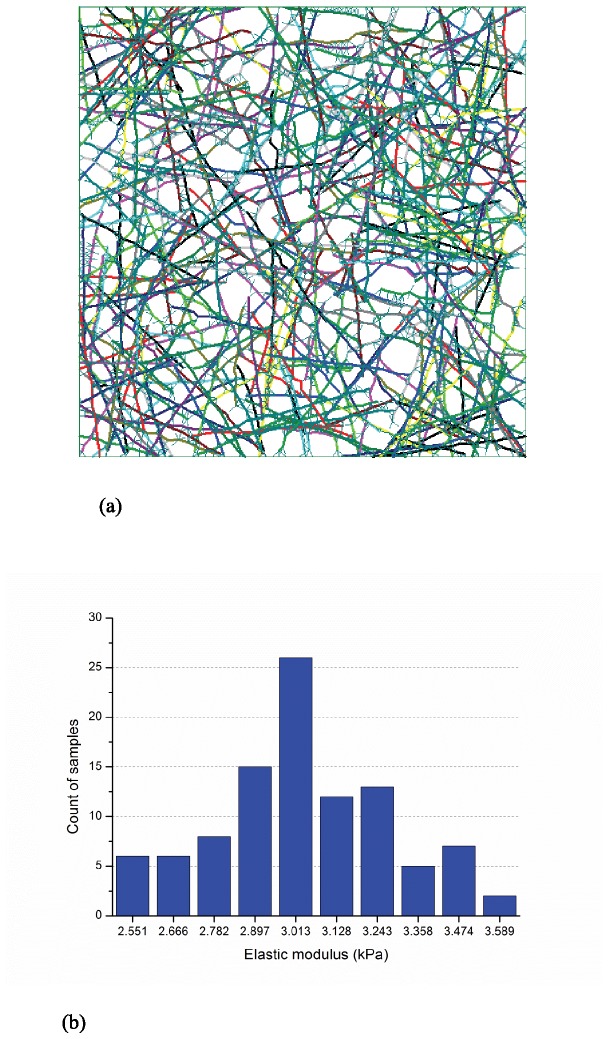
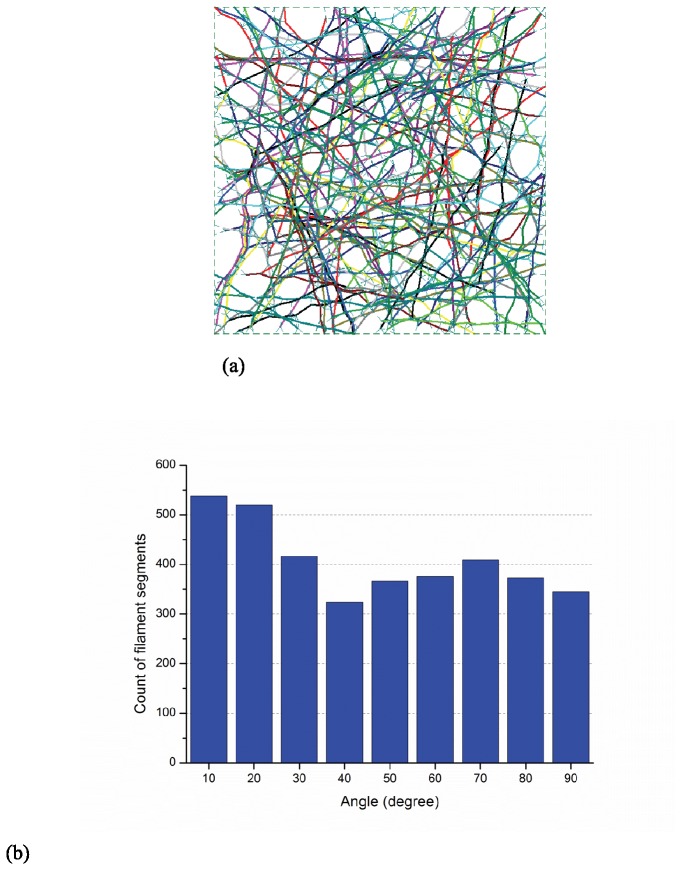
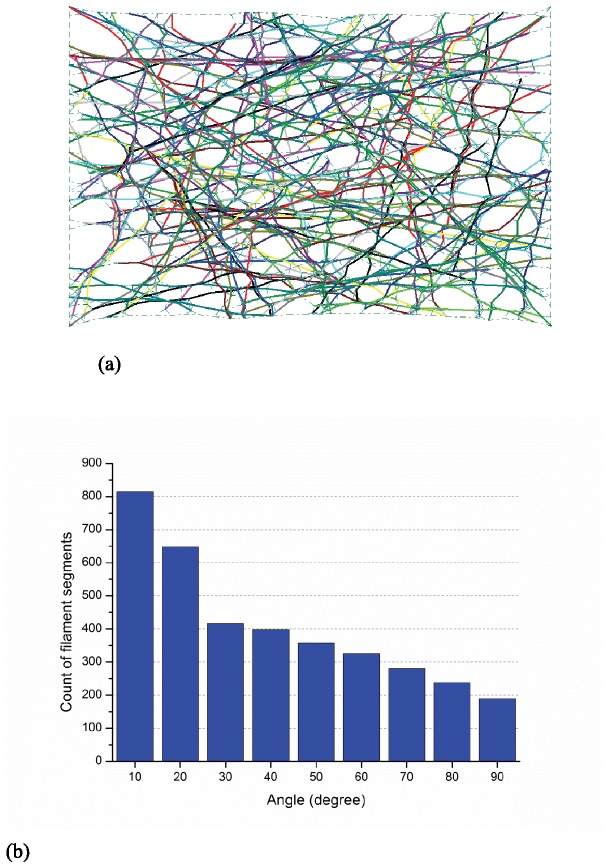
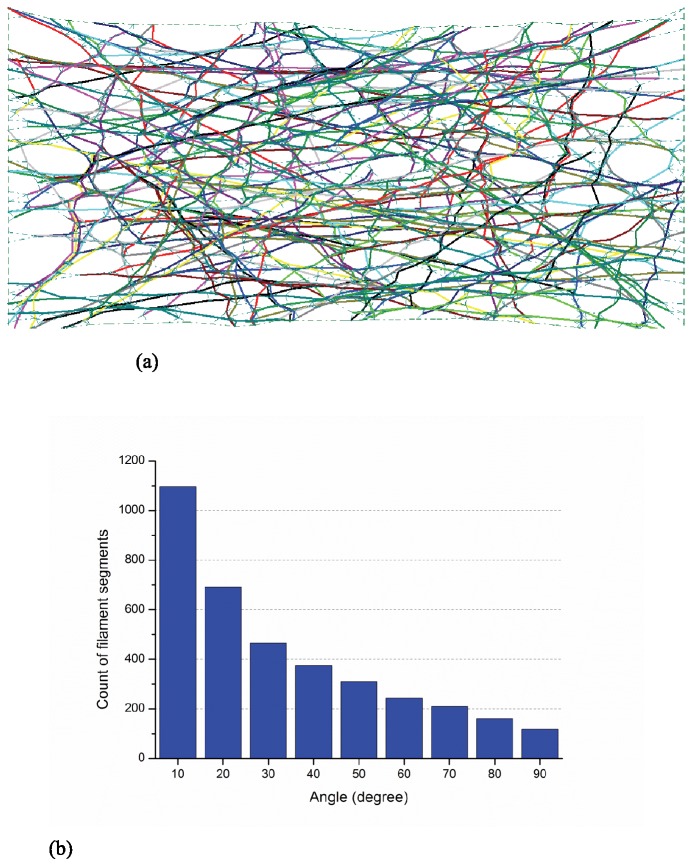
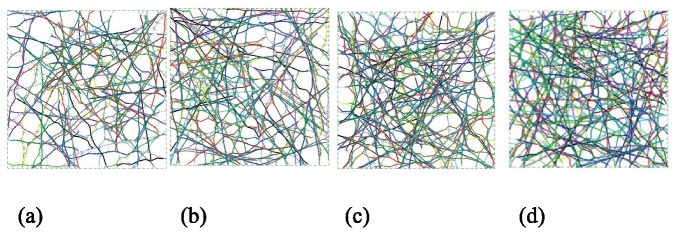
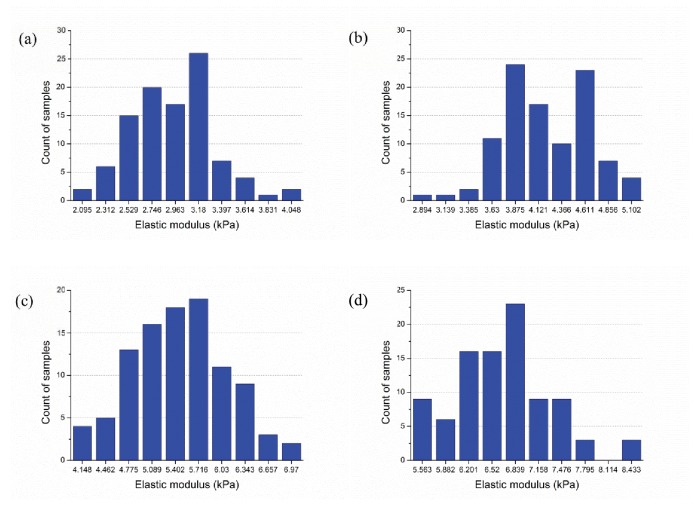
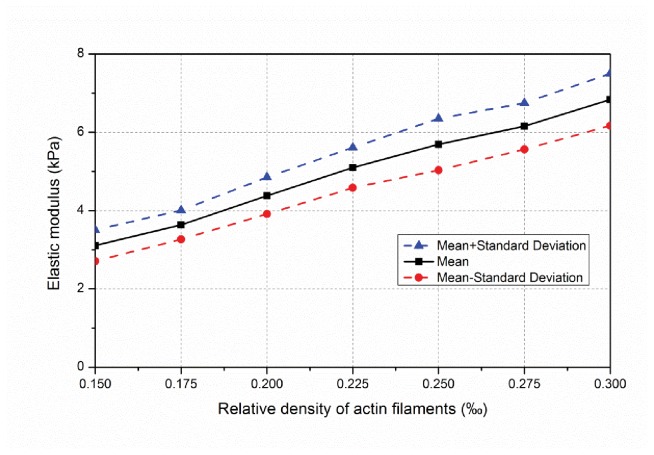
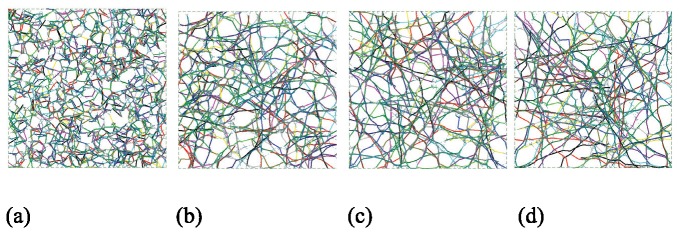
In eukaryotic cells the actin-cytoskeletal network provides stiffness and the driving force that contributes to changes in cell shape and cell motility, but the elastic behavior of this network is not well understood. In this paper a two dimensional form-finding model is proposed to investigate the elasticity of the actin filament network. Utilizing an initially random array of actin filaments and actin-cross-linking proteins the form-finding model iterates until the random array is brought into a stable equilibrium configuration. With some care given to actin filament density and length, distance between host sites for cross-linkers, and overall domain size the resulting configurations from the form-finding model are found to be topologically similar to cytoskeletal networks in real cells. The resulting network may then be mechanically exercised to explore how the actin filaments deform and align under load and the sensitivity of the network's stiffness to actin filament density, length, etc. Results of the model are consistent with the experimental literature, e.g. actin filaments tend to re-orient in the direction of stretching; and the filament relative density, filament length, and actin-cross-linking protein's relative density, control the actin-network stiffness. The model provides a ready means of extension to more complicated domains and a three-dimensional form-finding model is under development as well as models studying the formation of actin bundles.
在真核细胞中,肌动蛋白细胞骨架网络提供了刚性和驱动力,有助于细胞形状和细胞运动的变化,但该网络的弹性行为还不是很清楚。本文提出了一个二维形态形成模型来研究肌动蛋白丝网络的弹性。利用初始的随机肌动蛋白丝和肌动蛋白交联蛋白阵列,形态形成模型进行迭代,直到随机阵列被带入稳定的平衡配置。通过仔细考虑肌动蛋白丝密度和长度、交联蛋白的宿主位点之间的距离以及整体域大小,形态形成模型的结果配置被发现与真实细胞中的细胞骨架网络在拓扑上相似。然后可以对得到的网络进行力学处理,以研究在载荷下肌动蛋白丝如何变形和对齐,以及网络刚度对肌动蛋白丝密度、长度等的敏感性。模型的结果与实验文献一致,例如,肌动蛋白丝倾向于在拉伸的方向上重新取向;并且纤维相对密度、纤维长度和肌动蛋白交联蛋白的相对密度控制着肌动蛋白网络的刚度。该模型为更复杂的域提供了一种扩展的方法,目前正在开发三维形态形成模型以及研究肌动蛋白束形成的模型。