Neuroscience Graduate Program, University of Southern California Los Angeles, CA, USA ; Brain and Creativity Institute Los Angeles, CA, USA.
Front Psychol. 2013 Oct 23;4:772. doi: 10.3389/fpsyg.2013.00772. eCollection 2013.
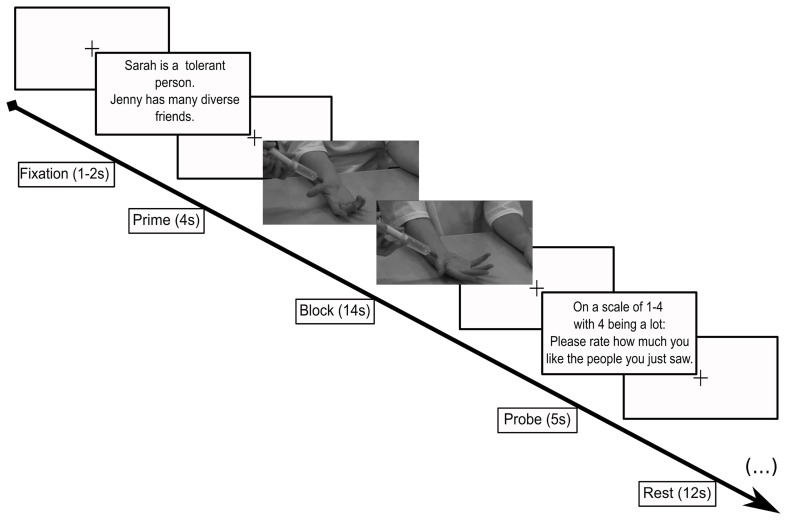
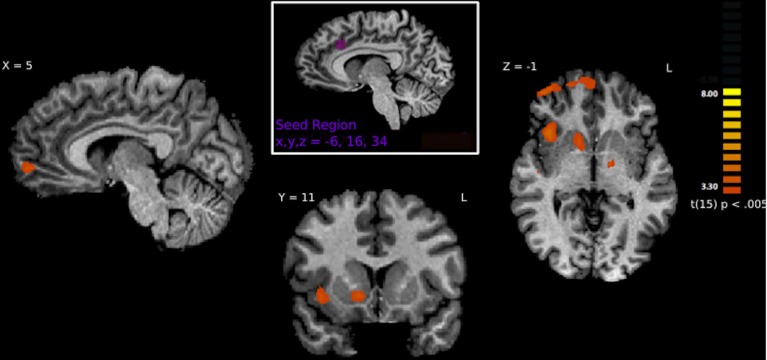
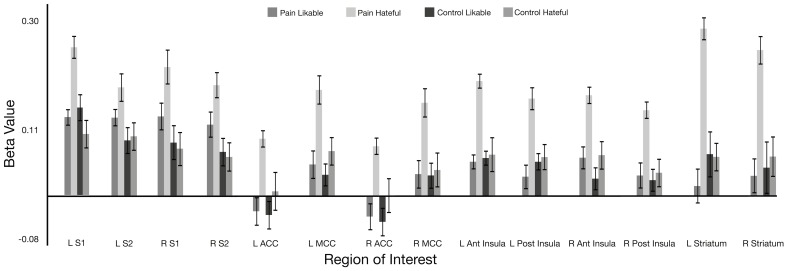
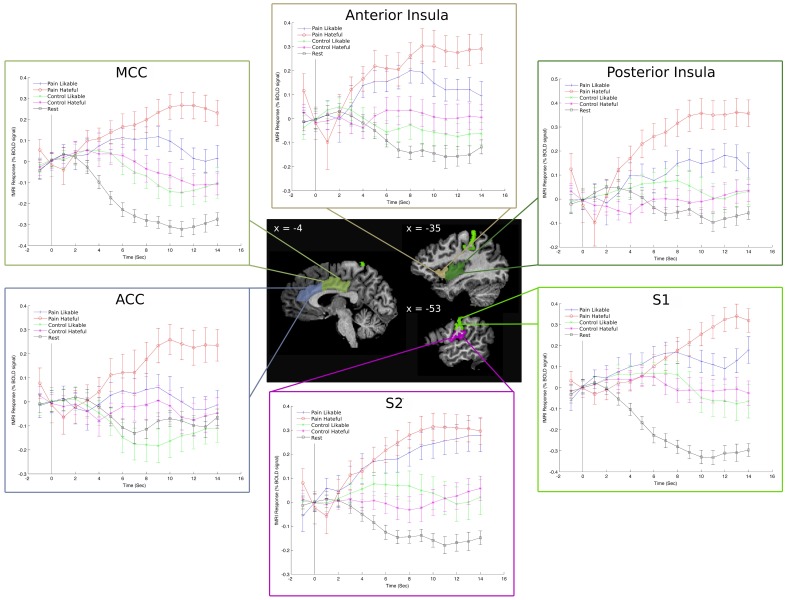
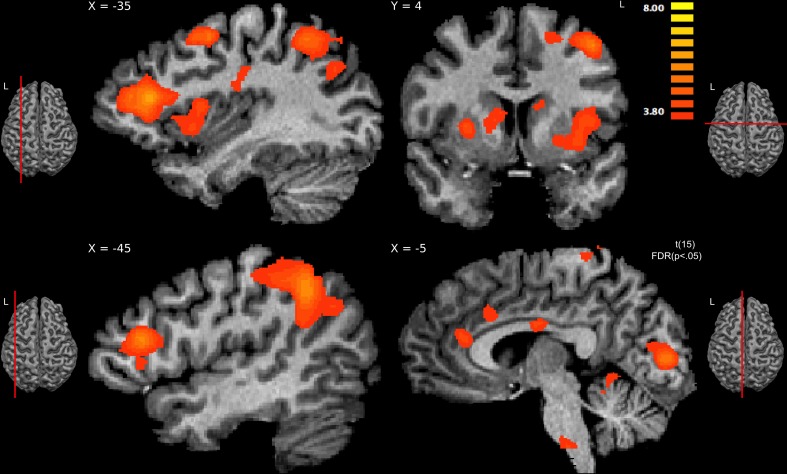
How does witnessing a hateful person in pain compare to witnessing a likable person in pain? The current study compared the brain bases for how we perceive likable people in pain with those of viewing hateful people in pain. While social bonds are built through sharing the plight and pain of others in the name of empathy, viewing a hateful person in pain also has many potential ramifications. In this functional Magnetic Resonance Imaging (fMRI) study, Caucasian Jewish male participants viewed videos of (1) disliked, hateful, anti-Semitic individuals, and (2) liked, non-hateful, tolerant individuals in pain. The results showed that, compared with viewing liked people, viewing hateful people in pain elicited increased responses in regions associated with observation of physical pain (the insular cortex, the anterior cingulate cortex (ACC), and the somatosensory cortex), reward processing (the striatum), and frontal regions associated with emotion regulation. Functional connectivity analyses revealed connections between seed regions in the left ACC and right insular cortex with reward regions, the amygdala, and frontal regions associated with emotion regulation. These data indicate that regions of the brain active while viewing someone in pain may be more active in response to the danger or threat posed by witnessing the pain of a hateful individual more so than the desire to empathize with a likable person's pain.
看到可恨的人痛苦与看到可爱的人痛苦有何不同?本研究比较了我们感知可爱的人在痛苦中的大脑基础与观看可恨的人在痛苦中的大脑基础。虽然社会关系是通过以同理心的名义分担他人的困境和痛苦来建立的,但看到可恨的人在痛苦中也有许多潜在的影响。在这项功能磁共振成像(fMRI)研究中,白种人犹太男性参与者观看了(1)不喜欢、可恨、反犹太个体,以及(2)痛苦中的喜欢、不讨厌、宽容个体的视频。结果表明,与观看可爱的人相比,观看可恨的人在痛苦中会引起与观察身体疼痛(脑岛、前扣带皮层(ACC)和躯体感觉皮层)、奖励处理(纹状体)以及与情绪调节相关的额叶区域相关的区域的反应增加。功能连接分析显示,左 ACC 和右脑岛的种子区域与奖励区域、杏仁核和与情绪调节相关的额叶区域之间存在连接。这些数据表明,在观看某人痛苦时活跃的大脑区域可能会因目睹可恨的人痛苦所带来的危险或威胁而更加活跃,而不是因为渴望同情可爱的人的痛苦。