Kesner Ladislav, Fajnerová Iveta, Adámek Petr, Buchtík Martin, Grygarová Dominika, Hlinka Jaroslav, Kozelka Pavel, Nekovářová Tereza, Španiel Filip, Tintěra Jaroslav, Alexová Aneta, Greguš David, Horáček Jiří
Applied Neurosciences and Neuroimaging, National Institute of Mental Health, Klecany, Czechia.
Department of Art History, Faculty of Arts, Masaryk University, Brno, Czechia.
Front Behav Neurosci. 2020 Sep 11;14:98. doi: 10.3389/fnbeh.2020.00098. eCollection 2020.
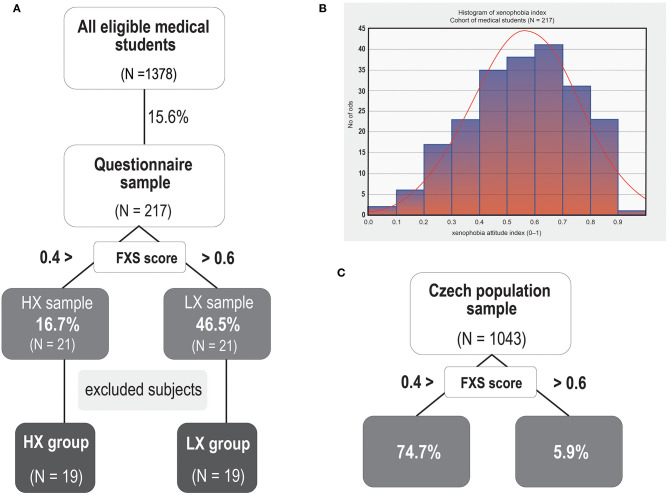
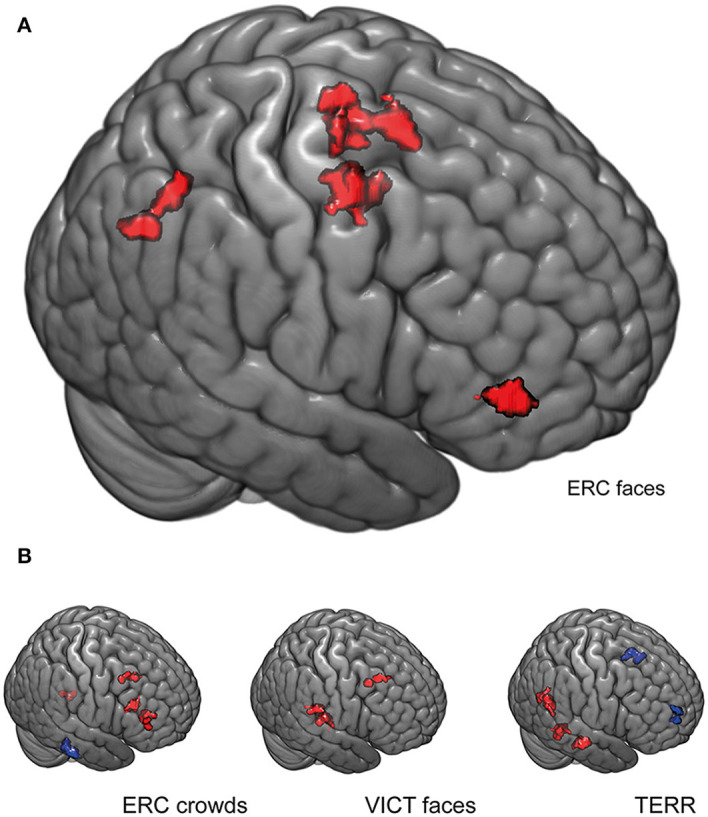
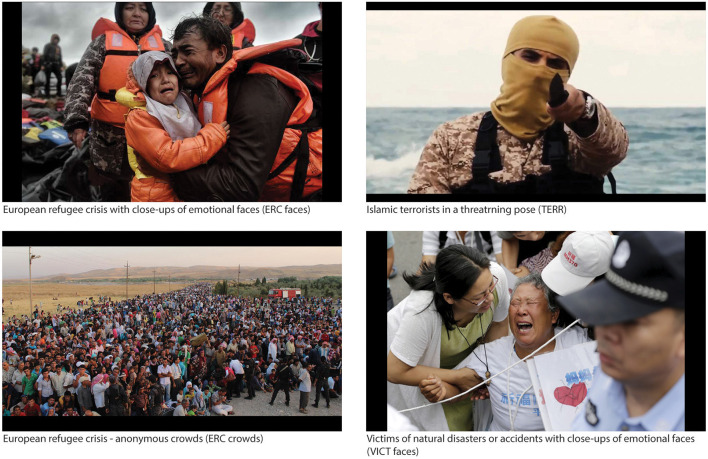
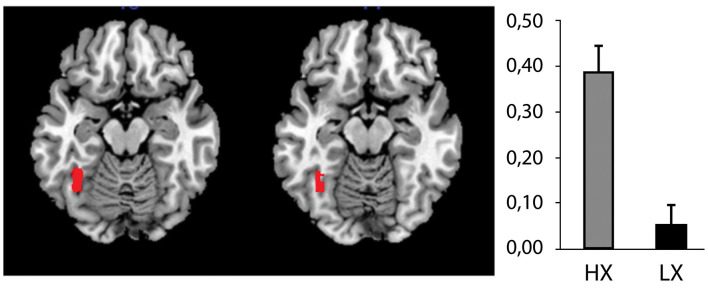
This study analyzes how people's attitudes to the European refugee crisis (ERC) correspond to selected psychological state and trait measures and impact the neural processing of media images of refugees. From a large pool of respondents, who filled in an online xenophobia questionnaire, we selected two groups (total = 38) with the same socio-demographic background, but with opposite attitudes toward refugees. We found that a negative attitude toward refugees (high xenophobia - HX) was associated with a significantly higher conscientiousness score and with a higher trait aggression and hostility, but there was no group effect connected with empathy, fear, and anxiety measures. At the neural level we found that brain activity during the presentation of ERC stimuli is affected by xenophobic attitudes-with more xenophobic subjects exhibiting a higher BOLD response in the left fusiform gyrus. However, while the fMRI results demonstrate increased attention and vigilance toward ERC-related stimuli in the HX group, they do not show differentiated patterns of brain activity associated with perception of dehumanized outgroup.
本研究分析了人们对欧洲难民危机(ERC)的态度如何与选定的心理状态和特质测量指标相对应,以及如何影响对难民媒体图像的神经处理。从大量填写了在线仇外心理问卷的受访者中,我们挑选了两组(共38人)具有相同社会人口背景,但对难民态度相反的人。我们发现,对难民的消极态度(高仇外心理-HX)与显著更高的尽责性得分、更高的特质攻击性和敌意相关,但在共情、恐惧和焦虑测量方面没有群体效应。在神经层面,我们发现,在呈现ERC刺激期间的大脑活动受仇外态度影响,仇外心理更强的受试者在左侧梭状回表现出更高的血氧水平依赖(BOLD)反应。然而,虽然功能磁共振成像(fMRI)结果表明HX组对与ERC相关的刺激的注意力和警惕性有所提高,但并未显示出与对被非人化的外群体的感知相关的大脑活动差异模式。