Department of Botany and Plant Sciences, Center for Plant Cell Biology, University of California Riverside, Riverside, California, United States of America.
PLoS One. 2013 Oct 24;8(10):e77889. doi: 10.1371/journal.pone.0077889. eCollection 2013.
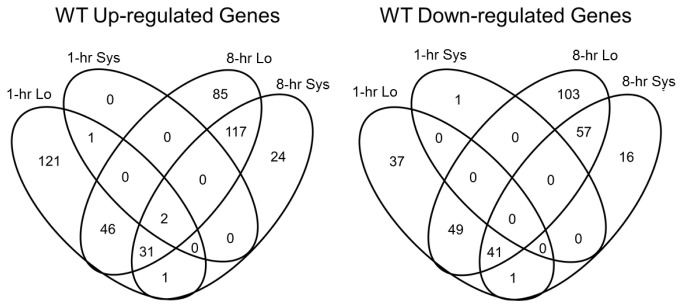
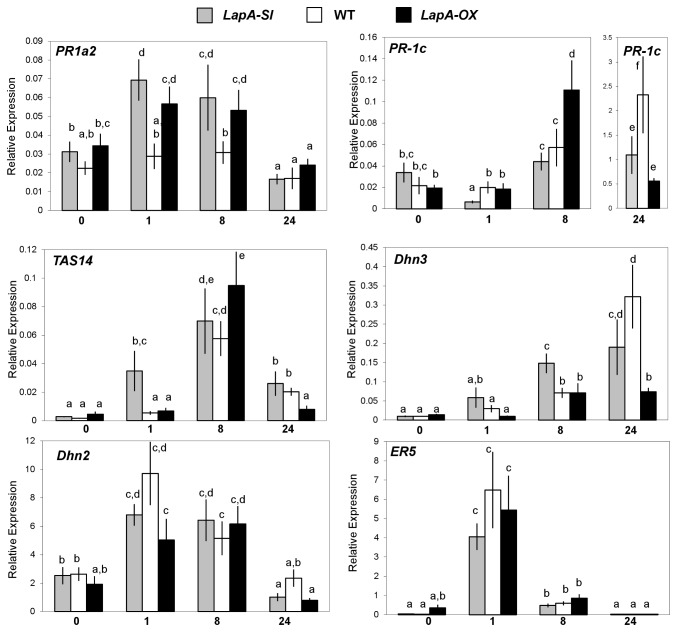
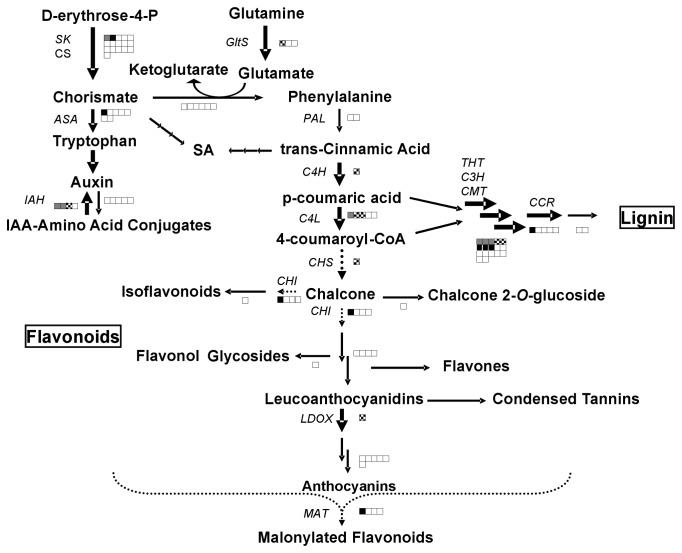
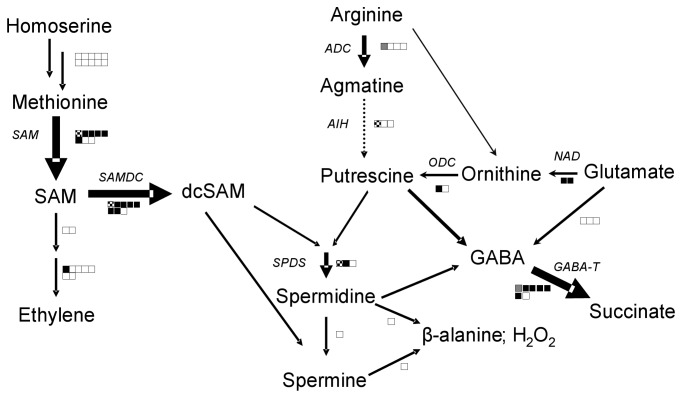
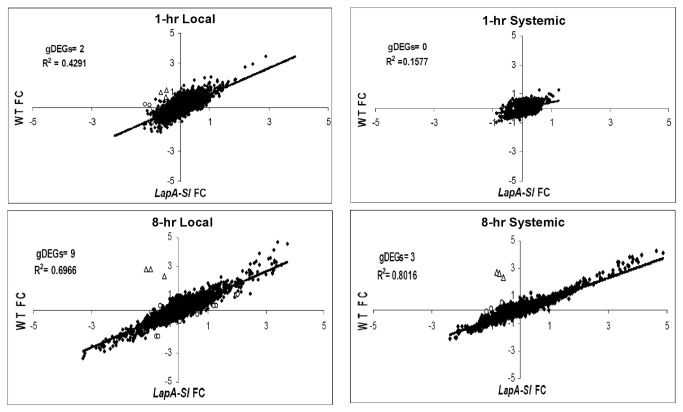
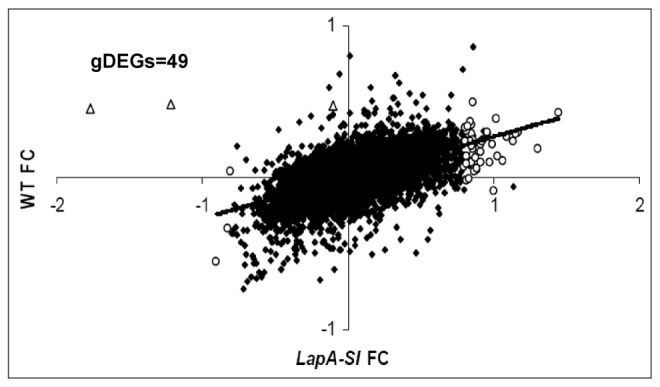
Wounding due to mechanical injury or insect feeding causes a wide array of damage to plant cells including cell disruption, desiccation, metabolite oxidation, and disruption of primary metabolism. In response, plants regulate a variety of genes and metabolic pathways to cope with injury. Tomato (Solanum lycopersicum) is a model for wound signaling but few studies have examined the comprehensive gene expression profiles in response to injury. A cross-species microarray approach using the TIGR potato 10-K cDNA array was analyzed for large-scale temporal (early and late) and spatial (locally and systemically) responses to mechanical wounding in tomato leaves. These analyses demonstrated that tomato regulates many primary and secondary metabolic pathways and this regulation is dependent on both timing and location. To determine if LAP-A, a known modulator of wound signaling, influences gene expression beyond the core of late wound-response genes, changes in RNAs from healthy and wounded Leucine aminopeptidase A-silenced (LapA-SI) and wild-type (WT) leaves were examined. While most of the changes in gene expression after wounding in LapA-SI leaves were similar to WT, overall responses were delayed in the LapA-SI leaves. Moreover, two pathogenesis-related 1 (PR-1c and PR-1a2) and two dehydrin (TAS14 and Dhn3) genes were negatively regulated by LAP-A. Collectively, this study has shown that tomato wound responses are complex and that LAP-A's role in modulation of wound responses extends beyond the well described late-wound gene core.
机械损伤或昆虫取食造成的创伤会对植物细胞造成广泛的损伤,包括细胞破裂、干燥、代谢物氧化以及初生代谢的破坏。作为响应,植物会调控多种基因和代谢途径来应对损伤。番茄(Solanum lycopersicum)是创伤信号转导的模式植物,但很少有研究检测过植物受到创伤后的全面基因表达谱。本研究利用 TIGR 马铃薯 10-K cDNA 芯片进行了跨物种的微阵列分析,以研究番茄叶片受到机械创伤后的早期和晚期、局部和系统的大规模时间和空间响应。这些分析表明,番茄调控了许多初生和次生代谢途径,而这种调控既依赖于时间又依赖于位置。为了确定已知的创伤信号转导调节剂 LAP-A 是否会影响核心晚期创伤应答基因之外的基因表达,研究人员检测了健康和受伤的亮氨酸氨肽酶 A 沉默(LapA-SI)和野生型(WT)叶片中的 RNA 变化。尽管在 LapA-SI 叶片中,受伤后大多数基因表达的变化与 WT 相似,但整体响应在 LapA-SI 叶片中延迟。此外,两个病程相关蛋白 1(PR-1c 和 PR-1a2)和两个脱水素(TAS14 和 Dhn3)基因受到 LAP-A 的负调控。综上所述,本研究表明番茄创伤反应复杂,LAP-A 在调节创伤反应中的作用超出了已知的晚期创伤基因核心。