Key Laboratory of Pollution Ecology and Environmental Engineering, Institute of Applied Ecology, Chinese Academy of Sciences, Shenyang, China.
PLoS One. 2013 Oct 29;8(10):e77891. doi: 10.1371/journal.pone.0077891. eCollection 2013.
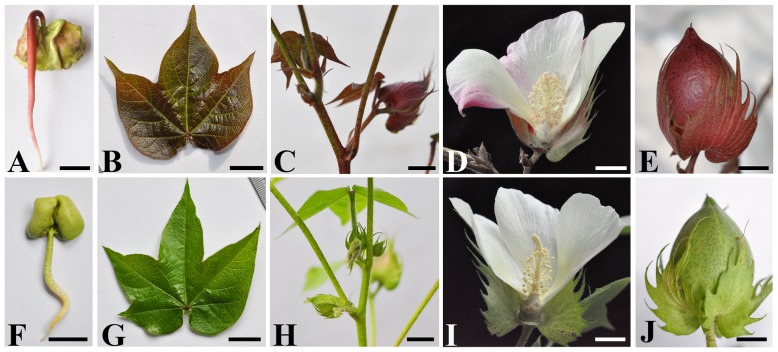
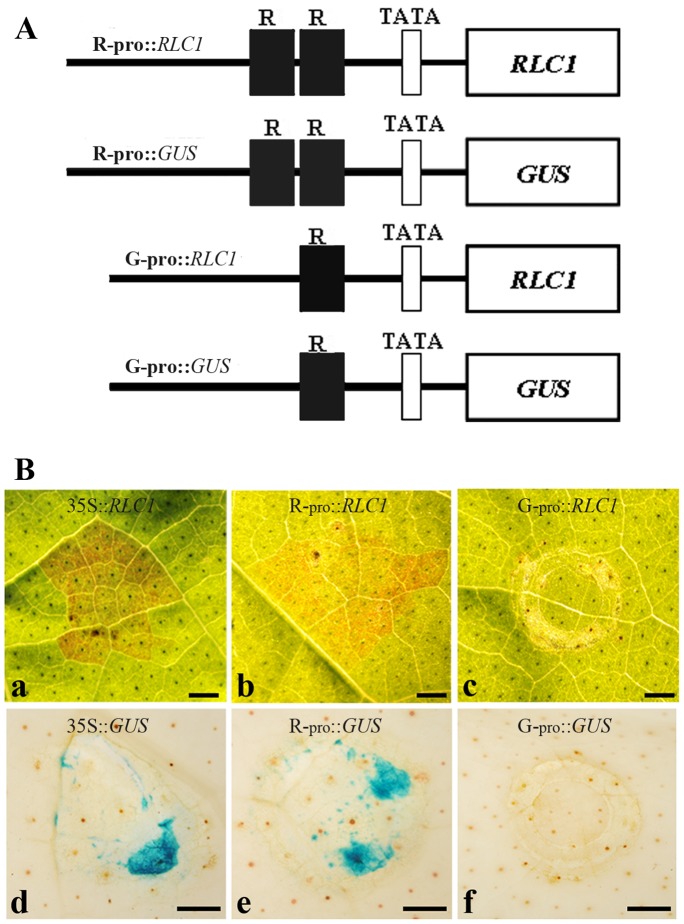
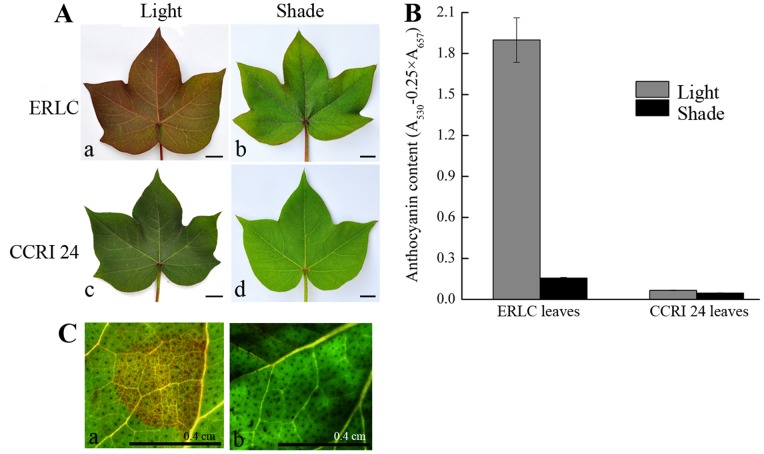
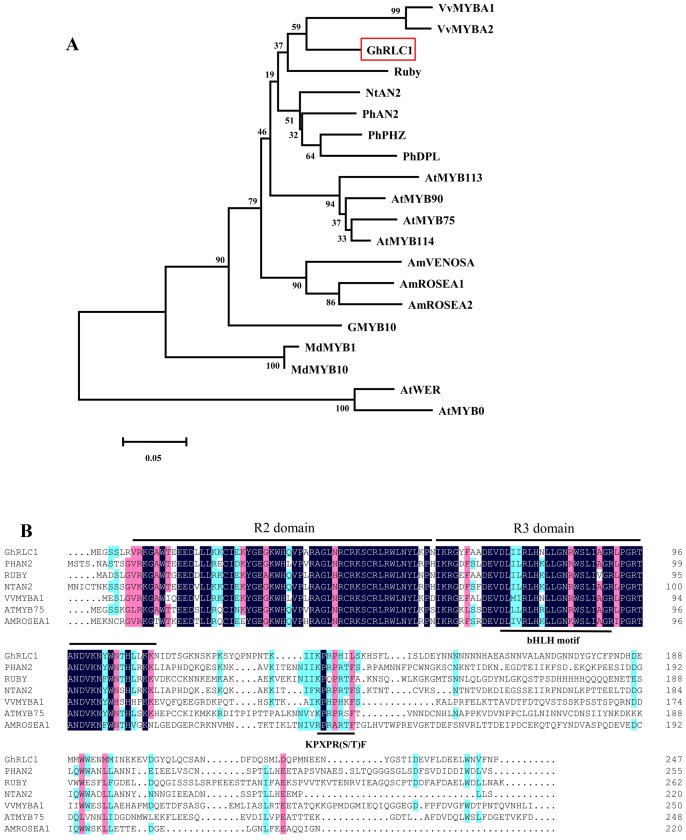
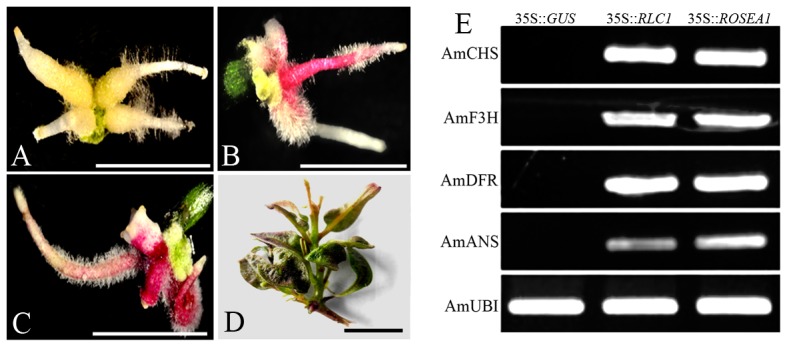
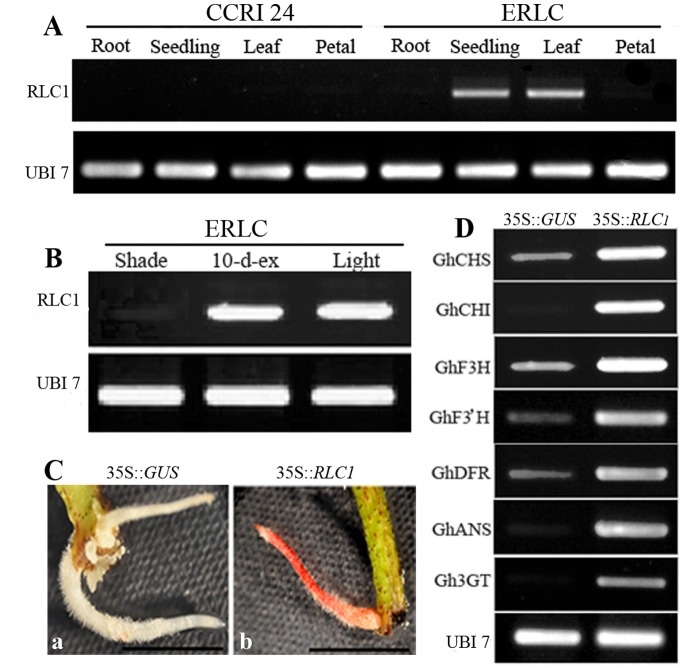
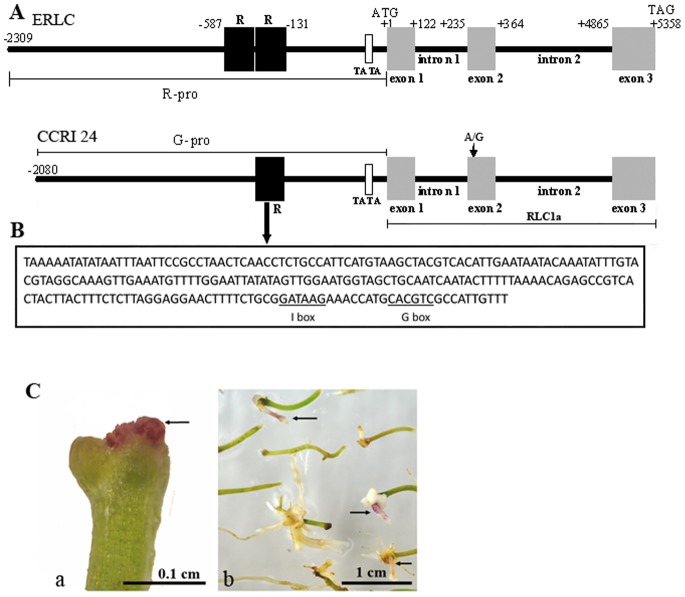
The red leaf coloration of Empire Red Leaf Cotton (ERLC) (Gossypium hirsutum L.), resulted from anthocyanin accumulation in light, is a well known dominant agricultural trait. However, the underpin molecular mechanism remains elusive. To explore this, we compared the molecular biological basis of anthocyanin accumulation in both ERLC and the green leaf cotton variety CCRI 24 (Gossypium hirsutum L.). Introduction of R2R3-MYB transcription factor Rosea1, the master regulator anthocyanin biosynthesis in Antirrhinum majus, into CCRI 24 induced anthocyanin accumulation, indicating structural genes for anthocyanin biosynthesis are not defected and the leaf coloration might be caused by variation of regulatory genes expression. Expression analysis found that a transcription factor RLC1 (Red Leaf Cotton 1) which encodes the ortholog of PAP1/Rosea1 was highly expressed in leaves of ERLC but barely expressed in CCRI 24 in light. Ectopic expression of RLC1 from ERLC and CCRI 24 in hairy roots of Antirrhinum majus and CCRI 24 significantly enhanced anthocyanin accumulation. Comparison of RLC1 promoter sequences between ERLC and CCRI 24 revealed two 228-bp tandem repeats presented in ERLC with only one repeat in CCRI 24. Transient assays in cotton leave tissue evidenced that the tandem repeats in ERLC is responsible for light-induced RLC1 expression and therefore anthocyanin accumulation. Taken together, our results in this article strongly support an important step toward understanding the role of R2R3-MYB transcription factors in the regulatory menchanisms of anthocyanin accumulation in red leaf cotton under light.
红叶色的帝国红棉(ERLC)(Gossypium hirsutum L.),由于花青素在光下积累,是一种众所周知的显性农业性状。然而,其基础分子机制仍不清楚。为了探讨这一点,我们比较了 ERLC 和绿叶棉花品种 CCRI 24(Gossypium hirsutum L.)中花青素积累的分子生物学基础。引入 R2R3-MYB 转录因子 Rosea1,它是金鱼草花青素生物合成的主要调节因子,导入 CCRI 24 中诱导花青素积累,表明花青素生物合成的结构基因没有缺陷,叶色可能是由于调节基因表达的变化。表达分析发现,一个转录因子 RLC1(红棉 1)在 ERLC 的叶片中高度表达,但在光照下 CCRI 24 中几乎不表达。RLC1 (来自 ERLC 和 CCRI 24 的同源物)在金鱼草和 CCRI 24 的发根中的异位表达显著增强了花青素的积累。在 ERLC 和 CCRI 24 之间比较 RLC1 启动子序列,发现 ERLC 中有两个 228-bp 的串联重复序列,而 CCRI 24 中只有一个重复序列。在棉花叶片组织中的瞬时分析表明,ERLC 中的串联重复序列负责光诱导的 RLC1 表达,因此花青素的积累。总之,我们在本文中的研究结果强烈支持了对 R2R3-MYB 转录因子在红棉叶光下花青素积累的调控机制中的作用的重要一步。