Eye Center, Second Affiliated Hospital, School of Medicine, Zhejiang University, Hangzhou, China.
PLoS One. 2013 Oct 24;8(10):e78647. doi: 10.1371/journal.pone.0078647. eCollection 2013.
Cataract is the leading cause of blindness worldwide. Many observational studies assessed the relationship between postmenopausal hormone replacement therapy (HRT) and risk of cataract development, but the reported results were controversial. The aim of present meta-analysis was to evaluate the association of postmenopausal hormone replacement therapy with risk of cataract development.
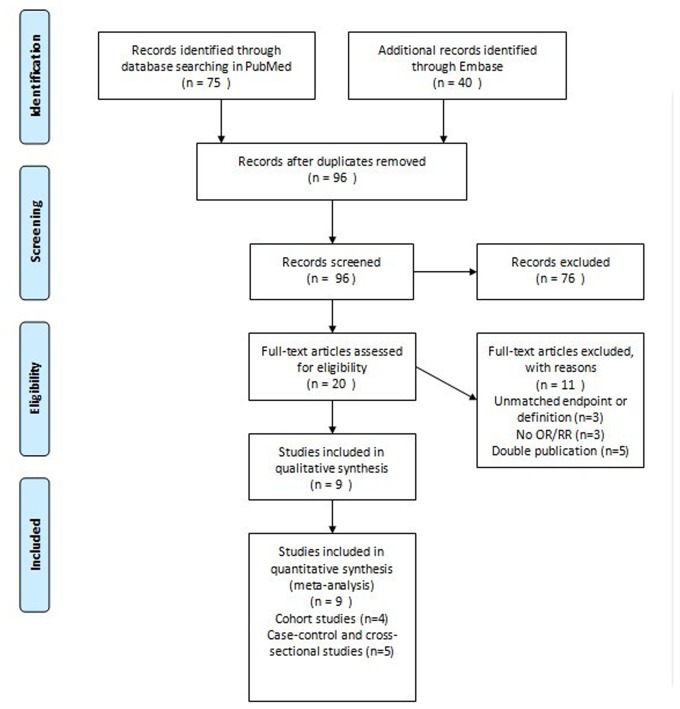
The eligible observational studies, including cross-sectional, case-control and cohort studies, were identified by searching PubMed and Embase during March of 2013. Either a fixed- or a random-effects model was used to calculate the pooled odds ratio (OR) with its 95% confidence interval (95%CI). Subgroup analysis on cataract types was performed.
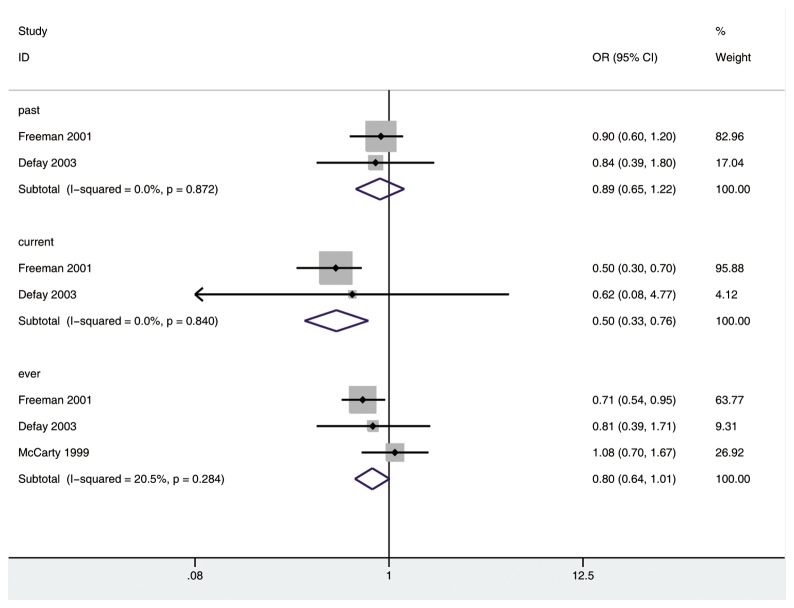
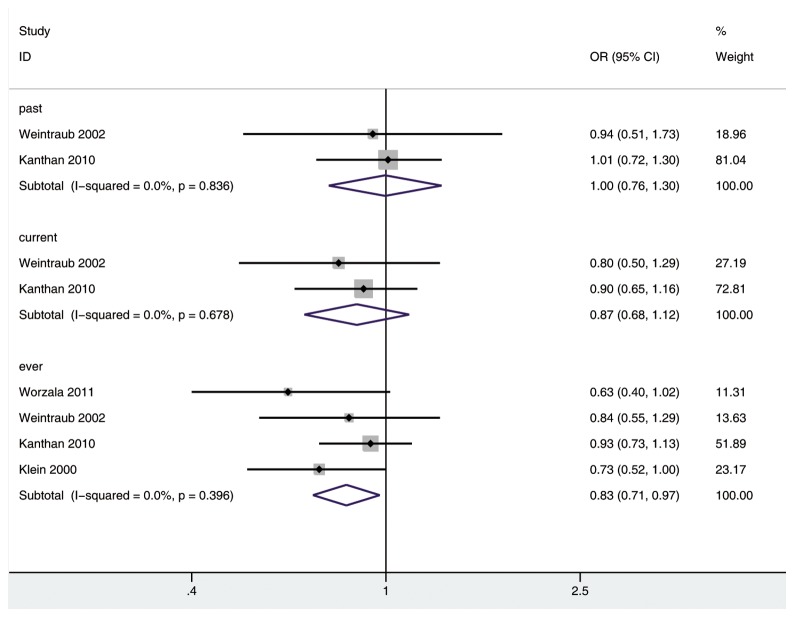
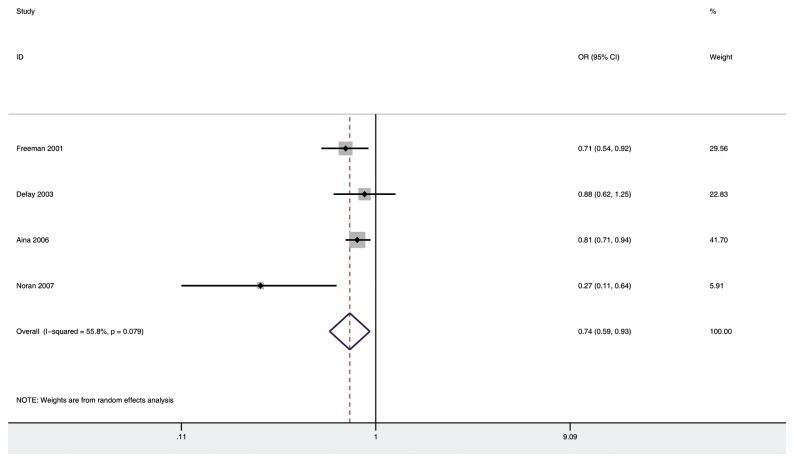
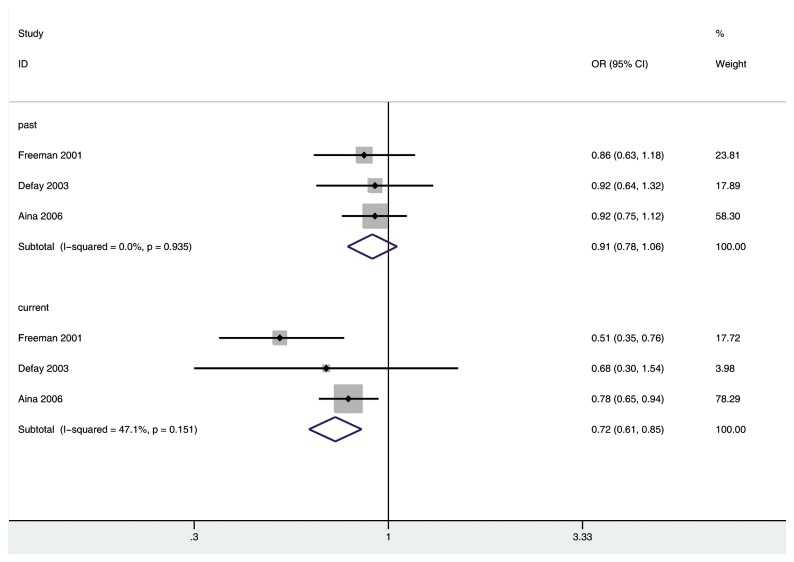
A total of four cohort and five case-control or cross-sectional studies were finally included into this meta-analysis. Overall, a significant decreased risk of developing any type of cataract was found in ever HRT group as compared with non-HRT group among cohort studies (OR 0.83; 95%CI: 0.71,0.97) and case-control or cross-sectional studies (OR 0.74; 95%CI: 0.59,0.93). Subgroup analysis on cataract types determined that the significantly decreased risk of nuclear cataract in current HRT group (OR 0.72; 95%CI: 0.61,0.85) and also a critically reduced risk of nuclear cataract in ever HRT group (OR 0.80; 95% CI: 0.64,1.01) were found among case-control or cross-sectional studies, as compared with non-HRT group. No association of HRT with risk of cortical and posterior subcapsular cataract was observed.
The results of present meta-analysis indicate that postmenopausal hormone use may play a protective role in cataract development.
白内障是全球致盲的首要原因。许多观察性研究评估了绝经后激素替代疗法(HRT)与白内障发展风险之间的关系,但报告的结果存在争议。本荟萃分析的目的是评估绝经后激素替代疗法与白内障发展风险之间的关系。
通过在 2013 年 3 月期间搜索 PubMed 和 Embase,确定了符合条件的观察性研究,包括横断面、病例对照和队列研究。使用固定或随机效应模型计算汇总比值比(OR)及其 95%置信区间(95%CI)。对白内障类型进行了亚组分析。
最终共有四项队列研究和五项病例对照或横断面研究纳入本荟萃分析。总体而言,与非 HRT 组相比,队列研究(OR 0.83;95%CI:0.71,0.97)和病例对照或横断面研究(OR 0.74;95%CI:0.59,0.93)中,使用过 HRT 的患者发生任何类型白内障的风险显著降低。白内障类型的亚组分析表明,当前 HRT 组核性白内障的风险显著降低(OR 0.72;95%CI:0.61,0.85),并且在病例对照或横断面研究中,曾经使用过 HRT 的患者核性白内障的风险也显著降低(OR 0.80;95%CI:0.64,1.01),与非 HRT 组相比。未观察到 HRT 与皮质性和后囊下白内障风险之间的关联。
本荟萃分析的结果表明,绝经后激素使用可能对白内障的发展具有保护作用。