García M, Fernández-Barredo S, Pérez-Gracia M T
Área Microbiología, Instituto Ciencias Biomédicas, Facultad Ciencias de la Salud, Universidad CEU Cardenal Herrera, Moncada (Valencia), Spain.
Microb Biotechnol. 2014 Jan;7(1):26-31. doi: 10.1111/1751-7915.12064. Epub 2013 Nov 11.
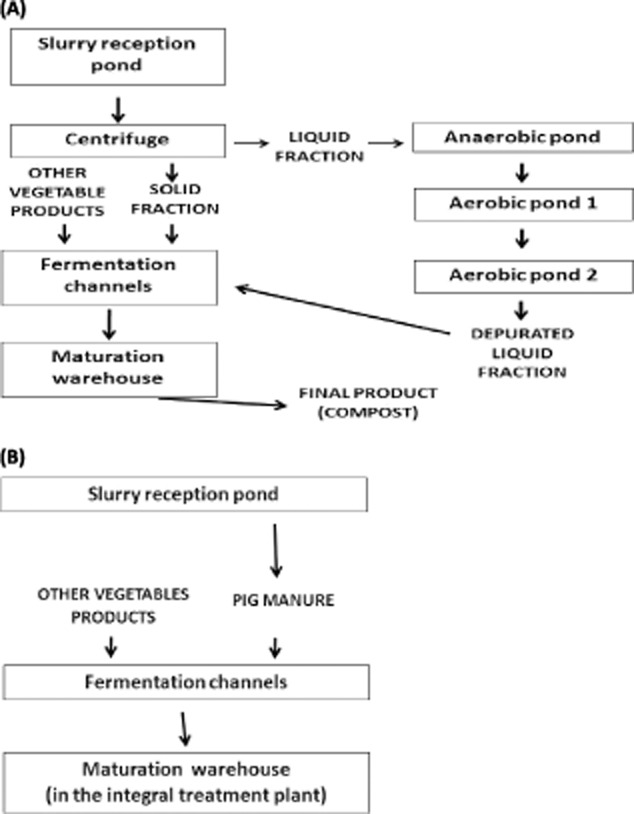
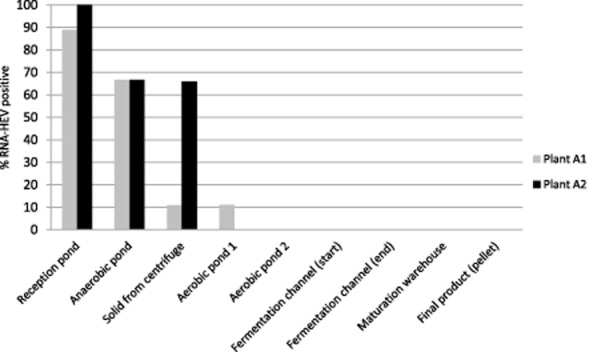
Hepatitis E virus (HEV) is an increasing cause of acute hepatitis in industrialized countries. The aim of this study was to evaluate the presence of HEV in pig manure composting plants located in Spain. For this purpose, a total of 594 samples were taken in 54 sampling sessions from the different stages of composting treatment in these plants as follows: slurry reception ponds, anaerobic ponds, aerobic ponds, fermentation zone and composting final products. HEV was detected by reverse transcription polymerase chain reaction (RT-nested PCR) in four (80%) of five plants studied, mainly in the first stages of the process. HEV was not detected in any final product (compost) sample, destined to be commercialized as a soil fertilizer, suggesting that composting is a suitable method to eliminate HEV and thus, to reduce the transmission of HEV from pigs to humans.
戊型肝炎病毒(HEV)在工业化国家中日益成为急性肝炎的病因。本研究的目的是评估西班牙猪粪堆肥厂中戊型肝炎病毒的存在情况。为此,在54次采样过程中,从这些工厂堆肥处理的不同阶段共采集了594个样本,如下所示:泥浆接收池、厌氧池、好氧池、发酵区和堆肥最终产品。在所研究的五个工厂中,有四个(80%)通过逆转录聚合酶链反应(RT-nested PCR)检测到了戊型肝炎病毒,主要是在该过程的第一阶段。在任何拟作为土壤肥料商业化的最终产品(堆肥)样本中均未检测到戊型肝炎病毒,这表明堆肥是消除戊型肝炎病毒从而减少戊型肝炎病毒从猪传播给人的合适方法。