Department of Epidemiology and Biostatistics, School of Public Health, Tongji Medical College, Huazhong University of Science and Technology, Wuhan, China.
PLoS One. 2013 Nov 6;8(11):e80969. doi: 10.1371/journal.pone.0080969. eCollection 2013.
A prediction model for tuberculosis incidence is needed in China which may be used as a decision-supportive tool for planning health interventions and allocating health resources.
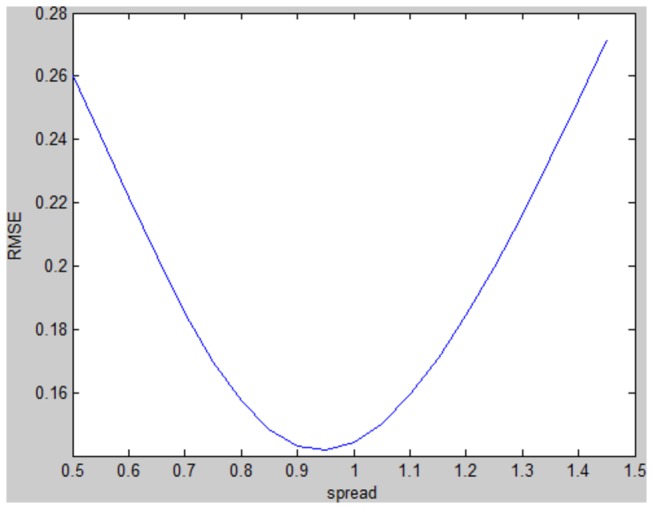
The autoregressive integrated moving average (ARIMA) model was first constructed with the data of tuberculosis report rate in Hubei Province from Jan 2004 to Dec 2011.The data from Jan 2012 to Jun 2012 were used to validate the model. Then the generalized regression neural network (GRNN)-ARIMA combination model was established based on the constructed ARIMA model. Finally, the fitting and prediction accuracy of the two models was evaluated.
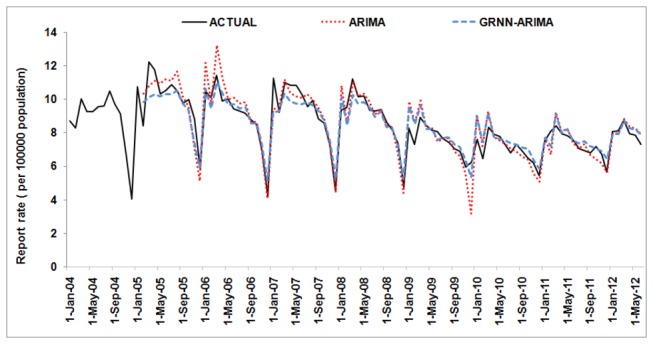
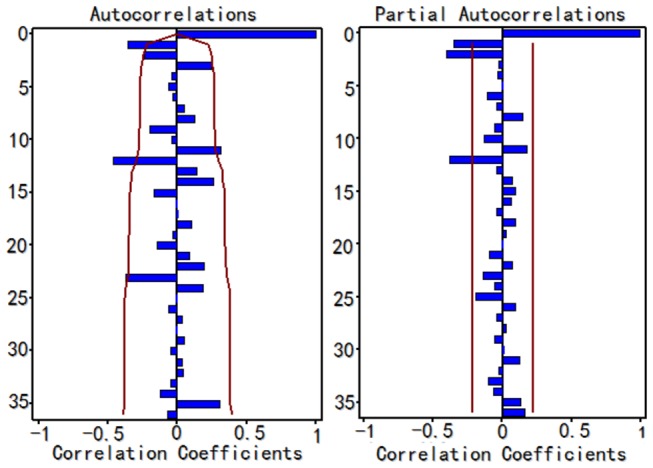
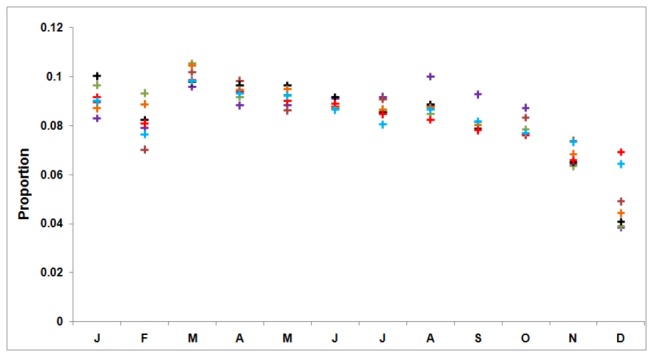
A total of 465,960 cases were reported between Jan 2004 and Dec 2011 in Hubei Province. The report rate of tuberculosis was highest in 2005 (119.932 per 100,000 population) and lowest in 2010 (84.724 per 100,000 population). The time series of tuberculosis report rate show a gradual secular decline and a striking seasonal variation. The ARIMA (2, 1, 0) × (0, 1, 1)12 model was selected from several plausible ARIMA models. The residual mean square error of the GRNN-ARIMA model and ARIMA model were 0.4467 and 0.6521 in training part, and 0.0958 and 0.1133 in validation part, respectively. The mean absolute error and mean absolute percentage error of the hybrid model were also less than the ARIMA model.
The gradual decline in tuberculosis report rate may be attributed to the effect of intensive measures on tuberculosis. The striking seasonal variation may have resulted from several factors. We suppose that a delay in the surveillance system may also have contributed to the variation. According to the fitting and prediction accuracy, the hybrid model outperforms the traditional ARIMA model, which may facilitate the allocation of health resources in China.
中国需要建立结核病发病率预测模型,该模型可以作为规划卫生干预措施和分配卫生资源的决策支持工具。
首先利用 2004 年 1 月至 2011 年 12 月湖北省结核病报告发病率数据构建自回归求和移动平均(ARIMA)模型,并用 2012 年 1 月至 6 月的数据对模型进行验证。然后,基于构建的 ARIMA 模型,建立广义回归神经网络(GRNN)-ARIMA 组合模型。最后,评价两种模型的拟合和预测精度。
湖北省 2004 年 1 月至 2011 年 12 月共报告 465960 例结核病病例。结核病报告发病率最高的年份是 2005 年(119.932/10 万),最低的年份是 2010 年(84.724/10 万)。结核病报告发病率的时间序列呈逐渐下降的趋势,季节性变化显著。从几个可能的 ARIMA 模型中选择了 ARIMA(2,1,0)×(0,1,1)12 模型。GRNN-ARIMA 模型和 ARIMA 模型在训练部分的残差均方误差分别为 0.4467 和 0.6521,在验证部分分别为 0.0958 和 0.1133。混合模型的平均绝对误差和平均绝对百分比误差也小于 ARIMA 模型。
结核病报告发病率的逐渐下降可能归因于结核病强化措施的效果。显著的季节性变化可能是由多种因素造成的。我们推测,监测系统的延迟也可能导致了这种变化。根据拟合和预测精度,混合模型优于传统的 ARIMA 模型,这可能有助于中国分配卫生资源。