Institute of Laboratory Animal Research, RWTH Aachen University, Pauwelstraße 30, 52074 Aachen, Germany ; Institute of Pathology, RWTH Aachen University, Pauwelstraße 30, 52074 Aachen, Germany ; Helmholtz Institute for Biomedical Engineering, Biointerface Group, RWTH Aachen University, Pauwelstraße 30, 52074 Aachen, Germany.
Stem Cells Int. 2013;2013:387324. doi: 10.1155/2013/387324. Epub 2013 Oct 21.
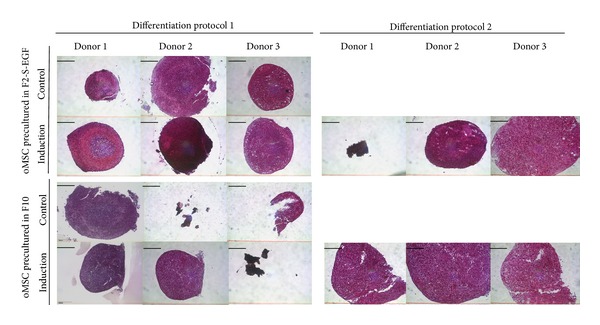
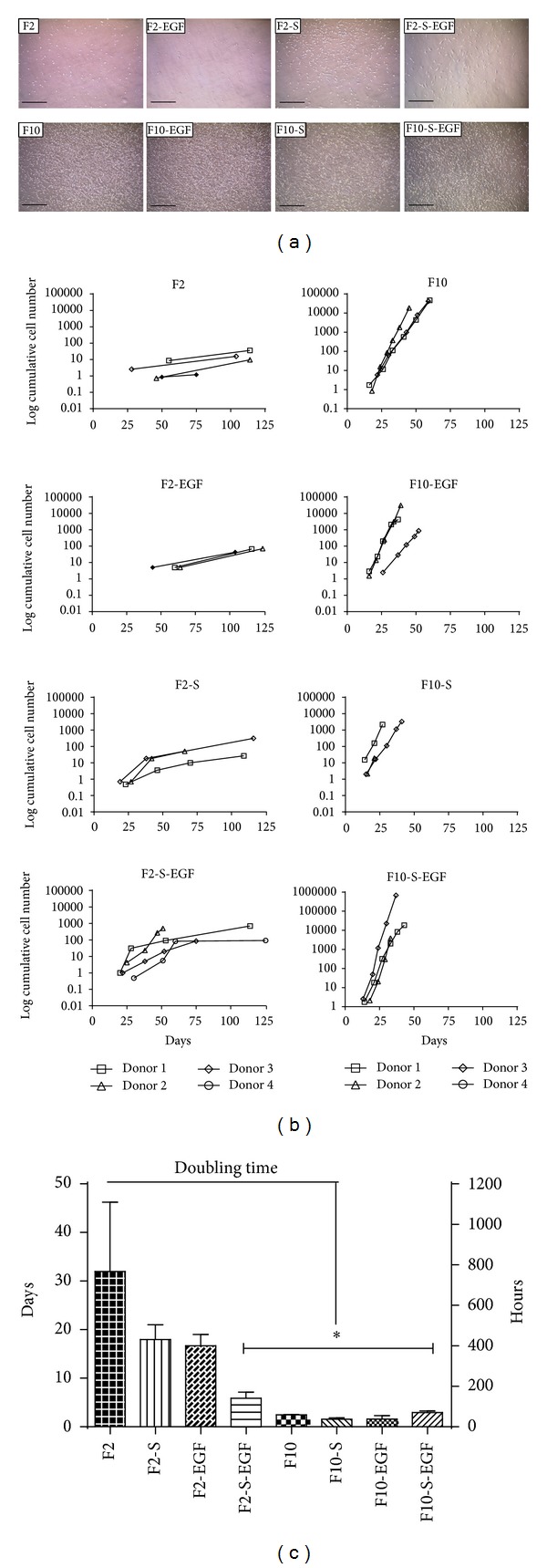
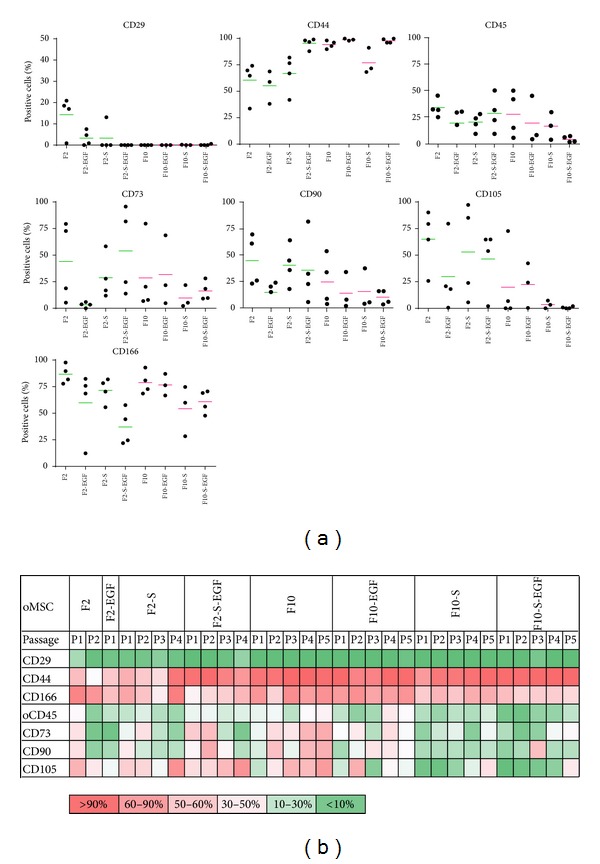
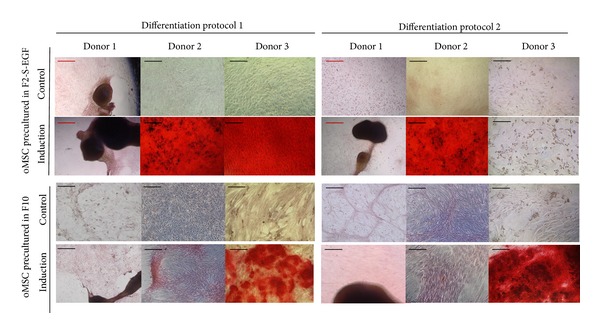
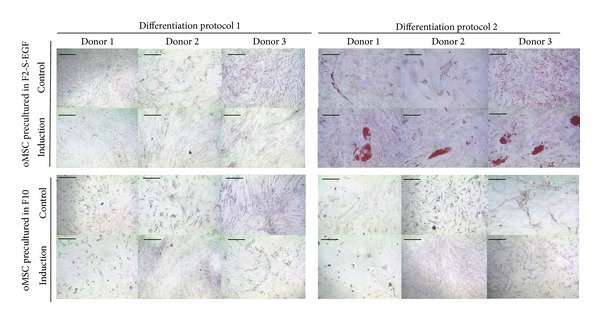
Orthopedic implants including engineered bone tissue are commonly tested in sheep. To avoid rejection of heterologous or xenogeneic cells, autologous cells are preferably used, that is, ovine mesenchymal stem cells (oMSC). Unlike human MSC, ovine MSC are not well studied regarding isolation, expansion, and characterization. Here we investigated the impact of culture media composition on growth characteristics, differentiation, and surface antigen expression of oMSC. The culture media varied in fetal calf serum (FCS) content and in the addition of supplements and/or additional epidermal growth factor (EGF). We found that FCS strongly influenced oMSC proliferation and that specific combinations of supplemental factors (MCDB-201, ITS-plus, dexamethasone, and L-ascorbic acid) determined the expression of surface epitopes. We compared two published protocols for oMSC differentiation towards the osteogenic, adipogenic, and chondrogenic fate and found (i) considerable donor to donor variations, (ii) protocol-dependent variations, and (iii) variations resulting from the preculture medium composition. Our results indicate that the isolation and culture of oMSC in different growth media are highly variable regarding oMSC phenotype and behaviour. Furthermore, variations from donor to donor critically influence growth rate, surface marker expression, and differentiation.
骨科植入物,包括工程化的骨组织,通常在绵羊中进行测试。为了避免异体或异种细胞的排斥,最好使用自体细胞,即绵羊间充质干细胞(oMSC)。与人类 MSC 不同,关于绵羊 MSC 的分离、扩增和特征尚无深入研究。在此,我们研究了培养基组成对 oMSC 生长特性、分化和表面抗原表达的影响。培养基在胎牛血清(FCS)含量以及补充剂和/或表皮生长因子(EGF)的添加方面有所不同。我们发现 FCS 强烈影响 oMSC 的增殖,并且补充因子(MCDB-201、ITS-plus、地塞米松和 L-抗坏血酸)的特定组合决定了表面表位的表达。我们比较了两种已发表的用于 oMSC 向成骨、成脂和成软骨命运分化的方案,发现(i)供体间存在很大差异,(ii)方案依赖性差异,以及(iii)由于预培养培养基组成而产生的差异。我们的结果表明,在不同生长培养基中分离和培养 oMSC 时,oMSC 表型和行为存在高度可变性。此外,供体间的差异会严重影响生长速度、表面标志物表达和分化。