Department of Food Science and Human Nutrition, University of Illinois at Urbana-Champaign, Urbana, IL 61801, USA.
Biotechnol Biofuels. 2013 Sep 27;6(1):138. doi: 10.1186/1754-6834-6-138.
Butanol (n-butanol) has high values as a promising fuel source and chemical feedstock. Biobutanol is usually produced by the solventogenic clostridia through a typical biphasic (acidogenesis and solventogenesis phases) acetone-butanol-ethanol (ABE) fermentation process. It is well known that the acids produced in the acidogenic phase are significant and play important roles in the switch to solventogenesis. However, the mechanism that triggers the metabolic switch is still not clear.
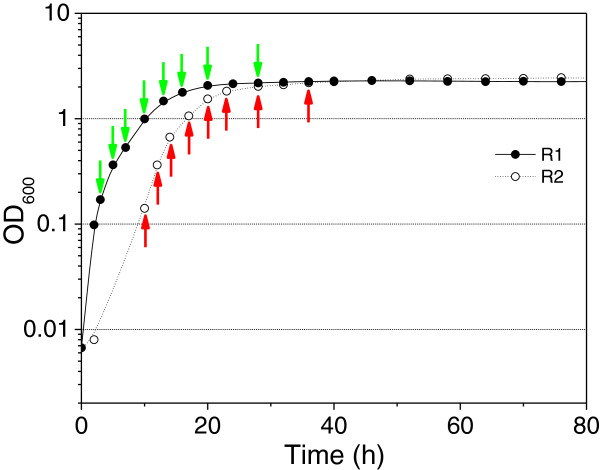
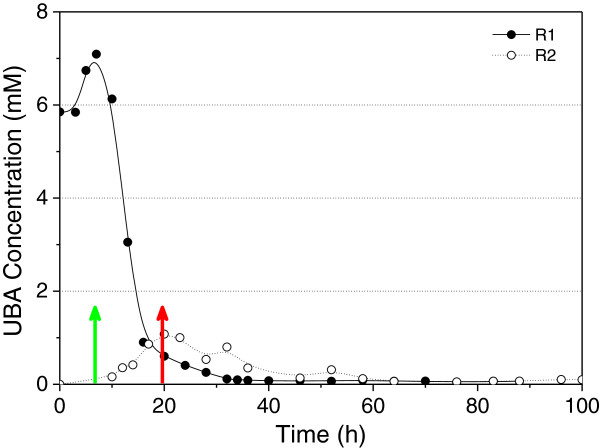
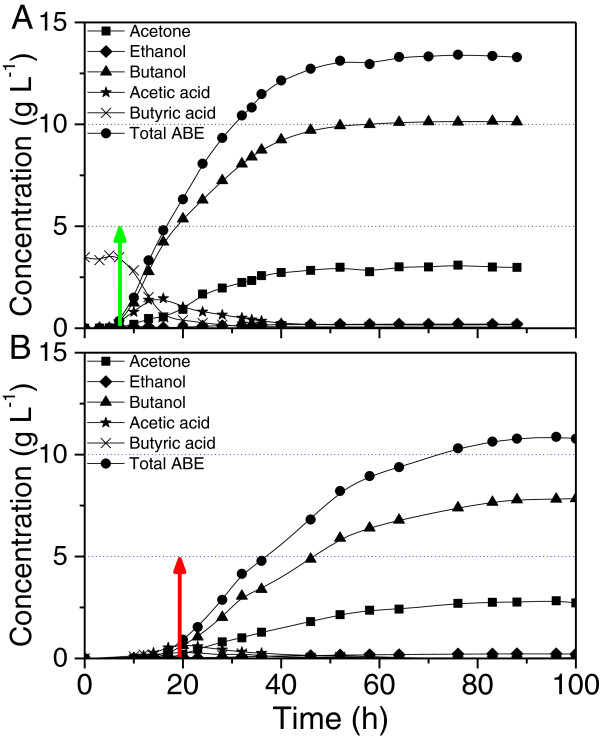
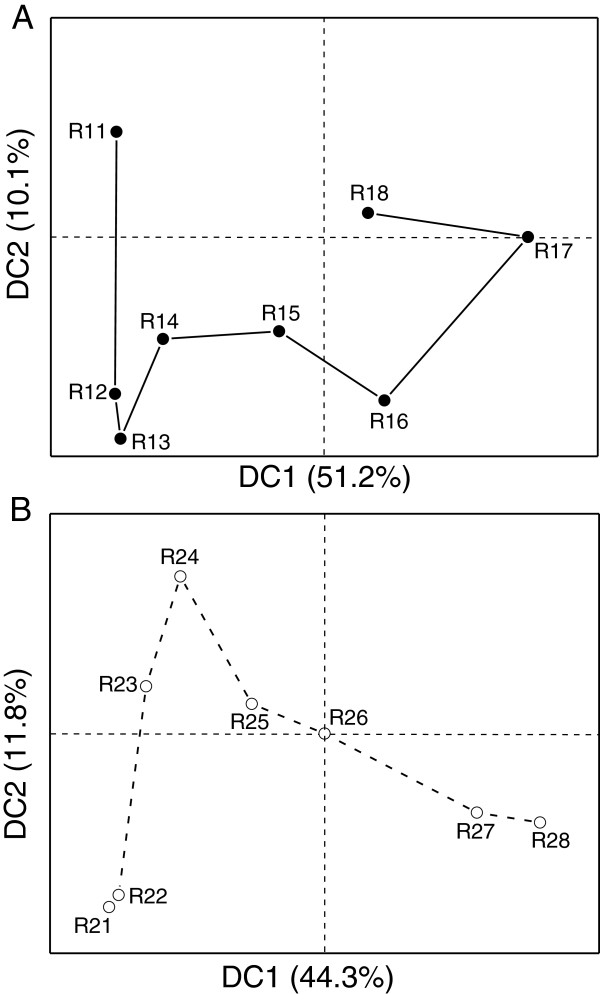
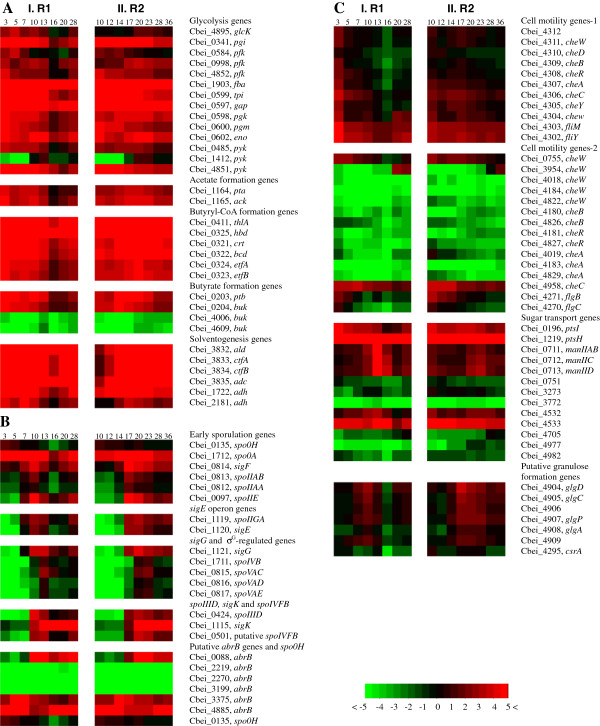
Sodium butyrate (40 mM) was supplemented into the medium for the ABE fermentation with Clostridium beijerinckii NCIMB 8052. With butyrate addition (reactor R1), solvent production was triggered early in the mid-exponential phase and completed quickly in < 50 h, while in the control (reactor R2), solventogenesis was initiated during the late exponential phase and took > 90 h to complete. Butyrate supplementation led to 31% improvement in final butanol titer, 58% improvement in sugar-based yield, and 133% improvement in butanol productivity, respectively. The butanol/acetone ratio was 2.4 versus 1.8 in the control, indicating a metabolic shift towards butanol production due to butyrate addition. Genome-wide transcriptional dynamics was investigated with RNA-Seq analysis. In reactor R1, gene expression related to solventogenesis was induced about 10 hours earlier when compared to that in reactor R2. Although the early sporulation genes were induced after the onset of solventogenesis in reactor R1 (mid-exponential phase), the sporulation events were delayed and uncoupled from the solventogenesis. In contrast, in reactor R2, sporulation genes were induced at the onset of solventogenesis, and highly expressed through the solventogenesis phase. The motility genes were generally down-regulated to lower levels prior to stationary phase in both reactors. However, in reactor R2 this took much longer and gene expression was maintained at comparatively higher levels after entering stationary phase.
Supplemented butyrate provided feedback inhibition to butyrate formation and may be re-assimilated through the reversed butyrate formation pathway, thus resulting in an elevated level of intracellular butyryl phosphate, which may act as a phosphate donor to Spo0A and then trigger solventogenesis and sporulation events. High-resolution genome-wide transcriptional analysis with RNA-Seq revealed detailed insights into the biochemical effects of butyrate on solventogenesis related-events at the gene regulation level.
正丁醇(n-丁醇)作为一种很有前途的燃料和化工原料,具有很高的价值。生物丁醇通常是由产溶剂梭菌通过典型的两相(产酸相和溶剂生成相)丙酮-丁醇-乙醇(ABE)发酵过程生产的。众所周知,在产酸相中产生的酸是显著的,并在向溶剂生成的转变中起着重要作用。然而,触发代谢转变的机制仍不清楚。
向 Clostridium beijerinckii NCIMB 8052 的 ABE 发酵培养基中添加丁酸钠(40 mM)。在添加丁酸钠(反应器 R1)的情况下,溶剂的生成在指数中期早期被触发,并在<50 h 内迅速完成,而在对照(反应器 R2)中,溶剂生成在指数后期开始,并需要>90 h 才能完成。丁酸钠的添加分别使最终丁醇产量提高了 31%,糖基得率提高了 58%,丁醇生产率提高了 133%。与对照相比,丁醇/丙酮的比例从 1.8 提高到 2.4,表明由于丁酸钠的添加,代谢向丁醇生产发生了转变。通过 RNA-Seq 分析研究了全基因组转录动力学。在反应器 R1 中,与反应器 R2 相比,与溶剂生成相关的基因表达提前了约 10 小时被诱导。尽管在反应器 R1 (指数中期)溶剂生成开始后,早期的孢子形成基因被诱导,但孢子形成事件被延迟,并与溶剂生成解偶联。相比之下,在反应器 R2 中,孢子形成基因在溶剂生成开始时被诱导,并在溶剂生成阶段高度表达。在两个反应器中,运动基因在进入静止期之前通常被下调到较低水平。然而,在反应器 R2 中,这需要更长的时间,并且在进入静止期后,基因表达仍保持在相对较高的水平。
添加的丁酸钠对丁酸盐的形成提供了反馈抑制作用,并且可以通过丁酸盐形成途径的反向再吸收,从而导致细胞内丁酰磷酸水平升高,丁酰磷酸可能作为 Spo0A 的磷酸供体,然后触发溶剂生成和孢子形成事件。利用 RNA-Seq 进行的高分辨率全基因组转录分析在基因调控水平上深入了解了丁酸钠对溶剂生成相关事件的生化影响。