Ishaq Gaafar M, Saidu Yusuf, Bilbis Lawal S, Muhammad Suleiman A, Jinjir Nasir, Shehu Bello B
Department of Biochemistry, Usmanu Danfodiyo University, P.M.B. 2346, Sokoto, Nigeria.
J Neurosci Rural Pract. 2013 Jul;4(3):292-7. doi: 10.4103/0976-3147.118784.
Traumatic brain injury (TBI) is accompanied by substantial accumulation of biomarkers of oxidative stress and depletion of antioxidants reserve which initiate chain reactions that damage brain cells. The present study investigated the role of ascorbic acid and α-tocopherol on the severity and management of TBI in rats.
Wistar rats were subjected to closed head injury using an accelerated impact device. Rats were administered 45 mg/kg and 60 mg/kg body weight of ascorbic acid, α-tocopherol or a combination of the two vitamins for 2 weeks pre- and post injury. Blood and brain tissue homogenates were analyzed for vitamin C, vitamin E, malondialdehyde, superoxide dismutase, and creatine kinase activities.
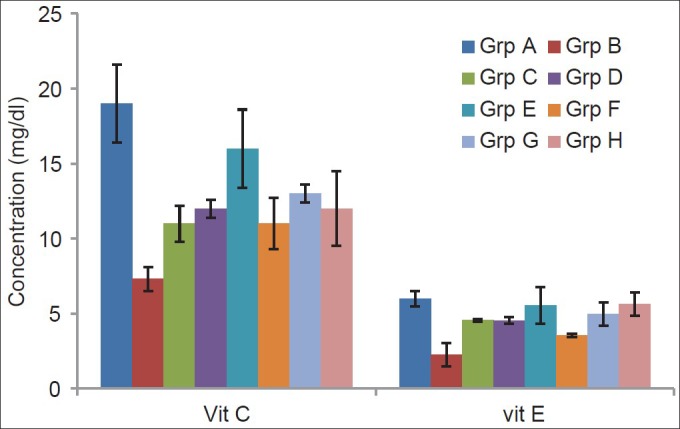
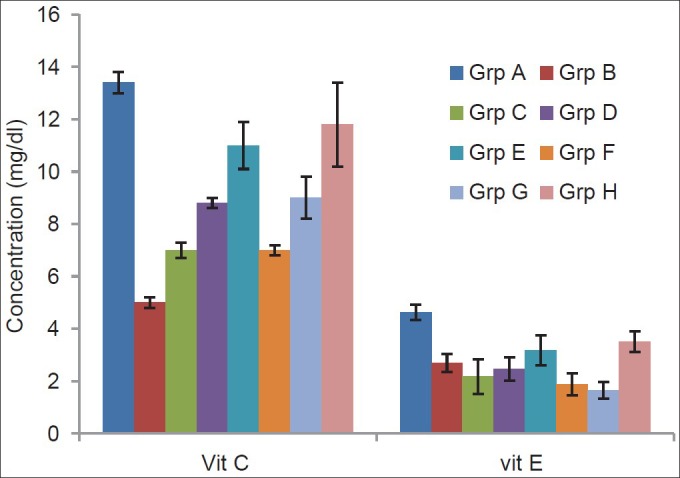
The results indicated that TBI caused significant (P < 0.05) decreased in vitamins C and E levels in the blood and brain tissue of TBI-untreated rats. The activities of superoxide dismutase in TBI rats were markedly reduced when compared with non traumatized control and showed a tendency to increased following supplementation with vitamins C and E. Supplementation of the vitamins significantly (P < 0.05) reduced malondialdehyde in the treatment groups compared with the TBI-untreated group.
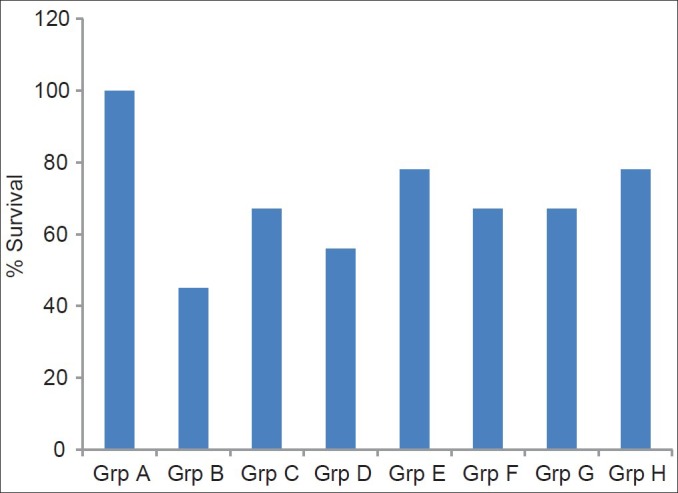
The study indicated that pre and post treatment with ascorbic acid and α-tocopherol reduced oxidative stress induced by brain injury and effectively reduced mortality rate in rats.
创伤性脑损伤(TBI)伴随着氧化应激生物标志物的大量积累和抗氧化剂储备的消耗,从而引发损害脑细胞的连锁反应。本研究调查了抗坏血酸和α-生育酚在大鼠TBI严重程度及治疗中的作用。
使用加速撞击装置对Wistar大鼠进行闭合性颅脑损伤。在损伤前后2周,给大鼠分别给予45mg/kg和60mg/kg体重的抗坏血酸、α-生育酚或两种维生素的组合。对血液和脑组织匀浆进行维生素C、维生素E、丙二醛、超氧化物歧化酶和肌酸激酶活性分析。
结果表明,TBI导致未治疗的TBI大鼠血液和脑组织中维生素C和E水平显著降低(P<0.05)。与未受创伤的对照组相比,TBI大鼠中超氧化物歧化酶的活性明显降低,而补充维生素C和E后有升高趋势。与未治疗的TBI组相比,补充维生素显著降低了治疗组中的丙二醛水平(P<0.05)。
该研究表明,抗坏血酸和α-生育酚在损伤前后进行治疗可减轻脑损伤诱导的氧化应激,并有效降低大鼠死亡率。