Departamento de Ciencias de la Salud, Universidad Autónoma Metropolitana-Lerma, Lerma de Villada, Lerma, México.
PLoS One. 2013 Nov 8;8(11):e79530. doi: 10.1371/journal.pone.0079530. eCollection 2013.
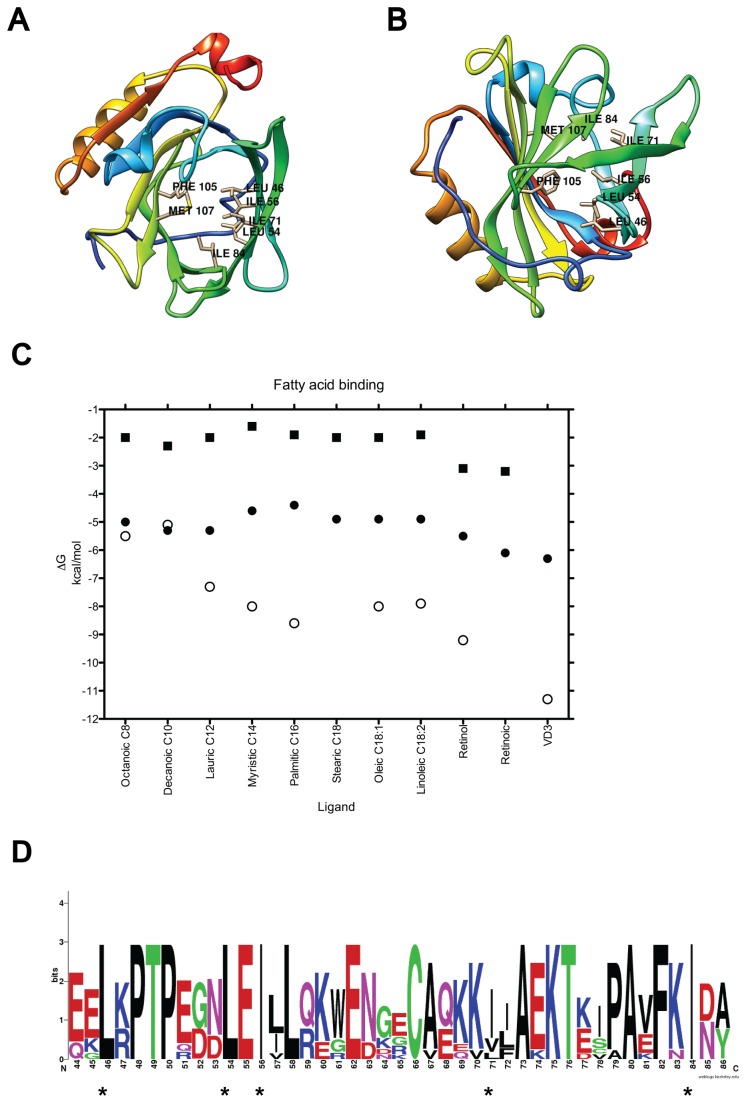
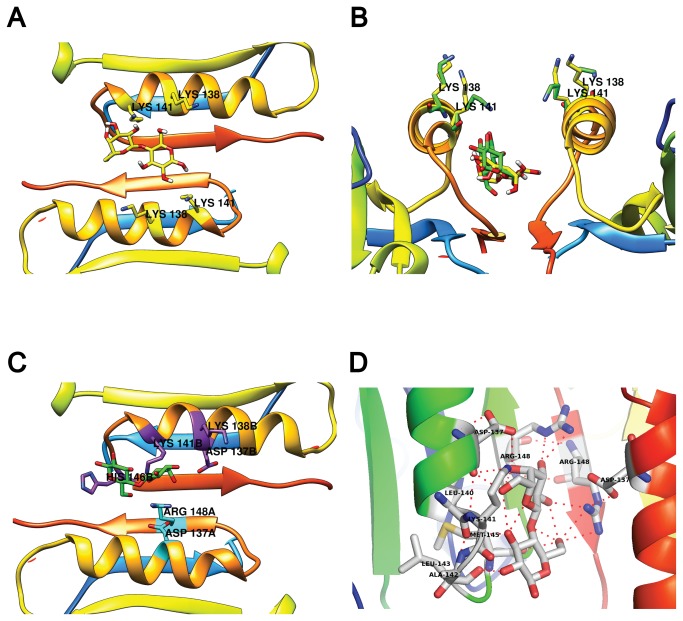
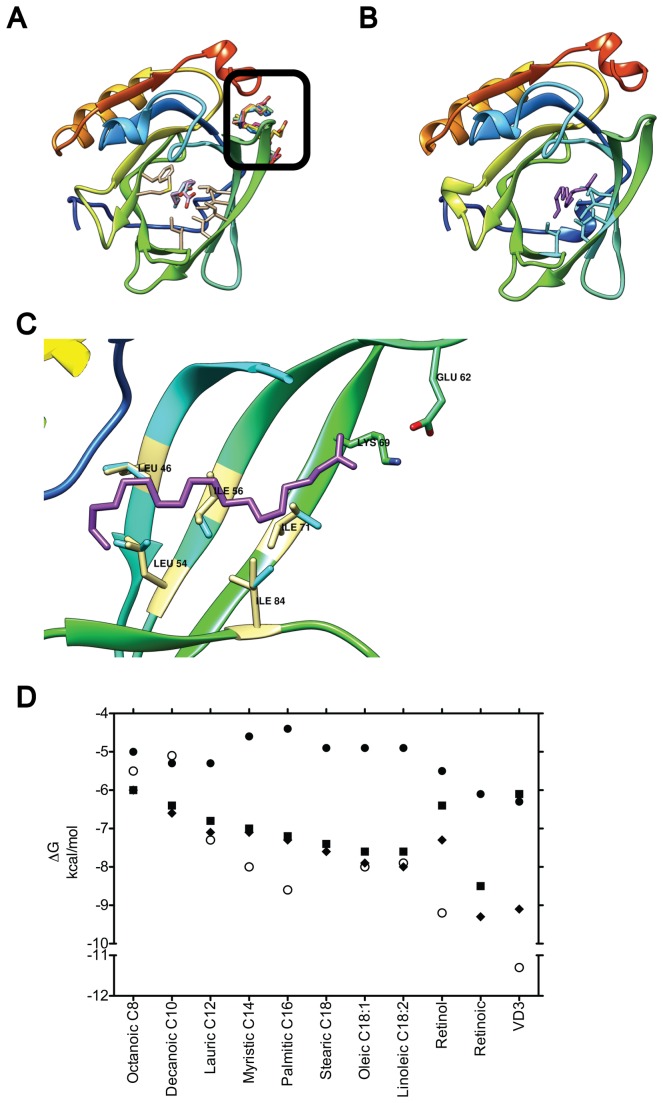
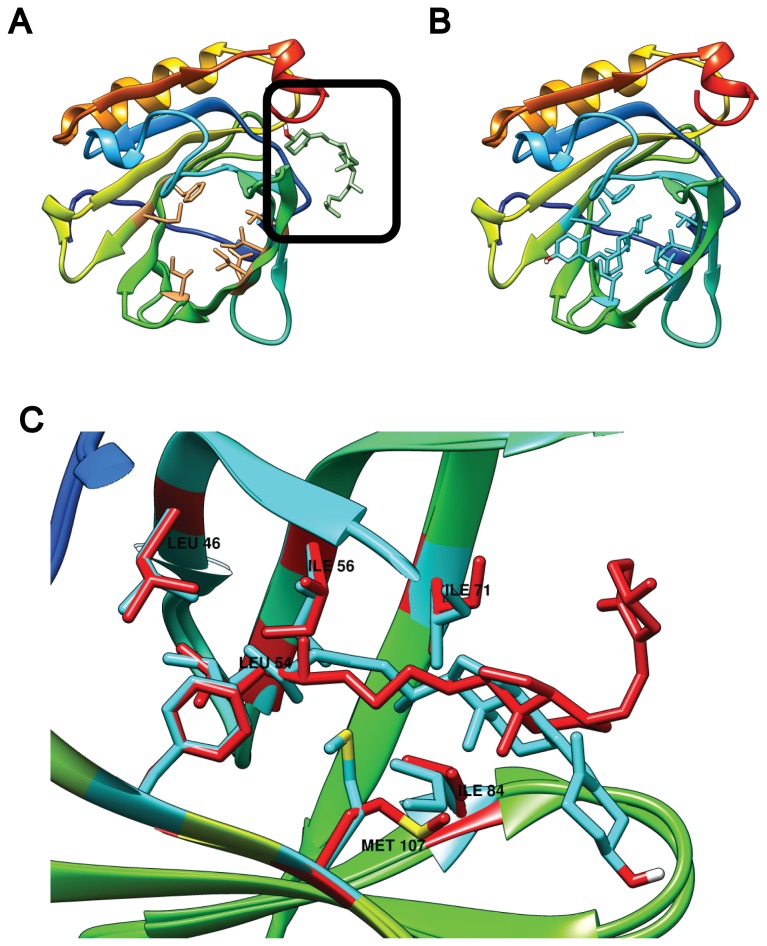
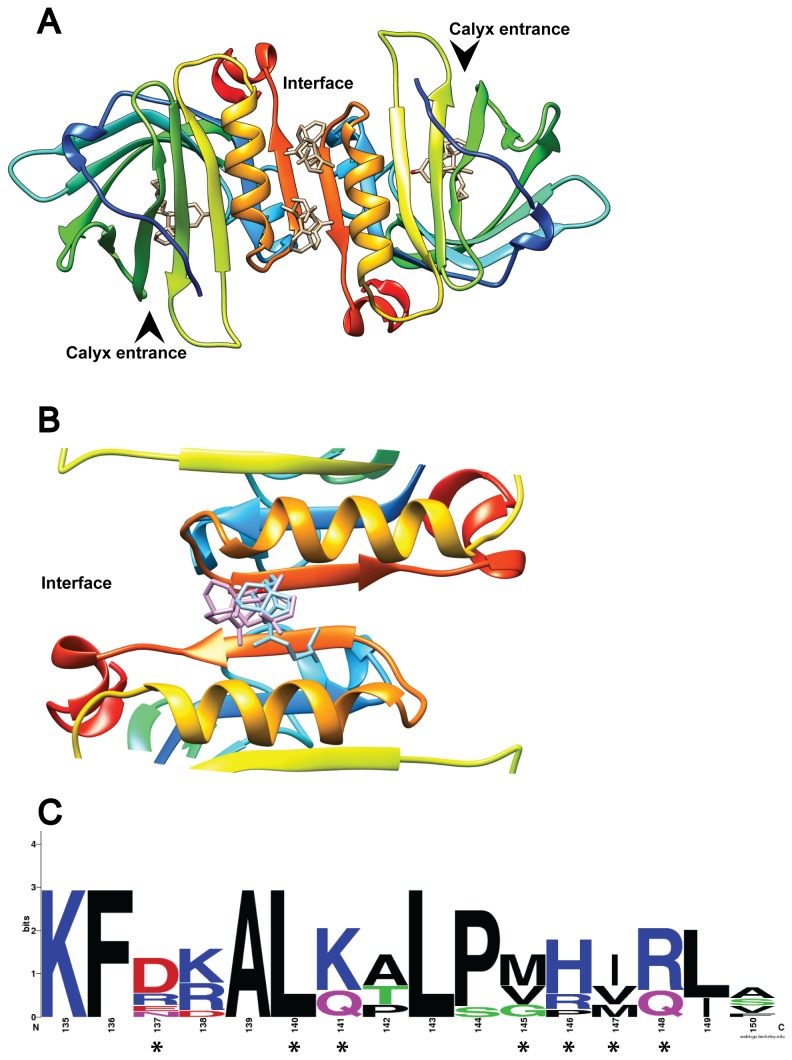
β-lactoglobulin (BLG) is an abundant milk protein relevant for industry and biotechnology, due significantly to its ability to bind a wide range of polar and apolar ligands. While hydrophobic ligand sites are known, sites for hydrophilic ligands such as the prevalent milk sugar, lactose, remain undetermined. Through the use of molecular docking we first, analyzed the known fatty acid binding sites in order to dissect their atomistic determinants and second, predicted the interaction sites for lactose with monomeric and dimeric BLG. We validated our approach against BLG structures co-crystallized with ligands and report a computational setup with a reduced number of flexible residues that is able to reproduce experimental results with high precision. Blind dockings with and without flexible side chains on BLG showed that: i) 13 experimentally-determined ligands fit the calyx requiring minimal movement of up to 7 residues out of the 23 that constitute this binding site. ii) Lactose does not bind the calyx despite conformational flexibility, but binds the dimer interface and an alternate Site C. iii) Results point to a probable lactolation site in the BLG dimer interface, at K141, consistent with previous biochemical findings. In contrast, no accessible lysines are found near Site C. iv) lactose forms hydrogen bonds with residues from both monomers stabilizing the dimer through a claw-like structure. Overall, these results improve our understanding of BLG's binding sites, importantly narrowing down the calyx residues that control ligand binding. Moreover, our results emphasize the importance of the dimer interface as an insufficiently explored, biologically relevant binding site of particular importance for hydrophilic ligands. Furthermore our analyses suggest that BLG is a robust scaffold for multiple ligand-binding, suitable for protein design, and advance our molecular understanding of its ligand sites to a point that allows manipulation to control binding.
β-乳球蛋白(BLG)是一种丰富的牛奶蛋白,在工业和生物技术中具有重要意义,这主要是因为它能够结合广泛的极性和非极性配体。虽然已知存在疏水性配体结合位点,但对于普遍存在的牛奶糖乳糖等亲水性配体的结合位点仍未确定。通过使用分子对接,我们首先分析了已知的脂肪酸结合位点,以剖析其原子决定因素,其次预测了乳糖与单体和二聚体 BLG 的相互作用位点。我们通过与配体共结晶的 BLG 结构来验证我们的方法,并报告了一种具有较少柔性残基的计算方案,能够以高精度重现实验结果。在 BLG 上进行有和没有柔性侧链的盲目对接表明:i)13 种实验确定的配体适合需要多达 7 个残基最小运动的钙结合位点,这 23 个残基构成了这个结合位点。ii)尽管 BLG 具有构象灵活性,但乳糖不结合钙结合位点,而是结合二聚体界面和替代的 Site C。iii)结果指向 BLG 二聚体界面上可能的乳糖结合位点 K141,这与先前的生化发现一致。相比之下,在 Site C 附近没有发现可及的赖氨酸。iv)乳糖与来自两个单体的残基形成氢键,通过爪状结构稳定二聚体。总体而言,这些结果提高了我们对 BLG 结合位点的理解,重要的是缩小了控制配体结合的钙结合位点的残基。此外,我们的结果强调了二聚体界面作为一个尚未充分探索的、具有生物学意义的结合位点的重要性,特别是对于亲水性配体。此外,我们的分析表明,BLG 是一个多配体结合的稳健支架,适合蛋白质设计,并推进了我们对其配体结合位点的分子理解,达到可以控制结合的程度。