Department of Wetland Ecology, Estación Biológica de Doñana (CSIC) , Seville , Spain.
PeerJ. 2013 Nov 7;1:e200. doi: 10.7717/peerj.200. eCollection 2013.
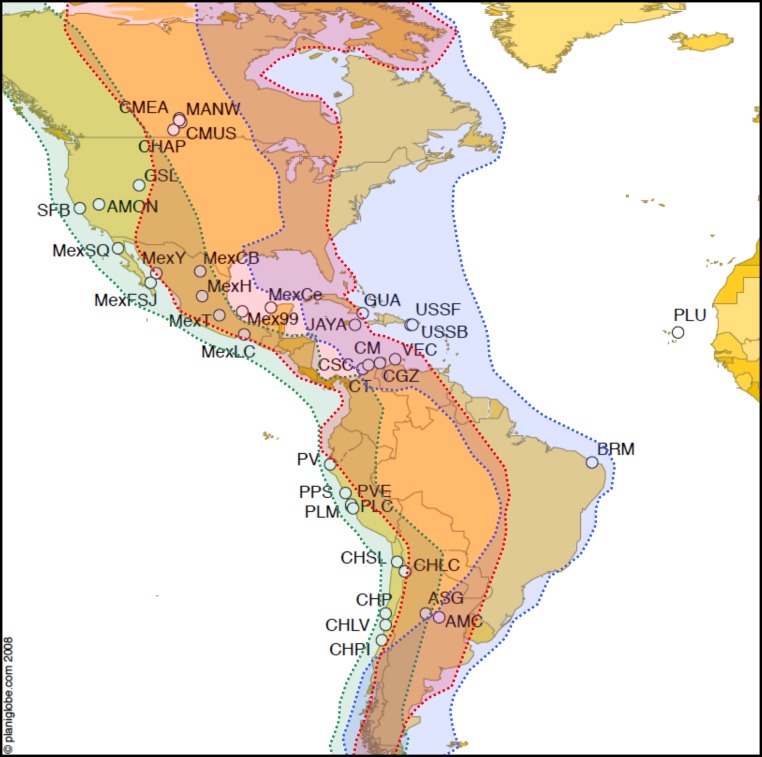
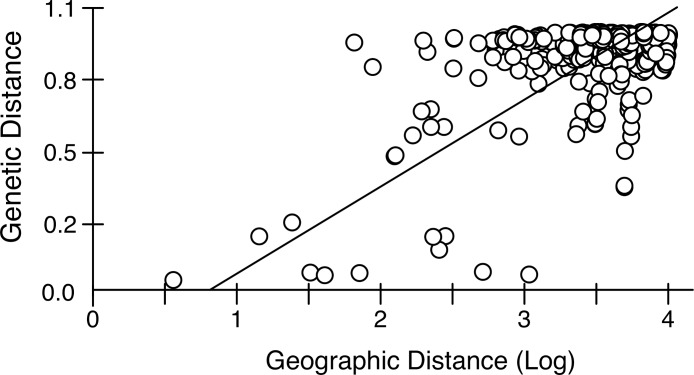
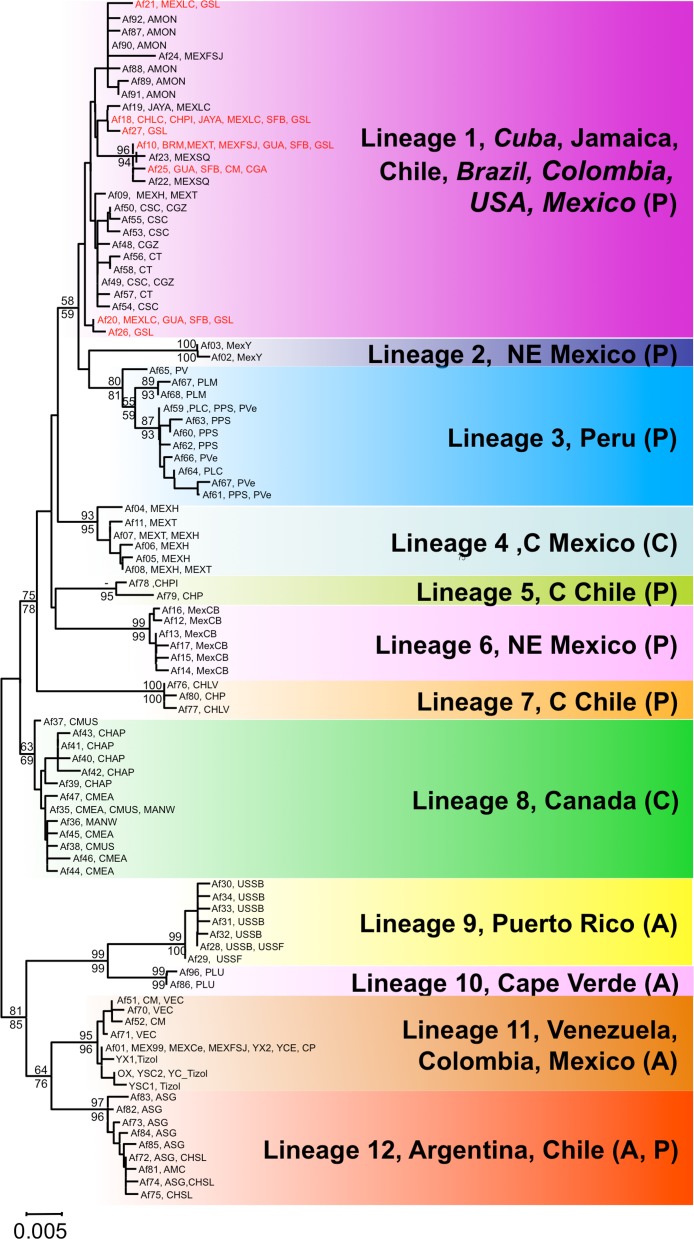
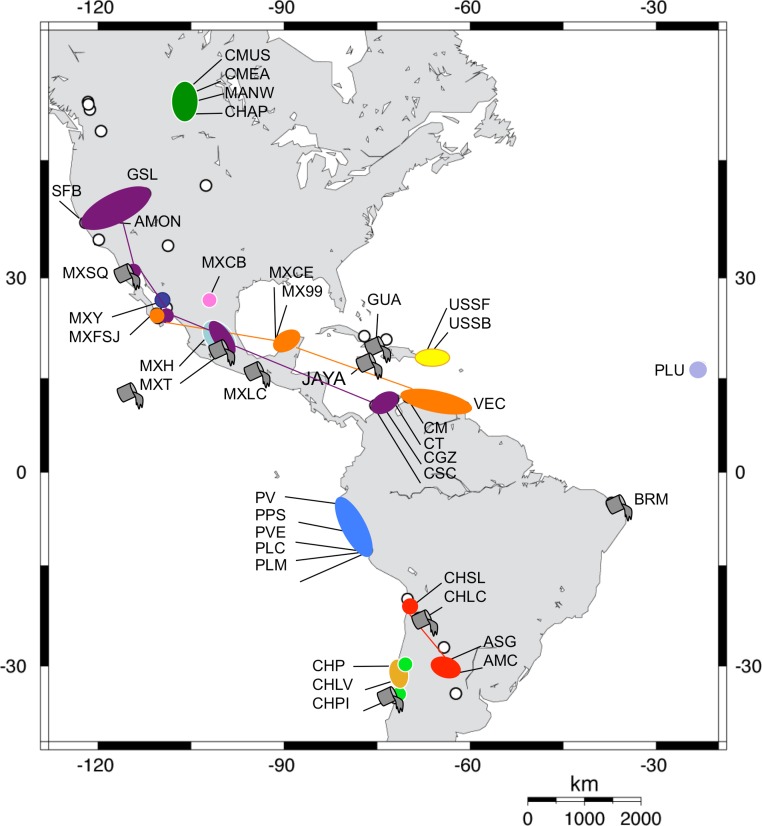
Since Darwin's time, waterbirds have been considered an important vector for the dispersal of continental aquatic invertebrates. Bird movements have facilitated the worldwide invasion of the American brine shrimp Artemia franciscana, transporting cysts (diapausing eggs), and favouring rapid range expansions from introduction sites. Here we address the impact of bird migratory flyways on the population genetic structure and phylogeography of A. franciscana in its native range in the Americas. We examined sequence variation for two mitochondrial gene fragments (COI and 16S for a subset of the data) in a large set of population samples representing the entire native range of A. franciscana. Furthermore, we performed Mantel tests and redundancy analyses (RDA) to test the role of flyways, geography and human introductions on the phylogeography and population genetic structure at a continental scale. A. franciscana mitochondrial DNA was very diverse, with two main clades, largely corresponding to Pacific and Atlantic populations, mirroring American bird flyways. There was a high degree of regional endemism, with populations subdivided into at least 12 divergent, geographically restricted and largely allopatric mitochondrial lineages, and high levels of population structure (Φ ST of 0.92), indicating low ongoing gene flow. We found evidence of human-mediated introductions in nine out of 39 populations analysed. Once these populations were removed, Mantel tests revealed a strong association between genetic variation and geographic distance (i.e., isolation-by-distance pattern). RDA showed that shared bird flyways explained around 20% of the variance in genetic distance between populations and this was highly significant, once geographic distance was controlled for. The variance explained increased to 30% when the factor human introduction was included in the model. Our findings suggest that bird-mediated transport of brine shrimp propagules does not result in substantial ongoing gene flow; instead, it had a significant historical role on the current species phylogeography, facilitating the colonisation of new aquatic environments as they become available along their main migratory flyways.
自达尔文时代以来,水鸟一直被认为是大陆水生无脊椎动物传播的重要载体。鸟类的迁徙促进了美洲卤虫(Artemia franciscana)的世界性入侵,携带了包囊(休眠卵),并有利于从引入点快速扩展范围。在这里,我们研究了鸟类迁徙飞行路线对美洲卤虫在其原生范围内的种群遗传结构和系统地理学的影响。我们对代表美洲卤虫整个原生范围的大量种群样本的两个线粒体基因片段(COI 和 16S 的一部分数据)进行了序列变异分析。此外,我们进行了 Mantel 检验和冗余分析(RDA),以检验飞行路线、地理和人类引入对大陆尺度的系统地理学和种群遗传结构的作用。卤虫的线粒体 DNA 非常多样化,有两个主要的分支,主要对应太平洋和大西洋种群,反映了美洲鸟类的迁徙飞行路线。存在高度的区域特有性,种群分为至少 12 个不同的、地理上受限的、主要是异域的线粒体谱系,种群结构水平很高(Φ ST 为 0.92),表明持续的基因流很低。我们在分析的 39 个种群中的 9 个中发现了人为介导引入的证据。一旦去除这些种群,Mantel 检验显示遗传变异与地理距离之间存在很强的关联(即隔离距离模式)。RDA 显示,共享的鸟类迁徙路线解释了种群间遗传距离变异的 20%左右,这一比例在控制了地理距离后仍然非常显著。当将人为引入因素纳入模型时,解释的方差增加到 30%。我们的研究结果表明,鸟类介导的卤虫繁殖体的运输不会导致持续的大量基因流;相反,它在当前物种的系统地理学中具有重要的历史作用,促进了新的水生环境的殖民化,因为它们沿着主要的迁徙飞行路线变得可用。