Diabetes, Nutrition and Metabolic Diseases Outpatient Unit, Emergency County Clinical Hospital, Târgu Mureş, Romania.
Biochem Med (Zagreb). 2013;23(3):266-80. doi: 10.11613/bm.2013.033.
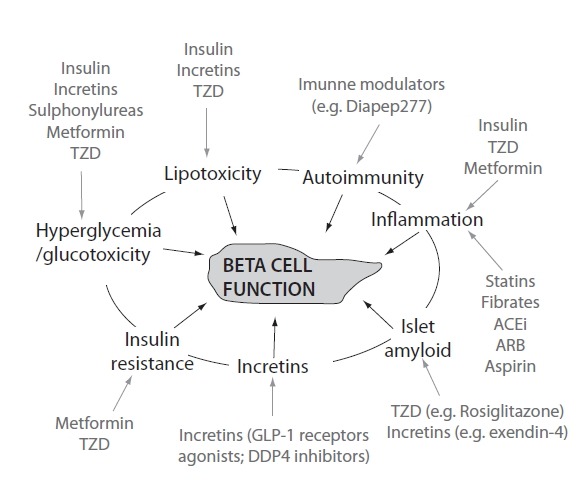
Diabetes is a complex, heterogeneous condition that has beta cell dysfunction at its core. Many factors (e.g. hyperglycemia/glucotoxicity, lipotoxicity, autoimmunity, inflammation, adipokines, islet amyloid, incretins and insulin resistance) influence the function of pancreatic beta cells. Chronic hyperglycaemia may result in detrimental effects on insulin synthesis/secretion, cell survival and insulin sensitivity through multiple mechanisms: gradual loss of insulin gene expression and other beta-cell specific genes; chronic endoplasmic reticulum stress and oxidative stress; changes in mitochondrial number, morphology and function; disruption in calcium homeostasis. In the presence of hyperglycaemia, prolonged exposure to increased free fatty acids result in accumulation of toxic metabolites in the cells ("lipotoxicity"), finally causing decreased insulin gene expression and impairment of insulin secretion. The rest of the factors/mechanisms which impact on the course of the disease are also discusses in detail. The correct assessment of beta cell function requires a concomitant quantification of insulin secretion and insulin sensitivity, because the two variables are closely interrelated. In order to better understand the fundamental pathogenetic mechanisms that contribute to disease development in a certain individual with diabetes, additional markers could be used, apart from those that evaluate beta cell function. The aim of the paper was to overview the relevant mechanisms/factors that influence beta cell function and to discuss the available methods of its assessment. In addition, clinical considerations are made regarding the therapeutical options that have potential protective effects on beta cell function/mass by targeting various underlying factors and mechanisms with a role in disease progression.
糖尿病是一种复杂的异质性疾病,其核心是β细胞功能障碍。许多因素(如高血糖/糖毒性、脂毒性、自身免疫、炎症、脂肪细胞因子、胰岛淀粉样变、肠促胰岛素和胰岛素抵抗)影响胰腺β细胞的功能。慢性高血糖可能通过多种机制对胰岛素合成/分泌、细胞存活和胰岛素敏感性产生有害影响:胰岛素基因表达和其他β细胞特异性基因逐渐丧失;慢性内质网应激和氧化应激;线粒体数量、形态和功能的变化;钙稳态的破坏。在高血糖的情况下,长时间暴露于增加的游离脂肪酸会导致细胞内有毒代谢物的积累(“脂毒性”),最终导致胰岛素基因表达减少和胰岛素分泌受损。影响疾病进程的其他因素/机制也在详细讨论中。β细胞功能的正确评估需要同时定量胰岛素分泌和胰岛素敏感性,因为这两个变量密切相关。为了更好地理解导致个体糖尿病发展的基本发病机制,除了评估β细胞功能的那些标志物外,还可以使用其他标志物。本文的目的是综述影响β细胞功能的相关机制/因素,并讨论评估β细胞功能的可用方法。此外,还就针对在疾病进展中起作用的各种潜在因素和机制,具有保护β细胞功能/质量潜力的治疗选择,从临床角度进行了考虑。