Mangalam Ak, Poisson Lm, Nemutlu E, Datta I, Denic A, Dzeja P, Rodriguez M, Rattan R, Giri S
Department of Immunology, Mayo Clinic College of Medicine, Rochester, MN 55905, USA ; Department ofNeurology, Mayo Clinic College of Medicine, Rochester, MN 55905, USA.
J Clin Cell Immunol. 2013 Jun 30;4. doi: 10.4172/2155-9899.1000150.
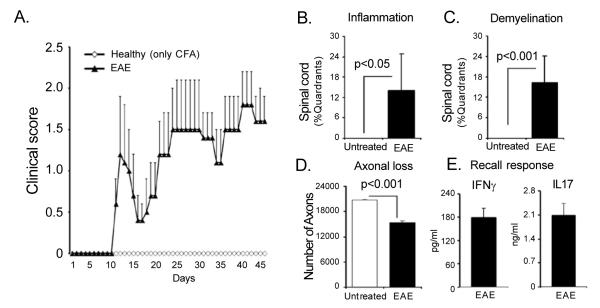
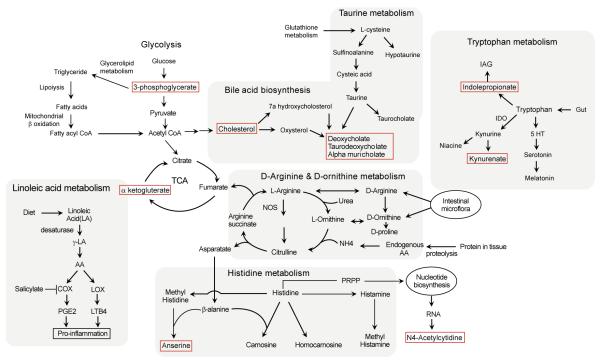
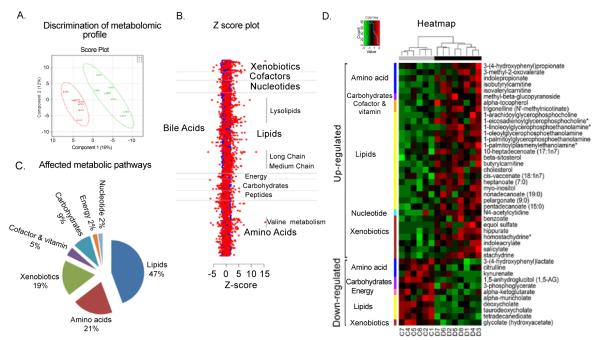
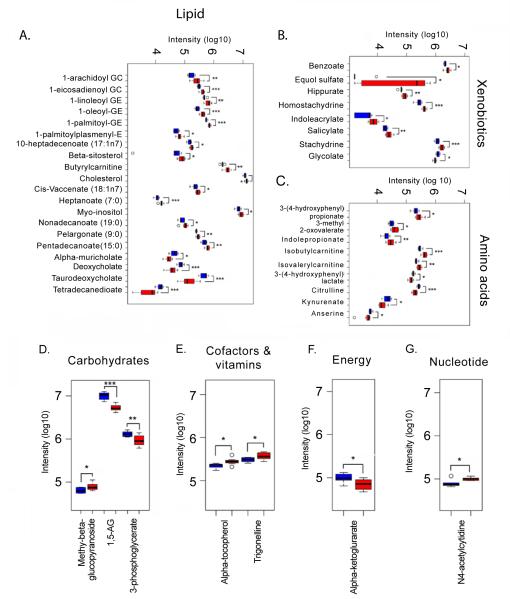
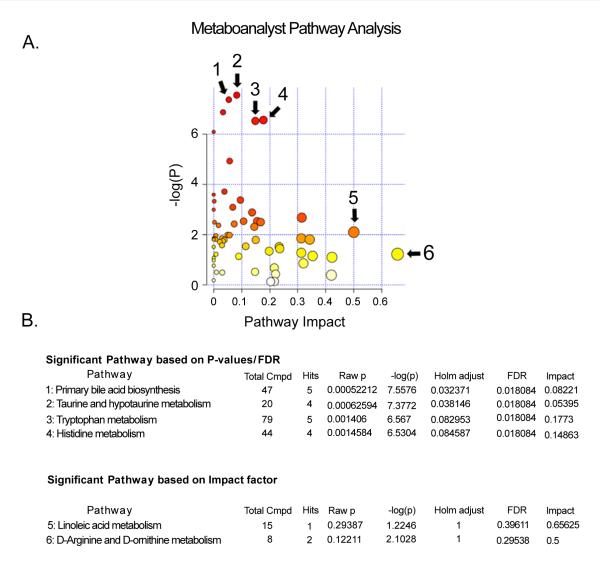
Multiple sclerosis (MS) is a chronic inflammatory and demyelinating disease of the CNS. Although, MS is well characterized in terms of the role played by immune cells, cytokines and CNS pathology, nothing is known about the metabolic alterations that occur during the disease process in circulation. Recently, metabolic aberrations have been defined in various disease processes either as contributing to the disease, as potential biomarkers, or as therapeutic targets. Thus in an attempt to define the metabolic alterations that may be associated with MS disease progression, we profiled the plasma metabolites at the chronic phase of disease utilizing relapsing remitting-experimental autoimmune encephalomyelitis (RR-EAE) model in SJL mice. At the chronic phase of the disease (day 45), untargeted global metabolomic profiling of plasma collected from EAE diseased SJL and healthy mice was performed, using a combination of high-throughput liquid-and-gas chromatography with mass spectrometry. A total of 282 metabolites were identified, with significant changes observed in 44 metabolites (32 up-regulated and 12 down-regulated), that mapped to lipid, amino acid, nucleotide and xenobiotic metabolism and distinguished EAE from healthy group (p<0.05, false discovery rate (FDR)<0.23). Mapping the differential metabolite signature to their respective biochemical pathways using the Kyoto Encyclopedia of Genes and Genomics (KEGG) database, we found six major pathways that were significantly altered (containing concerted alterations) or impacted (containing alteration in key junctions). These included bile acid biosynthesis, taurine metabolism, tryptophan and histidine metabolism, linoleic acid and D-arginine metabolism pathways. Overall, this study identified a 44 metabolite signature drawn from various metabolic pathways which correlated well with severity of the EAE disease, suggesting that these metabolic changes could be exploited as (1) biomarkers for EAE/MS progression and (2) to design new treatment paradigms where metabolic interventions could be combined with present and experimental therapeutics to achieve better treatment of MS.
多发性硬化症(MS)是一种中枢神经系统的慢性炎症性脱髓鞘疾病。尽管MS在免疫细胞、细胞因子和中枢神经系统病理学所起的作用方面已有充分的特征描述,但对于疾病过程中循环系统发生的代谢改变却一无所知。最近,代谢异常在各种疾病过程中已被定义为对疾病有贡献、作为潜在生物标志物或作为治疗靶点。因此,为了确定可能与MS疾病进展相关的代谢改变,我们利用SJL小鼠的复发缓解型实验性自身免疫性脑脊髓炎(RR-EAE)模型,在疾病的慢性期对血浆代谢物进行了分析。在疾病的慢性期(第45天),使用高通量液相色谱和气相色谱与质谱联用的方法,对从EAE患病SJL小鼠和健康小鼠收集的血浆进行了非靶向全局代谢组学分析。总共鉴定出282种代谢物,其中44种代谢物有显著变化(32种上调和12种下调),这些代谢物涉及脂质、氨基酸、核苷酸和外源性物质代谢,并且将EAE与健康组区分开来(p<0.05,错误发现率(FDR)<0.23)。利用京都基因与基因组百科全书(KEGG)数据库将差异代谢物特征映射到各自的生化途径,我们发现有六个主要途径发生了显著改变(包含协同改变)或受到影响(包含关键节点的改变)。这些途径包括胆汁酸生物合成、牛磺酸代谢、色氨酸和组氨酸代谢、亚油酸和D-精氨酸代谢途径。总体而言,本研究确定了一个来自各种代谢途径的44种代谢物特征,其与EAE疾病的严重程度密切相关,这表明这些代谢变化可被用作(1)EAE/MS进展的生物标志物,以及(2)设计新的治疗模式,其中代谢干预可与现有和实验性治疗方法相结合,以实现对MS更好的治疗。