Cancer Biology Program, Mater Medical Research Institute, South Brisbane, Australia.
FEBS J. 2014 Jan;281(1):63-73. doi: 10.1111/febs.12601. Epub 2013 Nov 28.
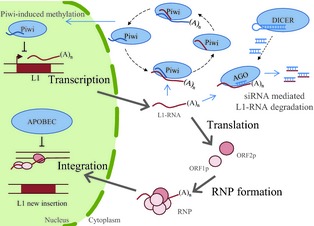
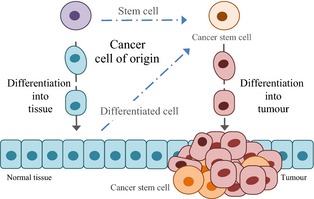
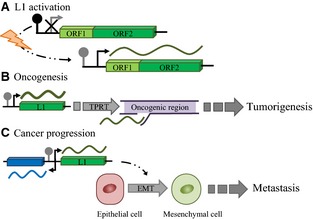
Retrotransposons have played a central role in human genome evolution. The accumulation of heritable L1, Alu and SVA retrotransposon insertions continues to generate structural variation within and between populations, and can result in spontaneous genetic disease. Recent works have reported somatic L1 retrotransposition in tumours, which in some cases may contribute to oncogenesis. Intriguingly, L1 mobilization appears to occur almost exclusively in cancers of epithelial cell origin. In this review, we discuss how L1 retrotransposition could potentially trigger neoplastic transformation, based on the established correlation between L1 activity and cellular plasticity, and the proven capacity of L1-mediated insertional mutagenesis to decisively alter gene expression and functional output.
逆转座子在人类基因组进化中发挥了核心作用。可遗传的 L1、Alu 和 SVA 逆转座子插入的积累持续在人群内和人群间产生结构变异,并且可能导致自发性遗传疾病。最近的研究报告称,L1 逆转座子在肿瘤中发生体细胞转座,在某些情况下,这可能导致肿瘤发生。有趣的是,L1 的激活似乎几乎只发生于上皮细胞来源的癌症中。在这篇综述中,我们根据 L1 活性与细胞可塑性之间的既定相关性,以及 L1 介导的插入诱变已被证实的改变基因表达和功能输出的能力,讨论了 L1 逆转座子如何可能引发肿瘤转化。