Lashley Tammaryn, Rohrer Jonathan D, Mahoney Colin, Gordon Elizabeth, Beck Jon, Mead Simon, Warren Jason, Rossor Martin, Revesz Tamas
Queen Square Brain Bank, Department of Molecular Neuroscience, UCL Institute of Neurology, London, UK.
Neuropathol Appl Neurobiol. 2014 Jun;40(4):502-13. doi: 10.1111/nan.12100.
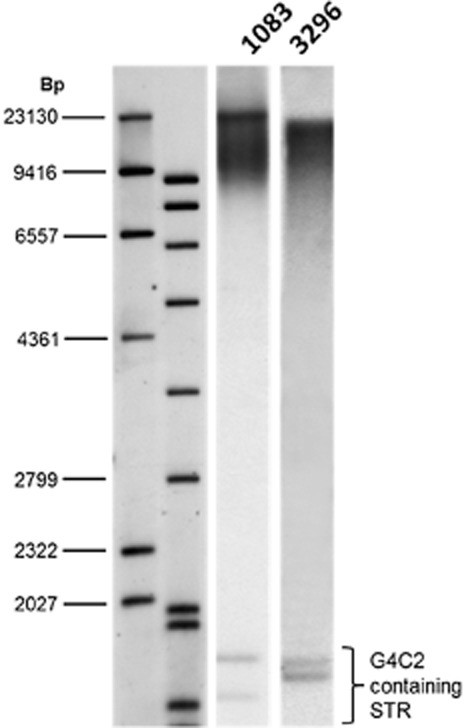
Frontotemporal lobar degeneration (FTLD) is a progressive neurodegenerative disease and is the second most common form of young onset dementia after Alzheimer's disease (AD). An autosomal dominant pattern of inheritance is present in around 25-50% of FTLD cases indicating a strong genetic component. Major pathogenic mutations of FTLD have been demonstrated independently in the progranulin (GRN) gene and the C9orf72 hexanucleotide expansion repeat. In this study we present a family that have been identified as carrying both a GRN Cys31fs mutation and the C9orf72 hexanucleotide expansion repeat.
In the present study we describe the clinical and genetic details of family members and pathological features of two family members that have come to post-mortem.
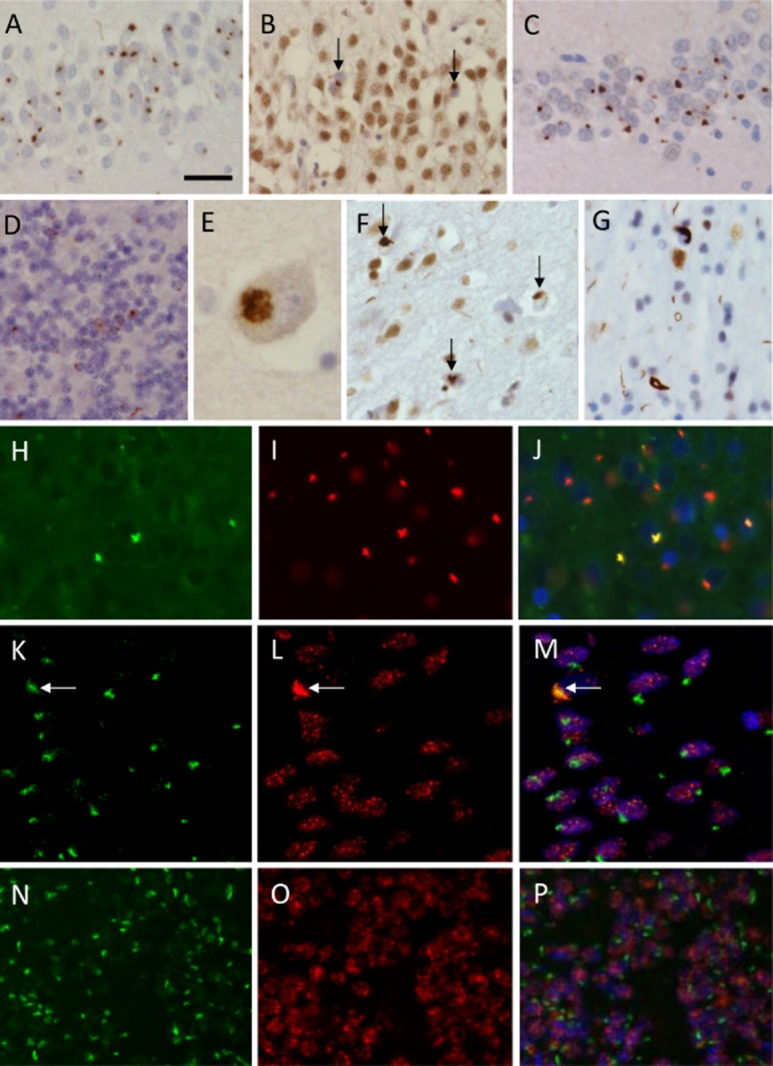
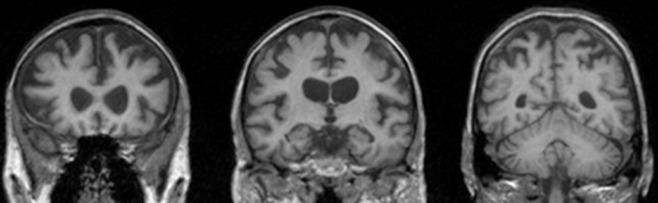
The mean age at disease onset was 57 years (48-61 years) and mean duration 4 years (2-7 years). The most common presenting syndrome was behavioural variant frontotemporal dementia. Brain imaging from available cases showed a symmetrical pattern of atrophy particularly affecting the frontal and temporal lobes. Pathologically two cases were classified as FTLD-TDP type A with TDP-43 positive inclusions, with additional p62-positive 'star-like' inclusions found in the hippocampal formation and cerebellum.
The type and distribution of the pathological lesions in these two cases were in keeping with FTLD cases carrying only the C9orf72 hexanucleotide repeat. However the driving force of the pathological process may be either pathogenic mutation or a combination of both converging on a singular mechanism.
额颞叶变性(FTLD)是一种进行性神经退行性疾病,是继阿尔茨海默病(AD)之后第二常见的青年起病型痴呆。约25%-50%的FTLD病例呈现常染色体显性遗传模式,表明其具有很强的遗传成分。FTLD的主要致病突变已分别在原颗粒蛋白(GRN)基因和C9orf72六核苷酸重复扩增中得到证实。在本研究中,我们报告了一个被鉴定同时携带GRN基因Cys31fs突变和C9orf72六核苷酸重复扩增的家系。
在本研究中,我们描述了家系成员的临床和遗传学细节以及两名已进行尸检的家系成员的病理特征。
疾病发作的平均年龄为57岁(48-61岁),平均病程为4年(2-7年)。最常见的首发综合征是行为变异型额颞叶痴呆。现有病例的脑部影像学检查显示出对称的萎缩模式,尤其影响额叶和颞叶。病理上,两例被归类为FTLD-TDP A型,有TDP-43阳性包涵体,在海马结构和小脑中发现额外的p62阳性“星状”包涵体。
这两例病例中病理损害的类型和分布与仅携带C9orf72六核苷酸重复的FTLD病例一致。然而,病理过程的驱动因素可能是致病突变或两者结合并汇聚于单一机制。