Department of Physics, University of California at San Diego, La Jolla, CA 92093-0374, USA.
Science. 2013 Nov 29;342(6162):1237435. doi: 10.1126/science.1237435.
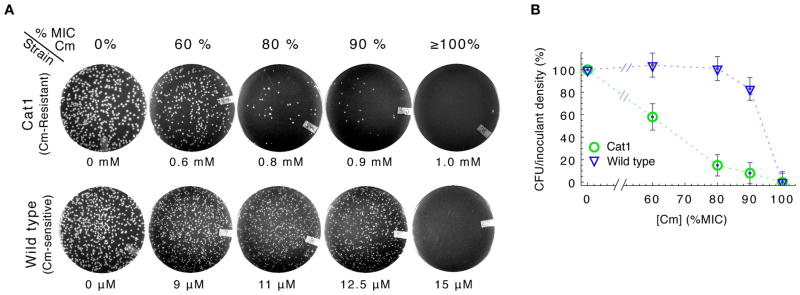
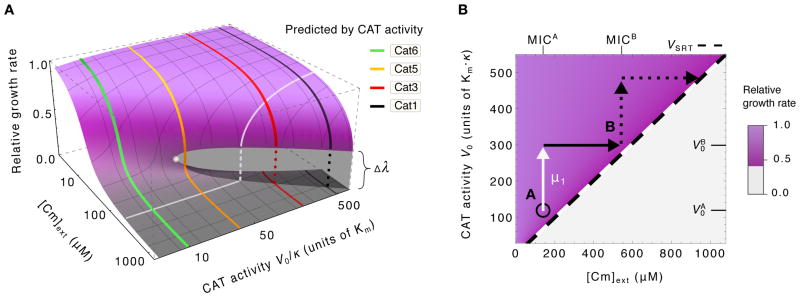
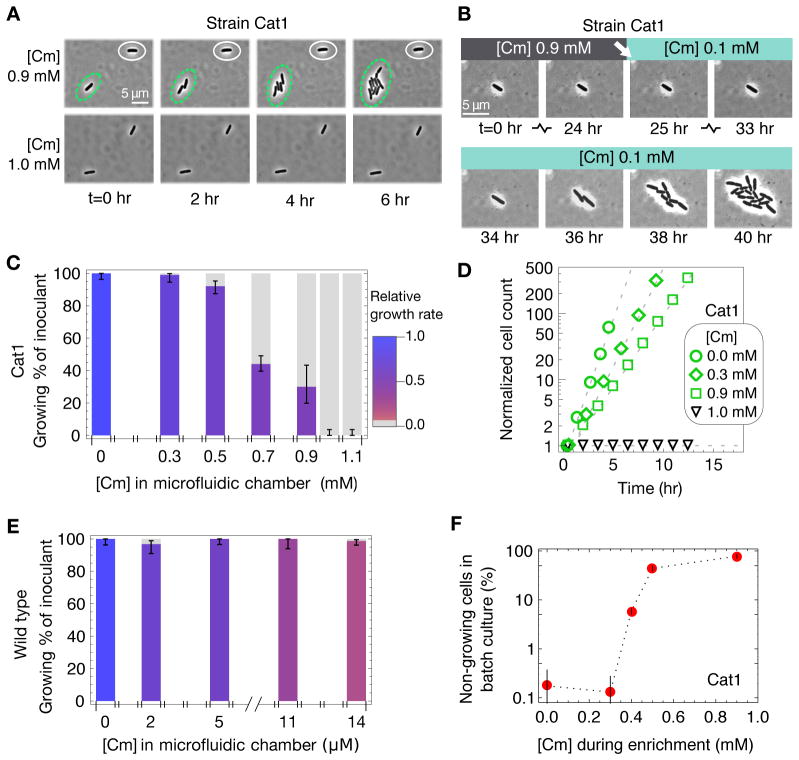
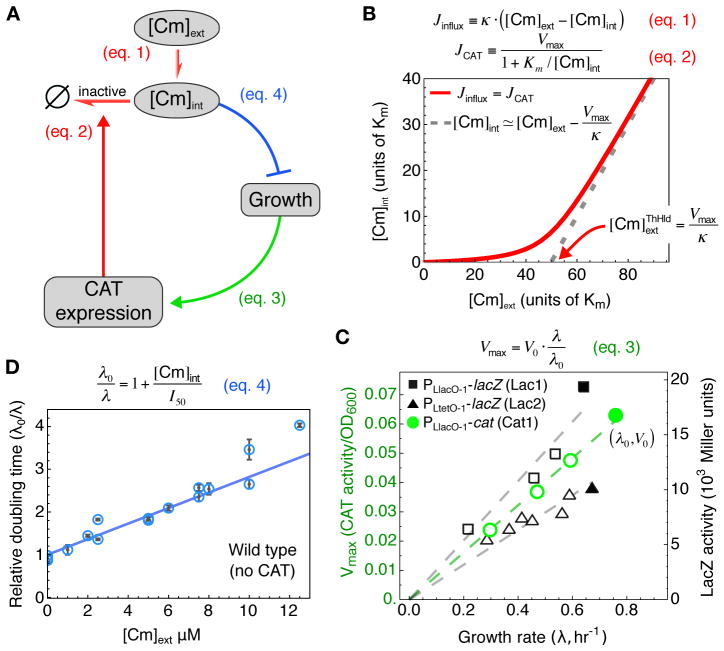
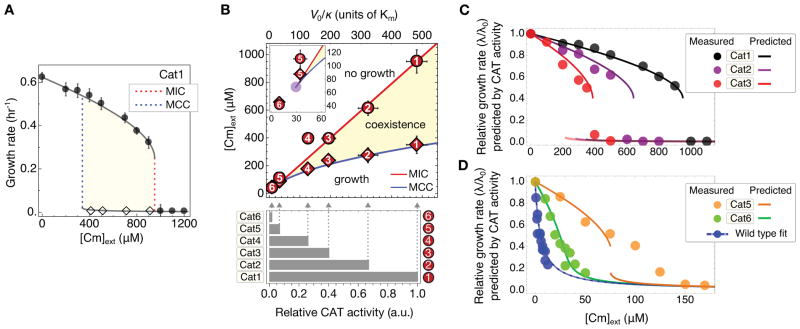
To predict the emergence of antibiotic resistance, quantitative relations must be established between the fitness of drug-resistant organisms and the molecular mechanisms conferring resistance. These relations are often unknown and may depend on the state of bacterial growth. To bridge this gap, we have investigated Escherichia coli strains expressing resistance to translation-inhibiting antibiotics. We show that resistance expression and drug inhibition are linked in a positive feedback loop arising from an innate, global effect of drug-inhibited growth on gene expression. A quantitative model of bacterial growth based on this innate feedback accurately predicts the rich phenomena observed: a plateau-shaped fitness landscape, with an abrupt drop in the growth rates of cultures at a threshold drug concentration, and the coexistence of growing and nongrowing populations, that is, growth bistability, below the threshold.
为了预测抗生素耐药性的出现,必须在耐药生物体的适应性和赋予耐药性的分子机制之间建立定量关系。这些关系通常是未知的,并且可能取决于细菌生长的状态。为了弥补这一差距,我们研究了表达对翻译抑制抗生素耐药性的大肠杆菌菌株。我们表明,耐药性表达和药物抑制之间存在正反馈回路,该反馈回路源于药物抑制生长对基因表达的固有全局影响。基于这种内在反馈的细菌生长定量模型准确地预测了所观察到的丰富现象:适应性景观呈平台状,在药物浓度阈值处培养物的生长速率急剧下降,并且在阈值以下存在生长和非生长种群共存,即生长双稳性。