UCL Institute of Neurology, University College London, , Queen Square, London WC1N 3BG, UK.
Philos Trans R Soc Lond B Biol Sci. 2013 Dec 2;369(1633):20130133. doi: 10.1098/rstb.2013.0133. Print 2014 Jan 5.
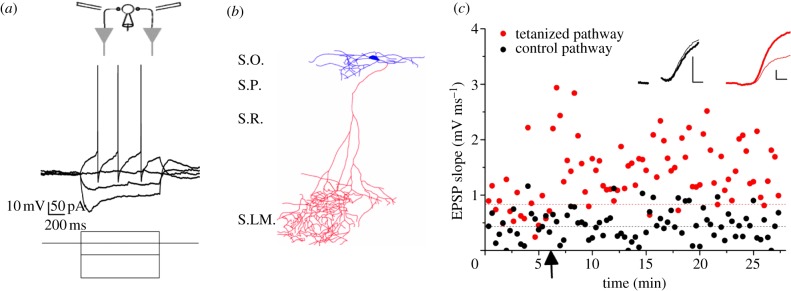
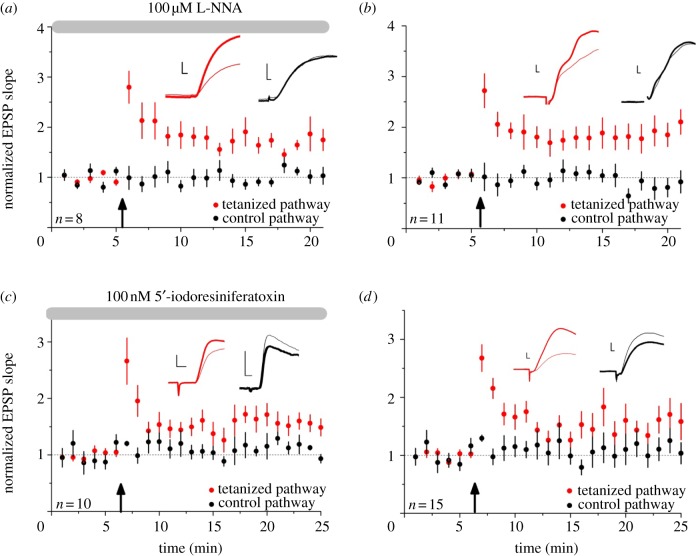
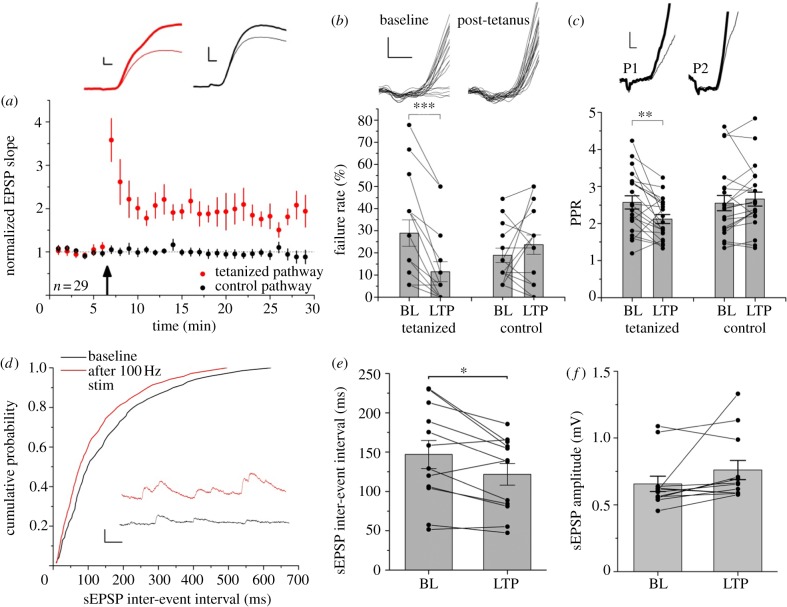
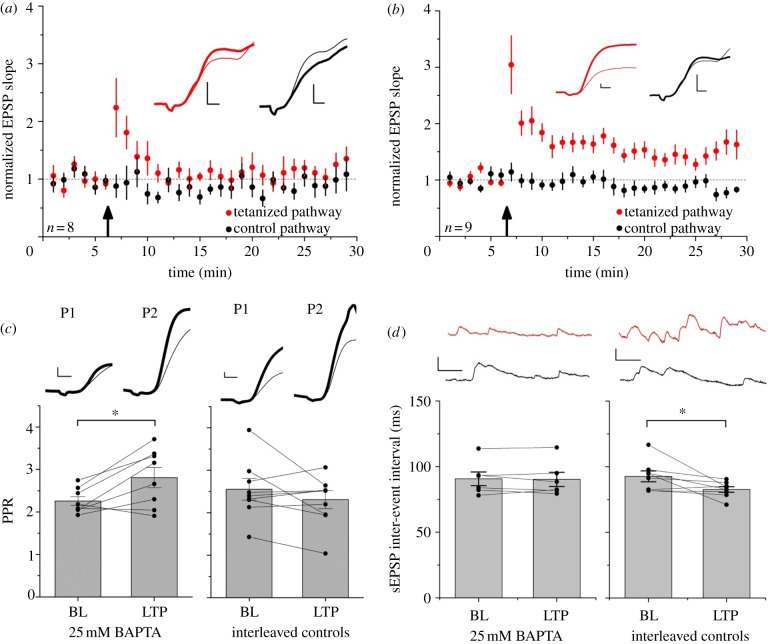
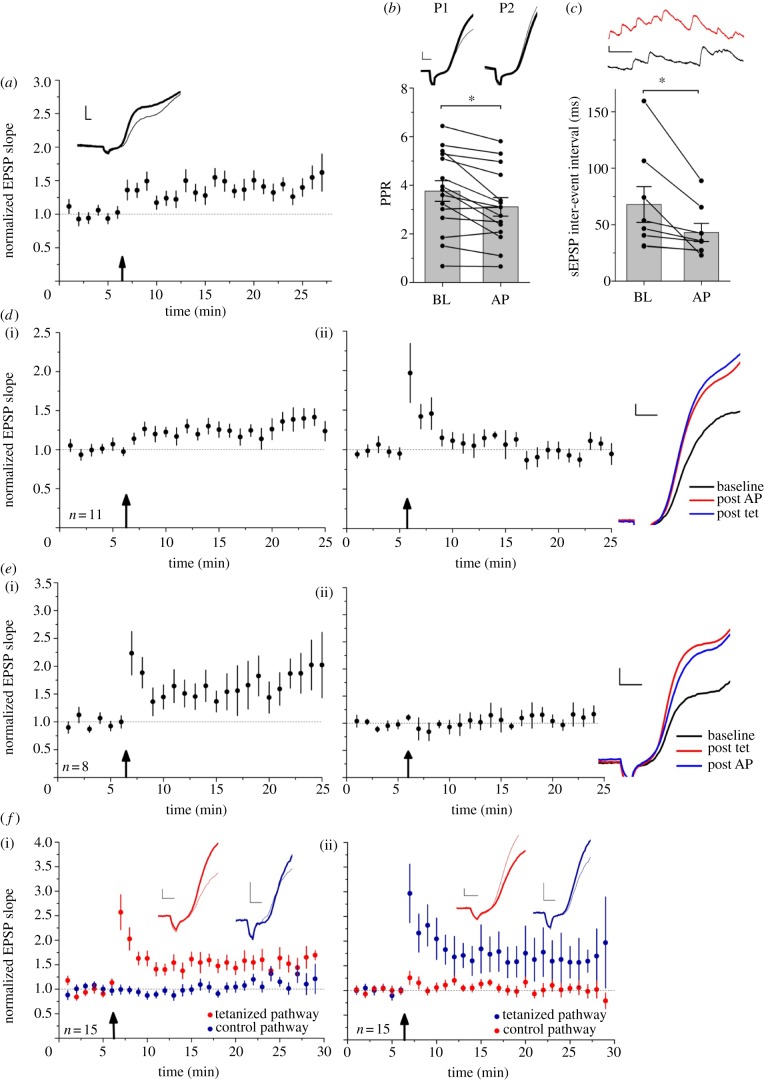
Several types of hippocampal interneurons exhibit a form of long-term potentiation (LTP) that depends on Ca(2+)-permeable AMPA receptors and group I metabotropic glutamate receptors. Several sources of evidence point to a presynaptic locus of LTP maintenance. The retrograde factor that triggers the expression of LTP remains unidentified. Here, we show that trains of action potentials in putative oriens-lacunosum-moleculare interneurons of the mouse CA1 region can induce long-lasting potentiation of stimulus-evoked excitatory postsynaptic currents that mimics LTP elicited by high-frequency afferent stimulation. We further report that blockers of nitric oxide production or TRPV1 receptors failed to prevent LTP induction. The present results add to the evidence that retrograde signalling underlies N-methyl-d-aspartate (NMDA) receptor-independent LTP in oriens interneurons, mediated by an unidentified factor.
几种类型的海马中间神经元表现出依赖于 Ca(2+)-通透型 AMPA 受体和 I 型代谢型谷氨酸受体的长时程增强 (LTP)。有几个证据来源指向 LTP 维持的突触前位置。触发 LTP 表达的逆行因子尚未确定。在这里,我们表明,在小鼠 CA1 区的假定或iens-lacunosum-moleculare 中间神经元中,动作电位的串可以诱导刺激诱发的兴奋性突触后电流的持久增强,该增强模拟由高频传入刺激引起的 LTP。我们进一步报告说,一氧化氮产生或 TRPV1 受体的阻断剂不能防止 LTP 的诱导。目前的结果增加了逆行信号是 NMDA 受体非依赖性 oriens 中间神经元 LTP 的基础的证据,这种 LTP 由未鉴定的因子介导。